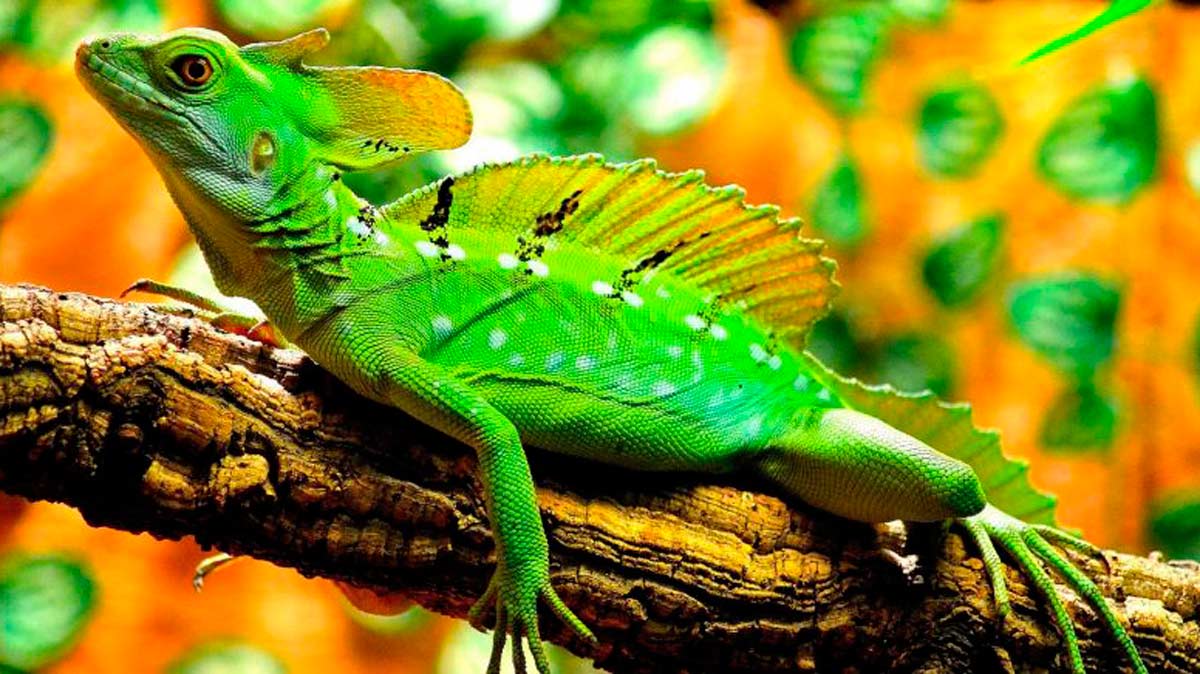
Reptile skin isn't just a tough suit of armor. It's a marvel of evolutionary engineering that solved one of vertebrate history's biggest hurdles: how to conquer dry land without drying out. Unlike amphibians, which rely on permeable skin for respiration and hydration, reptiles locked their moisture inside with a specialized, keratin-rich integument.
The primary keyword for this topic targets the physiological mechanics, ecological advantages, and evolutionary history of reptile scaly skin. Below, we'll examine how these scales form, why shedding is a biological necessity, and how this unique outer layer lets lizards, snakes, and crocodilians thrive in some of the most punishing environments on Earth.
Anatomy of Reptilian Scales
At a glance, reptile skin looks and feels dry. That's because it lacks the mucous glands found in fish and amphibians. Instead, the epidermis produces rigid sheets and overlapping folds of keratin—the exact same protein found in human hair and fingernails.
These scales aren't individual attachments like fish scales; they are folding regions of the epidermis. Underneath this outer layer lies the dermis, which can anchor bony plates known as osteoderms in species like crocodilians and certain lizards.
- Alpha and Beta Keratin: Reptile scales get their properties from two types of keratin. Soft alpha-keratin lies in the flexible hinge regions between scales, while rigid beta-keratin forms the hard outer surface of the scale itself.
- Waterproofing: The microscopic lipid matrix embedded between epidermal cells prevents trans-epidermal water loss. This is why a desert monitor lizard can survive in arid heat that would quickly dehydrate a frog.
- Frictional Control: Scale microstructures reduce friction when a snake slithers across sand or rocks, directing movement forward while gripping surfaces.
The Mechanics of Ecdysis (Shedding)
Because beta-keratin is rigid, it doesn't grow. As a reptile matures or its body expands, it hits a biological roadblock: its suit is too tight. Enter ecdysis, the process of shedding the skin.
Before shedding begins, the reptile produces a new layer of skin underneath the old one. Specialized lymphatic fluid accumulates between the old and new epidermal layers, causing the skin to take on a dull or milky appearance—especially noticeable in snakes, whose eye caps also cloud over temporarily. Once the fluid breaks down the old cellular attachments, the animal rubs against abrasive surfaces like rocks or logs to peel the old keratin off in one piece or large fragments.
Lizards shed in patches, while snakes typically slough their entire skin inside out from nose to tail. This process isn't just about growth; it removes ectoparasites like mites and heals minor surface injuries. For more details on herpetological physiology, you can explore resources from the San Diego Zoo Wildlife Alliance.
Thermal Regulation and Armor
Reptiles are ectotherms, meaning they rely on external heat sources to manage their body temperature. Their scaly skin plays an active role in this thermal dance. Dark scales absorb solar radiation quickly during morning basking routines, while lighter pigments or reflective structures can alter heat absorption.
Beyond temperature control, scales provide mechanical defense:
- Predator Deterrence: Spiky scales on an iguana or the rigid scutes of a tortoise make it painful or physically impossible for predators to swallow them whole.
- Abrasion Resistance: Burrowing skinks and snakes slide through abrasive soil without scraping their living tissue.
- Sensory Integration: Modified scales can act as tactile sensors, such as the facial pits of vipers that detect infrared heat signatures.
Evolutionary Success Across Habitats
Reptiles colonized nearly every terrestrial ecosystem because their skin broke the tether to open water. From the marine iguana of the Galápagos islands, which dives into cold salt water, to sidewinders in the Mojave Desert, scale adaptations dictate ecological niches.
Crocodilians developed heavy, keratinized scutes reinforced with bone to withstand crushing hydrostatic pressure in rivers and swamps. Meanwhile, arboreal geckos use microscopic hair-like setae on their toe pads—modified scales—to adhere to vertical glass. To learn more about global conservation efforts for these species, check out the Smithsonian National Zoo.
Frequently Asked Questions
Do all reptiles shed their skin in one piece?
No. Snakes typically shed their skin in a single, continuous piece (including the spectacle scales over their eyes). Most lizards shed their skin in ragged flakes or patches over several days.
Why does a snake's eyes turn blue before it sheds?
The "blue" or milky phase happens when lymphatic fluid accumulates between the old skin layer and the new skin forming underneath. This fluid temporarily clouds the transparent scale (brille) that covers the snake's eye.
Are reptile scales made of the same material as human fingernails?
Yes. Both reptile scales and human fingernails are composed primarily of keratin, a tough, fibrous structural protein.
Can reptiles absorb water through their skin?
Unlike amphibians, most reptiles cannot absorb standing water through their skin. They must drink water orally, though some specialized desert lizards can harvest morning condensation through microscopic channels between their scales.



