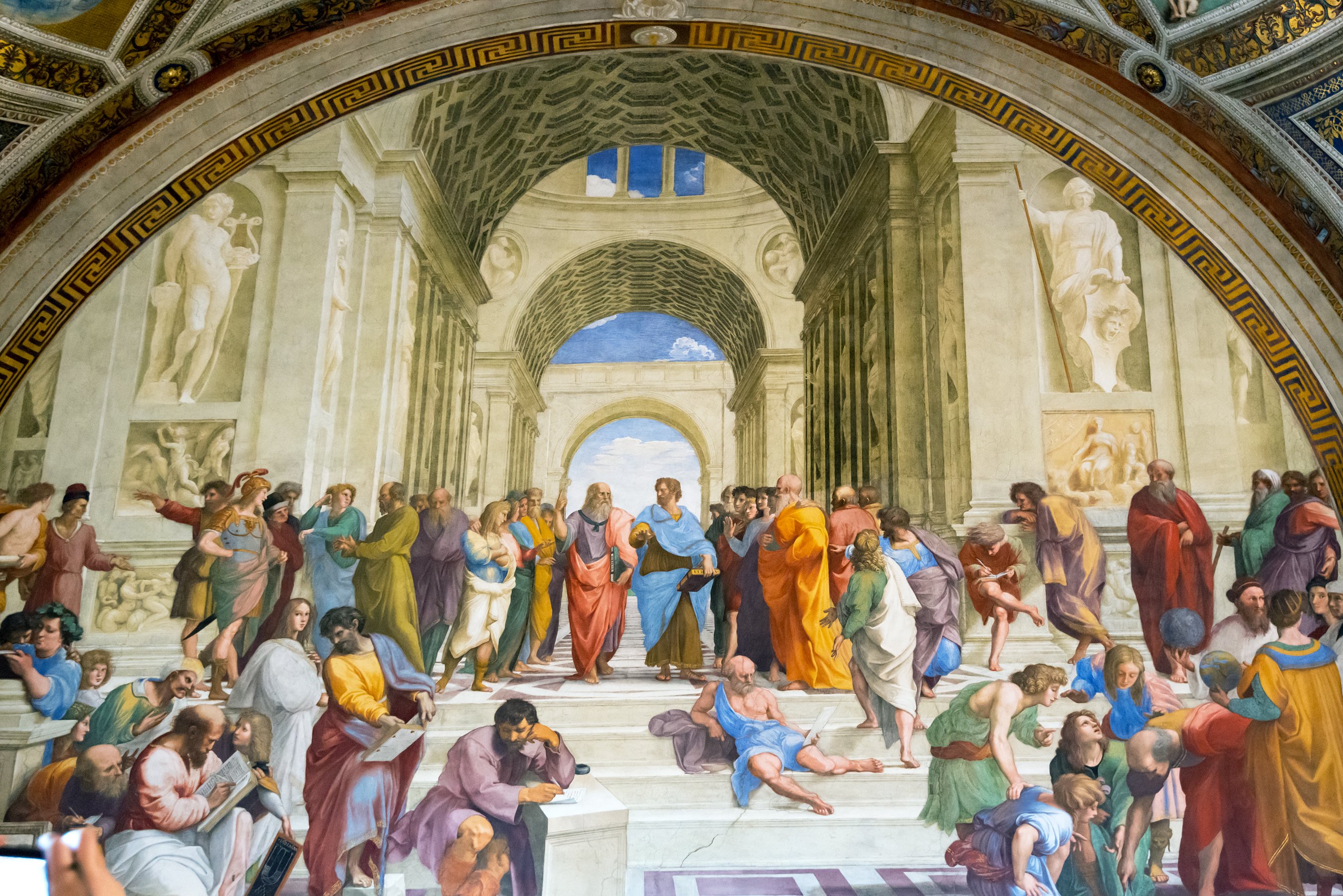
Renaissance humanism was a cultural and intellectual movement that shifted Europe's focus from medieval scholasticism toward the study of classical antiquity. It wasn't just a nostalgic look backward. It was a rigorous method of learning that championed human potential, empirical observation, and critical inquiry across art, politics, and science.
If you want to understand how modern education, civil liberty, and scientific skepticism took root, you have to look at how 14th-century thinkers revived ancient texts. They didn't just read Cicero and Plato; they used those classical frameworks to question the absolute authority of medieval institutions. Let's break down how this intellectual shift happened, who drove it, and why it changed Western civilization forever.
The Roots of Renaissance Humanism
The movement began in 14th-century Italy, primarily in bustling mercantile cities like Florence, Venice, and Milan. Medieval European intellectual life had long been dominated by scholasticism—a closed system of theology taught in universities that relied heavily on dogmatic logic and accepted church authority.
Humanism emerged as an alternative educational program known as the studia humanitatis. This curriculum focused on grammar, rhetoric, history, poetry, and moral philosophy. Scholars who taught these subjects were called humanistae.
Francesco Petrarch is widely considered the father of humanism. Born in Tuscany in 1304, Petrarch spent decades combing dusty monastic libraries across Europe for lost manuscripts written by classical Roman authors like Cicero and Livy. He argued that the centuries following the fall of Rome were a period of cultural darkness, and that humanity could only progress by recovering the lost wisdom of Greece and Rome.
Petrarch's work inspired a generation of civic humanists. Men like Coluccio Salutati and Leonardo Bruni used their classical training to serve as chancellors of Florence. They argued that active political engagement and public service were the highest callings for an educated citizen, directly challenging the medieval monastic ideal of quiet contemplation.
Core Ideals of the Humanist Program
Humanism wasn't a monolith, but its practitioners shared a distinct set of philosophical commitments. These ideas reshaped how individuals viewed themselves and their role in society.
The Dignity of Man
Medieval theology often emphasized humanity's fallen, sinful nature and complete dependence on divine intervention. Humanist thinkers flipped this narrative. In his famous 1486 text, Oration on the Dignity of Man, Giovanni Pico della Mirandola imagined God telling humanity that it had no fixed place in the cosmic hierarchy. Instead, humans possessed the free will to shape their own destiny, rise to the level of angels, or sink to the level of beasts.
The Revival of Classical Antiquity
Humanists believed that ancient Greek and Roman texts offered timeless truths about human nature, ethics, and rhetoric. They painstakingly translated ancient Greek works into Latin, making them widely accessible to Europe's literate elite for the first time in centuries.
Critical Philology
To understand ancient texts properly, humanists developed sophisticated philological methods. They compared different manuscript copies, analyzed historical grammar, and spotted forgeries. Lorenzo Valla famously used these textual analysis techniques in 1440 to prove that the Donation of Constantine—a document the Catholic Church used to claim temporal political authority over Western Europe—was a medieval forgery. This was a massive blow to institutional authority.
Impact on Art, Literature, and Science
You can't separate humanist philosophy from the creative explosions of the period. Artists and scientists adopted the humanist emphasis on empirical observation, proportion, and human experience.
Realism and Human Emotion in Art
Painters and sculptors stopped treating human figures as flat, rigid symbols of divine hierarchy. Instead, they embraced linear perspective, anatomical precision, and psychological realism. Leonardo da Vinci dissected corpses to understand muscle structure, while Michelangelo captured raw emotional intensity in marble. Art became an exploration of the physical world and the human psyche, rooted in the belief that earthly existence was worth studying in profound detail.
The Shift Toward Empirical Science
The humanist habit of questioning established authority laid the groundwork for the Scientific Revolution. When Nicolaus Copernicus proposed a heliocentric model of the universe in 1543, he was relying on mathematical rigor and careful observation rather than blindly accepting Ptolemaic tradition. Galileo Galilei later expanded on this, famously stating that the book of nature is written in the language of mathematics. For more on the evolution of scientific thought during this era, you can read the Stanford Encyclopedia of Philosophy.
Common Misconceptions About the Movement
People often misunderstand what humanism meant during the Renaissance. Clearing up these myths helps clarify why the movement was so disruptive.
- It wasn't secular atheism: Almost all Renaissance humanists were devout Christians. They didn't reject God; they believed that studying human potential and classical letters allowed people to better appreciate God's creation.
- It wasn't available to everyone: Humanism was an elite educational movement. Access was largely restricted to wealthy urban men who could afford tutors and books.
- It wasn't a sudden revolution: The shift didn't happen overnight. Scholasticism and humanism coexisted and argued with each other in universities and courts for generations.
Frequently Asked Questions
What caused the rise of Renaissance humanism?
The movement was fueled by a growing urban merchant class in Italy, the influx of Greek scholars fleeing the fall of the Byzantine Empire after 1453, and the rediscovery of forgotten classical manuscripts in monastic libraries.
How did humanism differ from scholasticism?
Scholasticism focused on theology, logic, and reconciling Christian doctrine with Aristotle using rigid university syllabi. Humanism focused on grammar, rhetoric, history, and ethics, using classical texts to train active, articulate citizens for public life.
Who were the most important humanist figures?
Key figures include Francesco Petrarch, who sparked the recovery of classical texts; Desiderius Erasmus, who used humanist scholarship to critique church corruption; and Coluccio Salutati, who pioneered civic humanism in Florence.
Did humanism influence the Protestant Reformation?
Yes. Northern humanists like Erasmus used critical philology to study early Christian texts and translate the New Testament directly from Greek. Their critiques of institutional corruption and clerical ignorance directly inspired reformers like Martin Luther. You can explore primary historical sources through the British Library.



