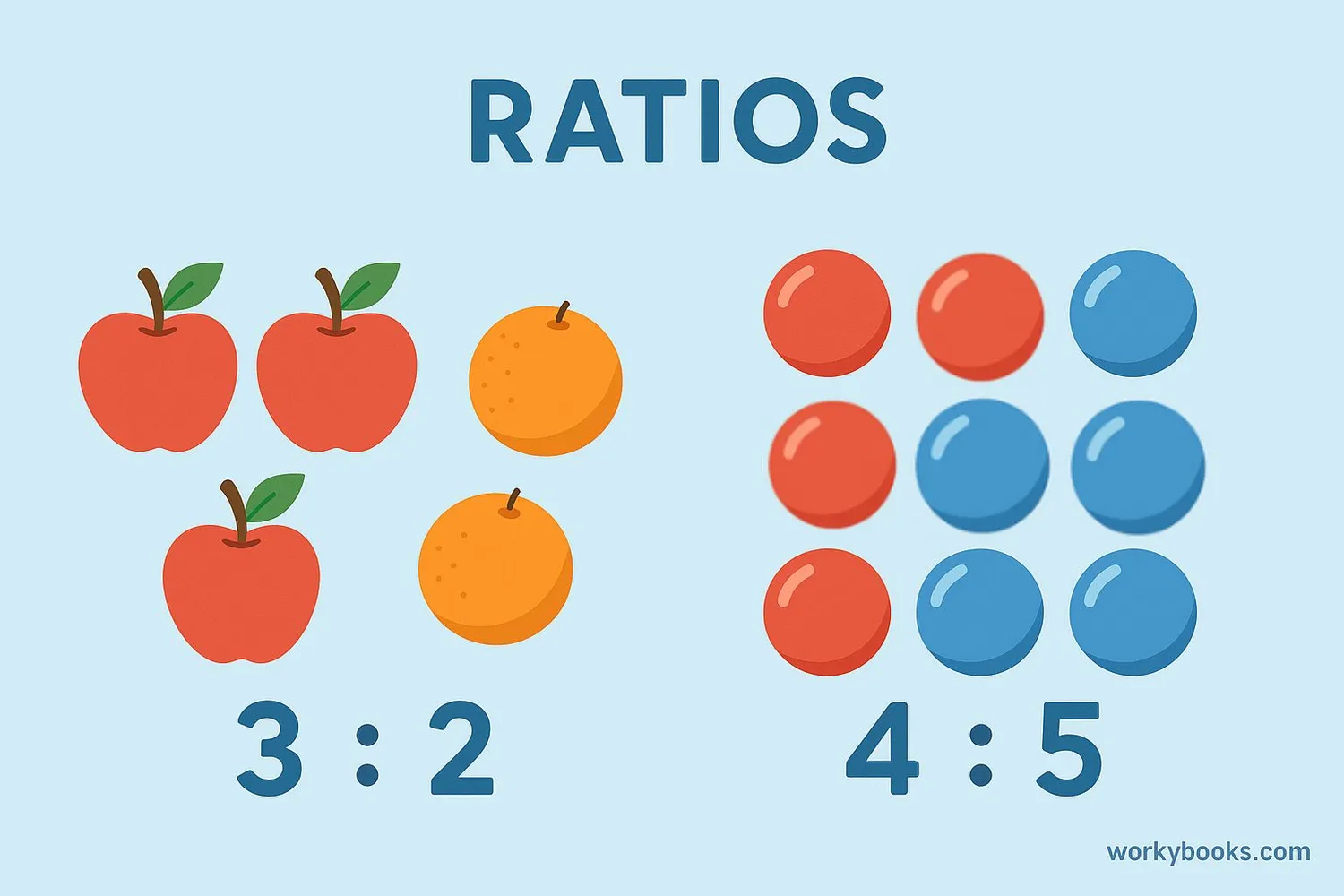
Mathematics often feels like a collection of abstract rules until it intersects with daily survival, money, and personal well-being. Ratios act as quiet engines behind everything from managing household budgets to evaluating medical test results. When you understand how proportions connect disparate pieces of data, you stop guessing and start measuring the forces shaping your choices.
Ratios compare two quantities by showing how many times one value contains or relates to another. Unlike raw numbers, which can easily mislead without context, proportions reveal relative scale. This foundational mathematical tool bridges the gap between raw data and meaningful action across personal finance, clinical health, and routine problem-solving.
Financial ratios and the reality of money management
Personal finance relies on proportions to determine financial health. Looking at a bank account balance tells you very little without knowing your obligations. Ratios provide the necessary baseline to evaluate debt, savings, and spending habits objectively.
The debt-to-income ratio (DTI) serves as a primary example. Lenders use this metric to decide whether you can handle monthly mortgage or loan payments. To find your DTI, divide your total monthly debt payments by your gross monthly income. For example, if you pay $1,500 toward debts each month and earn $5,000 before taxes, your DTI is 30 percent. Most lenders prefer this figure to stay below 36 percent for optimal borrowing terms.
Another critical financial measure is the savings rate, which compares money saved or invested against total earnings. Setting aside $500 from a $3,000 monthly paycheck yields a savings rate of roughly 16.6 percent. Tracking this ratio over time highlights whether lifestyle inflation is quietly eating away at your capacity to build wealth.
Common financial missteps stem from ignoring proportional changes. Focusing solely on a salary increase while letting debt scale up at an identical or faster rate keeps your financial position entirely stagnant. Monitoring these mathematical relationships prevents lifestyle creep.
Health metrics and biological proportions
Medicine relies heavily on ratios to evaluate bodily function without invasive procedures. Raw lab values often fluctuate based on body mass, hydration, and metabolism, making proportional analysis essential for accurate diagnoses.
The body mass index (BMI) offers a standardized way to evaluate weight relative to height, calculated by dividing weight in kilograms by height in meters squared. While BMI has limitations regarding muscle mass versus fat distribution, it provides clinicians with an initial screening ratio for metabolic risk.
Cardiovascular health also depends on proportional measurements. The waist-to-hip ratio compares abdominal circumference to hip circumference, serving as a reliable indicator of visceral fat accumulation and cardiovascular risk. According to the World Health Organization, a healthy waist-to-hip ratio is typically below 0.85 for women and 0.90 for men.
- Track baseline measurements monthly rather than daily to spot genuine trends.
- Compare personal lab ratios against established clinical standards rather than population averages.
- Consult primary care providers to interpret complex diagnostic ratios accurately.
Daily decisions and proportional thinking
Beyond finance and medicine, ratios govern routine choices, time management, and optimization problems. Proportional reasoning helps you scale recipes, calculate travel speeds, and allocate scarce resources efficiently.
Consider time management using the Pareto principle, often expressed as the 80/20 ratio. This heuristic suggests that roughly 80 percent of outcomes result from 20 percent of inputs. Recognizing this proportion helps prioritize tasks at work or home, focusing energy on high-impact activities rather than administrative clutter.
Scaling quantities for cooking or DIY projects relies entirely on direct proportions. Doubling a recipe requiring a 2:1 flour-to-liquid ratio means multiplying both numbers equally to maintain structural integrity. Failing to maintain this mathematical relationship ruins the final product.
Frequently asked questions
What is the simplest way to calculate a ratio?
Divide the first quantity by the second quantity, then simplify the resulting fraction to its lowest terms. For example, comparing 10 apples to 5 oranges gives a 2:1 ratio.
Why do financial analysts prefer ratios over raw numbers?
Raw figures lack context. A company reporting $1 million in profit means little unless you know whether its revenue was $2 million or $100 million. Ratios reveal efficiency and profitability relative to scale.
How often should personal financial ratios be recalculated?
Review your budget and debt-to-income ratios quarterly, or immediately following significant life events such as a job change, a move, or taking on new credit.
Can ratios help improve daily productivity?
Yes. Using proportional time allocation—such as dedicating specific ratios of focus time to rest—prevents burnout and maintains steady output throughout the day according to the Centers for Disease Control and Prevention workplace wellness guidelines.


