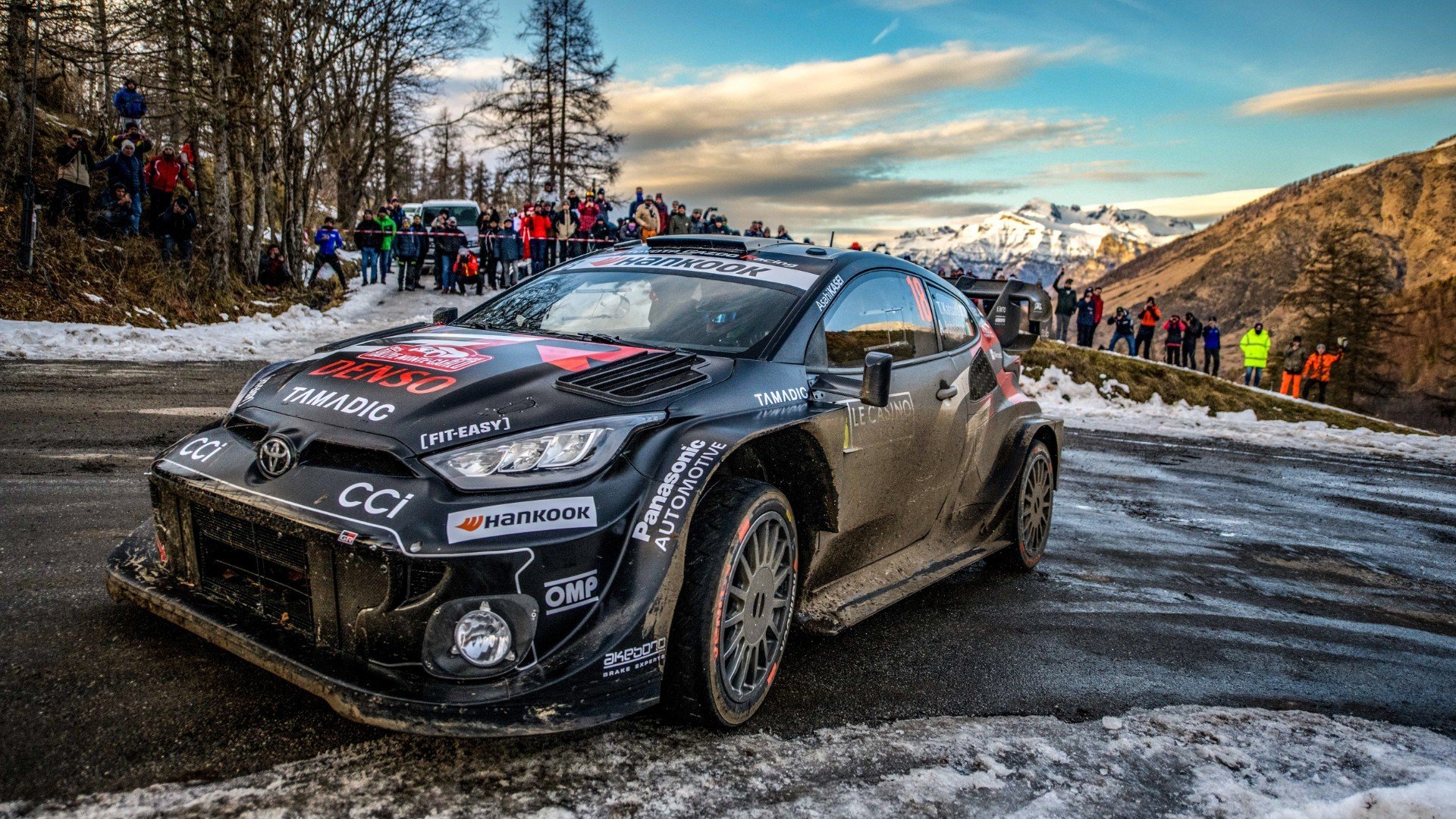
Rally Finland stands out as the fastest and most unforgiving round of the FIA World Rally Championship (WRC). Often called the Grand Prix of rallying, drivers rocket through dense Scandinavian forests on wide, hard-packed gravel roads featuring blind crests and massive, stomach-dropping jumps. Success requires absolute precision, flawless pace notes, and a complete disregard for self-preservation. When drivers push past the limit here, the forest doesn't forgive mistakes, turning minor miscalculations into spectacular high-speed crashes.
Understanding why this event commands such legendary status means looking beyond viral compilation clips. It requires examining the unique mechanical demands, the psychological toll on drivers, and the engineering that keeps cars surviving impacts that routinely exceed 120 km/h in the trees.
The Anatomy of a Finnish Gravel Stage
The roads around Jyväskylä consist of a solid foundation of crushed rock topped with a loose layer of gravel. This surface offers surprisingly high grip levels compared to loose dirt rallies like Acropolis or Safari, allowing drivers to slide their cars with immense confidence. Yet, this high-grip illusion breeds danger.
Cars routinely average over 120 km/h across entire stages, with peak speeds touching nearly 200 km/h on straight sections bordered by solid pine trees. The characteristic feature of these roads is the roller-coaster profile: undulating crests that hide the road ahead. If a driver approaches a blind crest even a fraction off line, the car launches into the air. Landings must be calculated down to the centimeter; landing with wheels turned or weight unbalance sends the vehicle careening off the road.
- High-Speed Ruts: Repeated passes carve deep ruts into the road surface, forcing drivers to fight tramlining effects.
- Crowned Roads: Finnish roads slope downward toward the edges for drainage, pulling the car outward during a slide.
- Pike’s Peak Style Drops: Vertical drops immediately past the gravel shoulder leave zero margin for error.
Why Non-Nordic Drivers Struggle to Win
Historically, Rally Finland has been an exclusive club for Nordic drivers. For decades, Finns and Swedes dominated the podium because local knowledge dictates success here. Sébastien Loeb and Sébastien Ogier proved that non-Nordic champions could master the event, but they had to spend years unlearning conventional racing instincts.
Local drivers grow up reading the specific undulations of these roads. They understand how a car compresses on the approach to a jump and how to lift off or apply throttle to manipulate the chassis attitude mid-air. When a co-driver calls a flat-out fifth-gear crest, trusting that call requires a level of psychological conditioning that foreign drivers rarely replicate without extensive seat time.
The Physics Behind the Crashes
Video compilations of Rally Finland highlight violent rolls and heavy tree impacts, but each incident follows a distinct mechanical breakdown of grip or aerodynamics. When a WRC Rally1 hybrid car flies off a jump at 160 km/h, aerodynamics play a critical role. Underbody downforce keeps the nose planted, but a sudden crosswind or an incorrect takeoff angle can pitch the car skyward.
Once the car loses contact with the ground, steering inputs become useless. Drivers must manage momentum purely through throttle and braking adjustments to land flat. If the car lands nose-first, the front suspension absorbs an impact equivalent to hitting a concrete wall, often shearing wheels off instantly. If it lands sideways, the centrifugal force triggers multiple high-speed rolls across the timber logs and ditches lining the stage.
"In Finland, you don't drive with your eyes just looking ten meters ahead. You look three corners down the road while your subconscious reads the vibration through the steering wheel."
Spectator Safety and Stage Etiquette
Managing crowds along legendary stages like Ouninpohja requires strict protocols. Unlike circuit racing protected by run-off asphalt and barriers, rally stages run through active forests. Organizing bodies enforce designated spectator zones to keep fans away from high-risk apexes and landing zones.
Understanding marshal instructions is vital for anyone attending live. Safety cars sweep the route up to minutes before the first competing entry, and any stray spectator on the road forces an immediate stage cancellation.
Frequently Asked Questions
What makes Ouninpohja the most famous stage?
Ouninpohja combines extreme high-speed sections with blind, cresting jumps where cars spend seconds airborne. Its flowing rhythm demands absolute commitment, making it the ultimate test of driver bravery in the WRC.
How do modern WRC cars survive massive jumps?
WRC cars feature specialized long-travel suspension geometry, multi-adjustable dampers, and reinforced tubular steel spaceframes equipped with FIA-certified roll cages designed to dissipate immense kinetic energy during a heavy impact or roll.
Why do co-driver pace notes matter more in Finland than anywhere else?
Because many corners are hidden behind blind crests, drivers cannot see the road ahead when initiating a turn. They must commit entirely to the co-driver's voice notes, steering blind based on precise timing and distance calls.
How many non-Finnish drivers have won Rally Finland?
While Finnish drivers have historically dominated the event, international champions like Carlos Sainz, Sébastien Loeb, Sébastien Ogier, and Kris Meeke have broken the streak over the years.