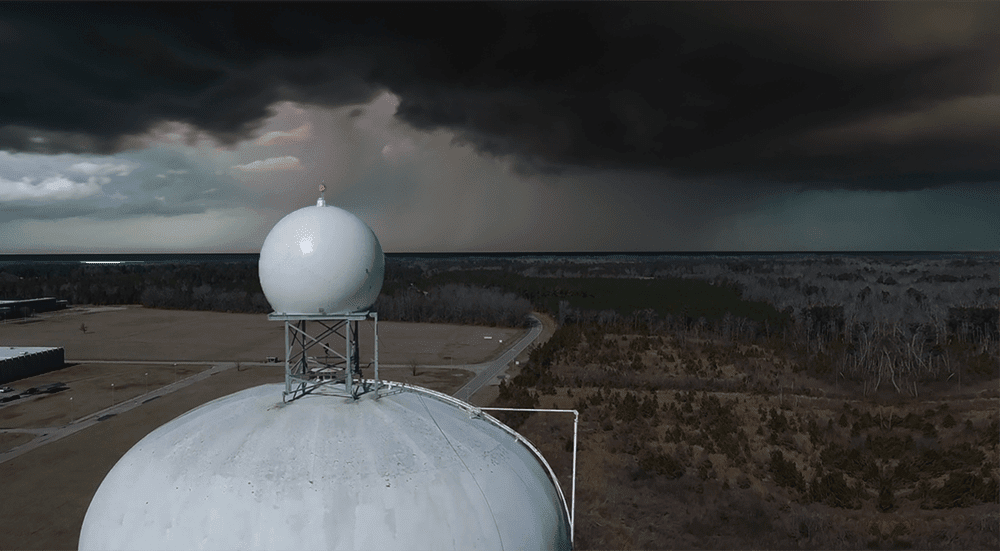
Huntsville, Alabama, earned the moniker "Rocket City" because it builds the hardware that powers space exploration and national defense. Behind that engineering output lies a massive concentration of radio frequency (RF) engineering, sensor design, and advanced radar technology. Local defense contractors, specialized research firms, and federal installations develop systems that track hypersonic threats, guide tactical maneuvers, and map complex atmospheric conditions. This infrastructure shapes both modern aerospace engineering and local emergency preparedness.
Advanced radar systems deployed across North Alabama range from active electronically scanned array (AESA) tactical hardware to high-fidelity weather tracking installations. Engineers in the region focus on solving persistent challenges in signal processing, clutter reduction, and multi-target tracking. Understanding how these technologies function reveals why Huntsville remains a primary hub for modern sensor innovation.
The Engineering Foundation of Huntsville Radar Systems
Modern radar architecture relies heavily on digital signal processing (DSP) and solid-state radio frequency components. Traditional mechanical radar units used physical motors to rotate directional antennas, limiting update speeds and leaving them vulnerable to mechanical failure. Modern systems implemented across Huntsville-developed platforms utilize phased-array technology.
Phased arrays use dozens or thousands of individual antenna elements. By shifting the phase of the radio frequency signal emitted from each element, engineers steer the radar beam electronically without moving parts. This allows the system to scan multiple sectors simultaneously, track high-speed objects with microsecond precision, and maintain a lock on fast-moving targets during high-stress operational scenarios.
Local firms like Phased n Research specialize in translating complex phased-array physics into deployable defense and aerospace hardware. Their work covers physics-based modeling and algorithm development, ensuring that simulation models accurately reflect real-world electromagnetic interference and atmospheric distortion.
Key Innovations in Signal Processing
- Adaptive Waveform Technology: Systems dynamically alter pulse repetition frequency and waveform shape to evade electronic jamming and improve target resolution in cluttered environments.
- Digital Beamforming: Receivers process signals digitally at the element level, improving signal-to-noise ratios and isolating faint returns from background clutter.
- Low Probability of Intercept (LPI): Advanced tactical radars spread emissions across wide frequency bands, making them difficult for adversaries to detect or target.
Defense Applications and Tactical Radar in North Alabama
The defense sector drives the majority of high-end radar research in Madison County. Organizations like the Missile Defense Agency, headquartered at Redstone Arsenal, require sensors capable of detecting intercontinental threats at extreme ranges. Contractors in the surrounding industrial parks design and test the radar payloads that integrate into land, air, and sea-based defense architectures.
Systems such as tactical AESA radars deployed for counter-unmanned aircraft systems (C-UAS) rely on rapid data refresh rates. Unmanned aerial vehicles present unique tracking challenges due to their small radar cross-section and erratic flight paths. Huntsville engineers build specialized filtering algorithms that separate drone signatures from background clutter like birds, trees, and vehicular traffic.
Another major focus area is electronic warfare (EW). RF engineers design integrated suites that combine radar detection with active countermeasures. These systems identify hostile radar emissions, classify threat types, and deploy appropriate electronic shielding or spoofing signals before a platform can be targeted.
Meteorology and Weather Radar Infrastructure
While defense applications dominate local engineering headlines, meteorological radar plays an equally critical role in public safety across North Alabama. Huntsville falls squarely within a region exposed to severe convective storms, seasonal tornadoes, and heavy precipitation events.
The National Weather Service office in Huntsville operates advanced Doppler and dual-polarization (dual-pol) radar systems. Dual-pol technology transmits both horizontal and vertical pulses, allowing meteorologists to determine the size, shape, and composition of precipitation particles in real time.
How Dual-Pol Radar Protects Huntsville Residents
- Debris Detection: When a tornado touches down, dual-pol radar identifies the distinct spectral signature of lofted structural debris, allowing meteorologists to confirm a tornado is producing damage before spotters report it.
- Rainfall Estimation: By measuring the volume and shape of droplets, the system calculates precise rainfall rates over specific watersheds, improving flash flood warnings for local infrastructure.
- Wind Shear Identification: Velocity data tracks internal rotation within storm cells, giving emergency managers critical minutes to sound community sirens.
Manufacturing and Supply Chain Realities
Building advanced radar hardware requires a tightly integrated supply chain capable of producing high-purity gallium nitride (GaN) semiconductors, precision circuit boards, and ruggedized thermal management enclosures. High-frequency RF components generate immense heat, requiring liquid-cooling loops and advanced composite chassis that can withstand extreme G-forces on tactical aircraft or interceptor missiles.
Local engineering teams utilize comprehensive software verification and validation (IV&V) protocols to ensure firmware bugs don't compromise mission-critical hardware. Because radar systems operate in safety-critical domains, software code undergoes rigorous simulation testing against thousands of synthetic threat profiles before physical integration.
Common Misconceptions About Radar Technology
- Myth: Radar systems emit visible light or dangerous radiation levels. Radar uses radio waves at non-ionizing frequencies, similar to commercial wireless communications, posing no radiation threat to nearby populations.
- Myth: Modern radar can see through everything instantly. Atmospheric moisture, heavy terrain, and specialized stealth coatings still create attenuation and reflection challenges that require sophisticated software algorithms to overcome.
- Myth: Radar development is purely hardware-focused. Today, more than half of a modern radar system's capability is determined by its software, signal processing algorithms, and machine learning classifiers rather than the physical antenna dish.
Frequently Asked Questions
What makes Huntsville a hub for radar technology?
Huntsville hosts a unique concentration of federal defense installations, aerospace prime contractors, and specialized engineering firms like Phased n Research and deciBel Research. This ecosystem provides the talent pipeline, testing infrastructure, and funding necessary to support complex radio frequency engineering projects from initial research to field deployment.
How do phased-array radars differ from traditional radar?
Traditional radar systems use a physical rotating antenna to sweep an area. Phased arrays use stationary panels containing numerous small antenna elements that shift electronic phases to steer the beam instantaneously, allowing for faster tracking and simultaneous monitoring of multiple targets.
How does weather radar detect tornadoes so quickly?
Weather radar measures the Doppler shift of reflected pulses to determine the velocity of raindrops moving toward or away from the radar site. When opposing wind directions converge tightly within a storm cell, the radar displays a rotational signature called a mesocyclone, indicating potential tornado formation.
What role do private companies play in defense radar development?
Private contractors handle the research, prototyping, software coding, and physical manufacturing of radar components under Department of Defense contracts. They work alongside military researchers to iterate rapidly on emerging threats, such as small drone swarms and hypersonic missiles.



