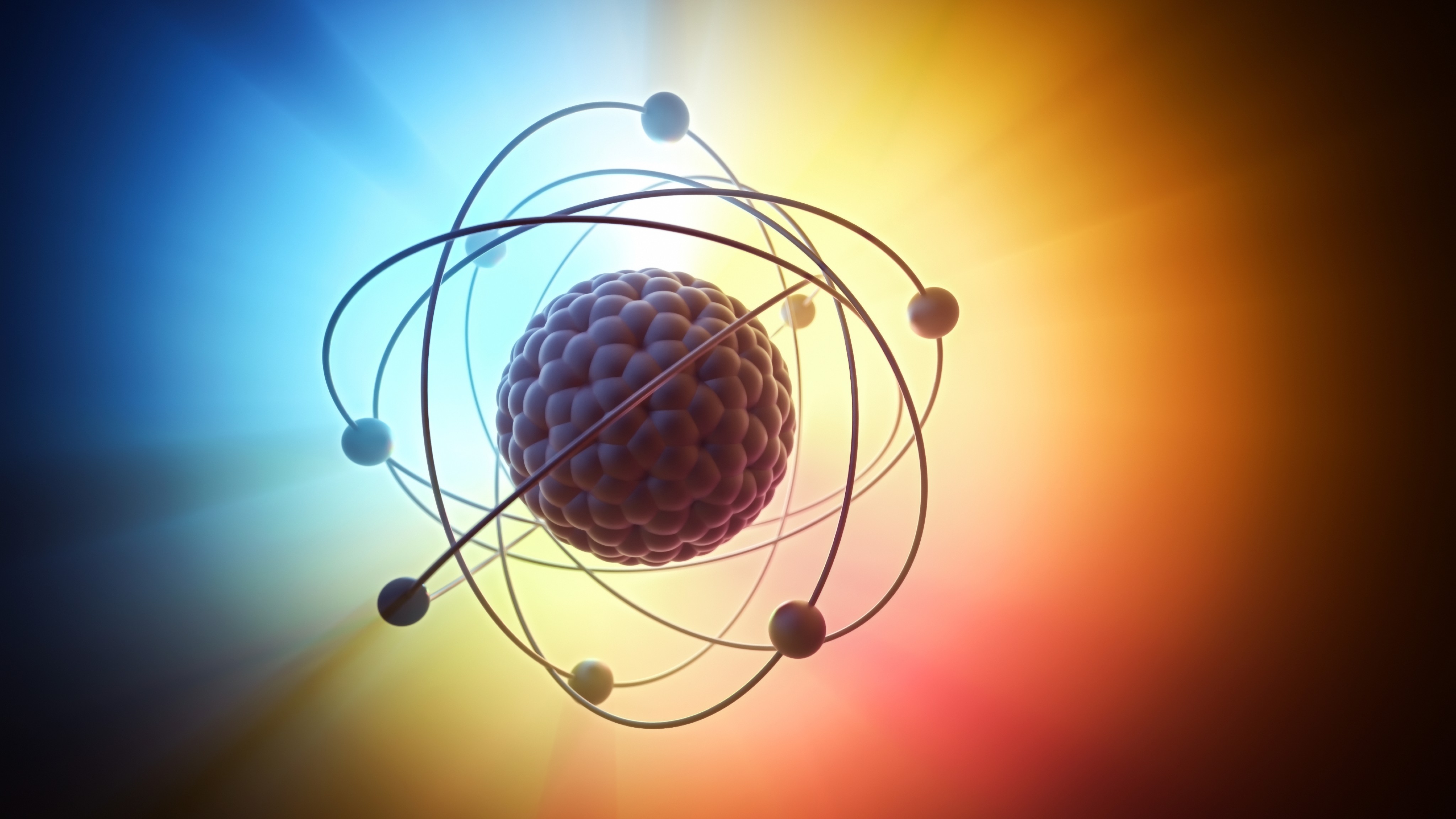
Quantum computing replaces standard binary logic with quantum mechanics to solve complex mathematical problems that would take ordinary machines thousands of years. Traditional computers rely on bits that represent either a zero or a one. Quantum machines use qubits, which leverage superposition and entanglement to process vast webs of variables simultaneously. This isn't just about raw speed; it's a completely different method of computation designed for molecular modeling, cryptography, and complex logistical optimization.
Understanding this shift requires looking past the hype. While a standard laptop processes instructions sequentially or across multiple cores, a quantum processor manipulates probability waves. Practical applications are moving out of theoretical physics laboratories and into real industries, though significant hardware hurdles remain. Let's break down how the hardware works, what makes it different, and where it's actually being applied today.
From Bits to Qubits: The Core Difference
Classical computers store and process data using transistors acting as switches. They're either on (1) or off (0). Every app, video, and spreadsheet breaks down into long strings of these binary digits.
Quantum bits, or qubits, behave differently because they obey the laws of quantum mechanics. A qubit can exist in a state of superposition. Instead of being strictly zero or one, it holds a probability of being either—or both—until it's measured.
Imagine a spinning coin. While it's moving, it's neither heads nor tails exclusively; it's a blur of both possibilities. Only when you slam your hand down on the coin does it force a definitive outcome.
Superposition in Action
Superposition allows quantum computers to scale their processing power exponentially. If you add a bit to a classical computer, its capacity increases linearly. If you add a qubit to a quantum system, its processing space doubles because of how states combine.
- 2 bits: Can represent one of four combinations at a time (00, 01, 10, 11).
- 2 qubits: Can represent all four combinations simultaneously thanks to superposition.
- 300 qubits: Can represent more states than there are atoms in the observable universe.
Entanglement: Spooky Physics at Work
The second pillar of quantum computing is entanglement. When two qubits become entangled, the physical state of one instantly dictates the state of another, no matter how far apart they are. Albert Einstein famously called this "spooky action at a distance."
For a processor, entanglement creates an instantaneous link between data points. When you manipulate one qubit, its entangled partner reacts immediately. This allows the processor to evaluate massive datasets as a single, cohesive unit rather than processing individual lines of code one by one.
How Quantum Computers Actually Compute
Building a machine that harnesses these properties is an immense engineering challenge. Qubits are fragile. Environmental interference—like heat, electromagnetic fields, or stray radiation—causes decoherence, which destroys the quantum state and turns data into random noise.
To prevent this, most modern quantum systems, such as those developed by IBM Quantum, operate inside specialized dilution refrigerators cooled to temperatures colder than deep space.
Quantum Gates vs. Logic Gates
Just as classical computers use logic gates (AND, OR, NOT) to manipulate bits, quantum computers use quantum gates to manipulate qubits. These gates rotate the probability vectors of qubits, steering them toward the correct answer through constructive and destructive interference.
- Interference amplification: Incorrect answers cancel each other out through destructive interference.
- Path reinforcement: Correct answers reinforce each other through constructive interference.
- Final measurement: The system collapses the wave function, leaving the correct solution.
Algorithms like Shor's algorithm for factoring large numbers and Grover's algorithm for searching unstructured databases are written specifically to exploit this wave-interference trick.
Real-World Applications
Quantum computers won't replace your smartphone or make video games render faster. They are specialized accelerators meant for specific, highly complex mathematical problems.
Drug Discovery and Molecular Modeling
Simulating the behavior of molecules is nearly impossible for classical computers because the number of electron interactions scales exponentially. Pharmaceutical companies use quantum approximations to model molecular structures accurately. This cuts down years of trial-and-error laboratory testing into targeted digital simulations, paving the way for faster treatments for complex diseases.
Supply Chain and Logistics Optimization
Global shipping networks, airline scheduling, and traffic routing involve millions of moving variables. Classical computers evaluate these routes sequentially, which takes too long when conditions change dynamically. Quantum algorithms excel at evaluating every permutation at once, helping delivery fleets and public transit networks minimize fuel consumption and congestion in real time.
Financial Modeling and Risk Analysis
Financial institutions deal with massive volatility and risk forecasting. Quantum models help simulate complex market behaviors, portfolio optimizations, and fraud detection patterns under thousands of potential economic scenarios simultaneously.
Cryptography and Cybersecurity
This is a double-edged sword. On one hand, Shor's algorithm poses a theoretical threat to modern RSA encryption, which relies on the difficulty of factoring large prime numbers. On the other hand, the field of quantum key distribution (QKD) uses the laws of physics to create unhackable communication channels. Any attempt by an eavesdropper to intercept the key alters its quantum state, immediately exposing the breach.
Current Limitations and Common Misconceptions
It's easy to read about quantum breakthroughs and assume we've entered a sci-fi future. In reality, the industry is navigating a difficult transition phase.
- Noise and Error Rates: Today's machines are often called NISQ (Noisy Intermediate-Scale Quantum) devices. They produce calculation errors because qubits lose their coherence too quickly.
- Error Correction Overhead: To build a single reliable "logical qubit" that can run long algorithms without failing, scientists need to bundle thousands of physical qubits together for error checking.
- The "Quantum Supremacy" Confusion: Achieving supremacy simply means a quantum computer solved a specific math problem faster than the world's best supercomputer. It doesn't mean the machine is universally useful for everyday tasks.
For a deeper dive into the physics and hardware roadmaps, you can explore the research tracked by the National Institute of Standards and Technology.
Frequently Asked Questions
Will a quantum computer replace my home PC?
No. Quantum computers require extreme cooling infrastructure, specialized programming languages, and massive power supplies. They will remain cloud-accessible tools hosted in specialized data centers, rented out to researchers and enterprises for heavy computational tasks.
What programming languages do quantum computers use?
Developers don't write traditional code like Python or C++ for quantum chips. Instead, they use specialized quantum assembly languages and toolkits, such as Qiskit or Cirq, which translate high-level mathematical operations into sequences of microwave pulses that manipulate physical qubits.
Are current passwords unsafe right now?
Not yet. While quantum computers are advancing rapidly, they don't currently possess enough error-corrected logical qubits to break modern 2048-bit encryption keys. However, cybersecurity experts are already transitioning infrastructure to post-quantum cryptography standards to protect sensitive data against future decryption threats.
How close are we to fault-tolerant quantum computing?
Most industry roadmaps estimate that commercially viable, fully error-corrected quantum computers capable of running large-scale industrial algorithms are still several years away, though hardware fidelity and qubit counts improve steadily each year.



