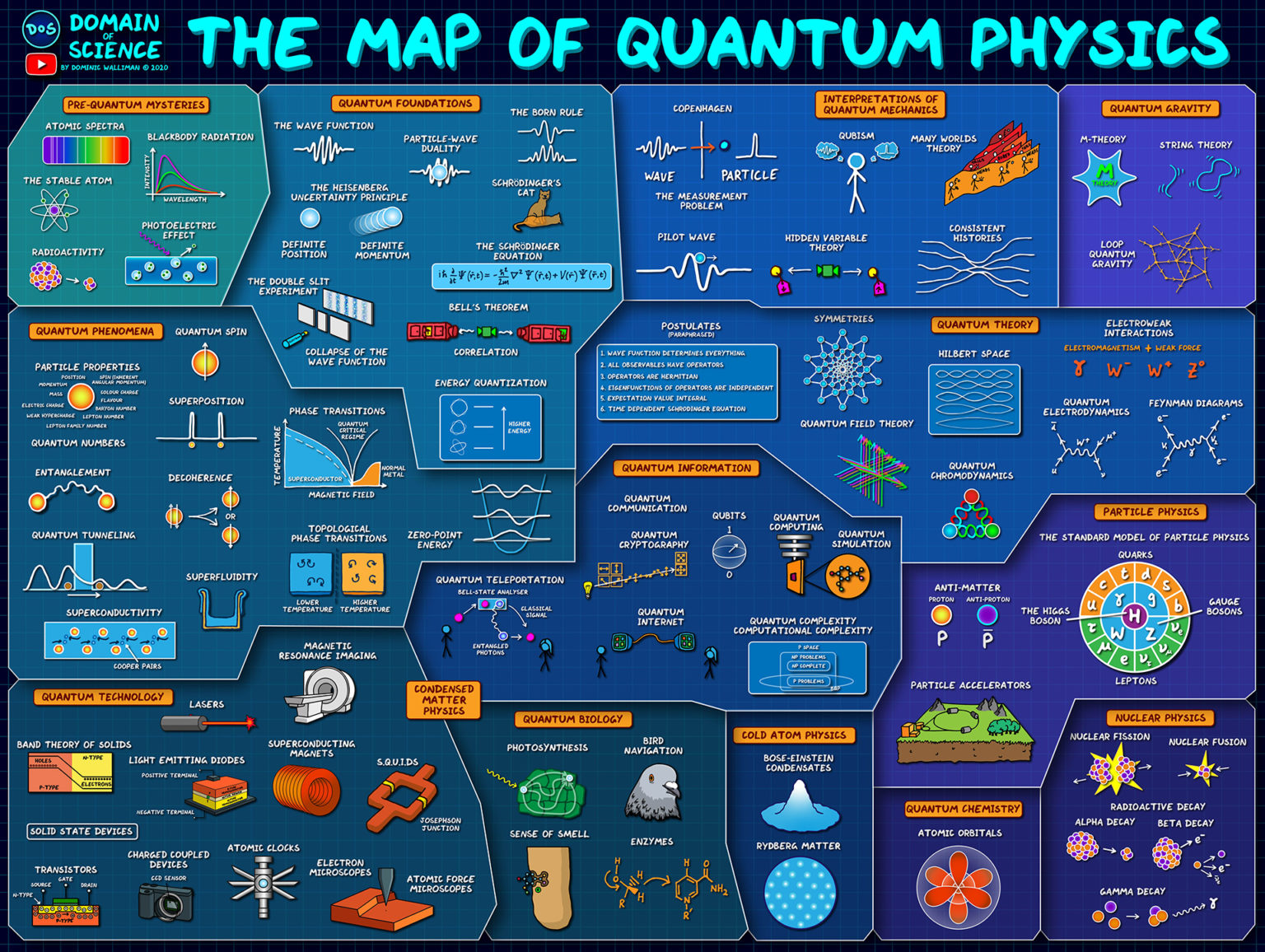
Quantum computing uses the fundamental rules of physics to process complex data in ways that traditional computers cannot. While regular laptops and supercomputers rely on bits that process information sequentially as either zeros or ones, quantum systems operate on principles that defy standard logic. This approach allows researchers to target massive optimization bottlenecks, molecular simulations, and logistical challenges that would otherwise take classical systems thousands of years to crack.
Understanding how this technology works requires looking past the hype. It isn't just a faster version of your home PC. It's an entirely different mathematical model designed for specific, highly complicated tasks.
How Quantum Computers Work
Traditional computers think in a straight line. They evaluate one scenario, store the result, and move to the next. Quantum computers evaluate multiple possibilities simultaneously through unique mechanical principles.
The core building blocks of this technology are quantum bits, or qubits. Unlike standard bits, qubits can exist in a state of superposition. This means a qubit can represent a zero, a one, or any proportion of both at the same time. When you link multiple qubits together, they create a multi-dimensional space capable of representing vast combinations of data instantly.
Another key principle is entanglement. When qubits become entangled, the state of one instantly dictates the state of another, no matter the physical distance between them. This correlation allows the system to process massive amounts of interconnected variables collectively rather than testing them one by one. Finally, quantum interference amplifies the correct mathematical paths while canceling out incorrect outcomes, guiding the system toward the optimal answer.
The World's Toughest Problems It Aims to Solve
Not every problem benefits from a quantum approach. Standard tasks like browsing the web, running spreadsheets, or writing emails run best on classical hardware. Quantum systems excel where variables multiply exponentially.
Molecular Simulation and Drug Discovery
Simulating molecular structures on a classical computer is painfully slow because every atom interacts with every other atom in complex ways. Traditional systems must approximate these interactions, leading to errors or years of trial-and-error laboratory testing.
Quantum computers mimic molecular behavior directly. Because quantum mechanics governs both the computer's qubits and the molecules themselves, the system can model complex proteins and chemical reactions natively. This capability could dramatically shorten the timeline for discovering life-saving medicines and designing new industrial catalysts.
Logistics and Supply Chain Optimization
Global supply chains involve thousands of moving parts, changing traffic patterns, weather disruptions, and variable fuel costs. Finding the single most efficient route or warehouse placement is a combinatorial nightmare for classical logistics software.
Quantum algorithms can map out multiple routing and distribution permutations simultaneously. Instead of crunching routes sequentially, the system narrows down the optimal parameters nearly instantly, saving billions in operational waste.
Financial Modeling and Risk Analysis
Financial markets are driven by millions of unpredictable variables. Portfolio optimization, risk assessment, and fraud detection require predicting how countless market factors interact over time. Quantum algorithms process these wide-ranging risk profiles concurrently, giving financial institutions tools to hedge against market crashes with higher accuracy than current predictive models allow.
Current Hardware and Engineering Hurdles
The transition from theoretical physics to practical utility faces steep physical obstacles. Qubits are fragile. Environmental noise, microscopic temperature fluctuations, and stray electromagnetic fields cause decoherence, which corrupts data and ruins calculations.
Maintaining a stable quantum state requires specialized cryogenic chambers that cool processors to fractions of a degree above absolute zero. Wiring thousands of control lines into these ultra-cold environments without generating heat is an ongoing engineering challenge.
Furthermore, error rates in current physical qubits are high. Building a truly useful, fault-tolerant quantum computer requires error-correction protocols that demand hundreds or thousands of physical qubits just to support a single reliable logical qubit. This creates a massive scaling hurdle that top technology firms and research labs are working to overcome.
Frequently Asked Questions
Will a quantum computer replace my personal laptop?
No. Quantum computers require extreme cooling systems and specialized programming. They are built for massive, multi-variable calculations, not everyday desktop applications. Your laptop will remain the ideal tool for standard software and browsing.
How do researchers program a quantum computer?
Programming quantum hardware requires specialized frameworks like Qiskit or Cirq. Developers must write algorithms that account for superposition, entanglement, and probability rather than traditional deterministic code paths.
When will quantum computers solve everyday industrial problems?
While small-scale quantum systems exist today, practical, fault-tolerant machines capable of solving industry-defining problems are still in development. Most experts expect a hybrid future where quantum coprocessors work alongside classical supercomputers to handle specific workloads.
Does quantum computing break current internet security?
Certain quantum algorithms, such as Shor's algorithm, have the mathematical potential to crack widely used encryption methods like RSA. This threat has driven the cybersecurity industry to develop post-quantum cryptography standards to secure data against future quantum decryption.



