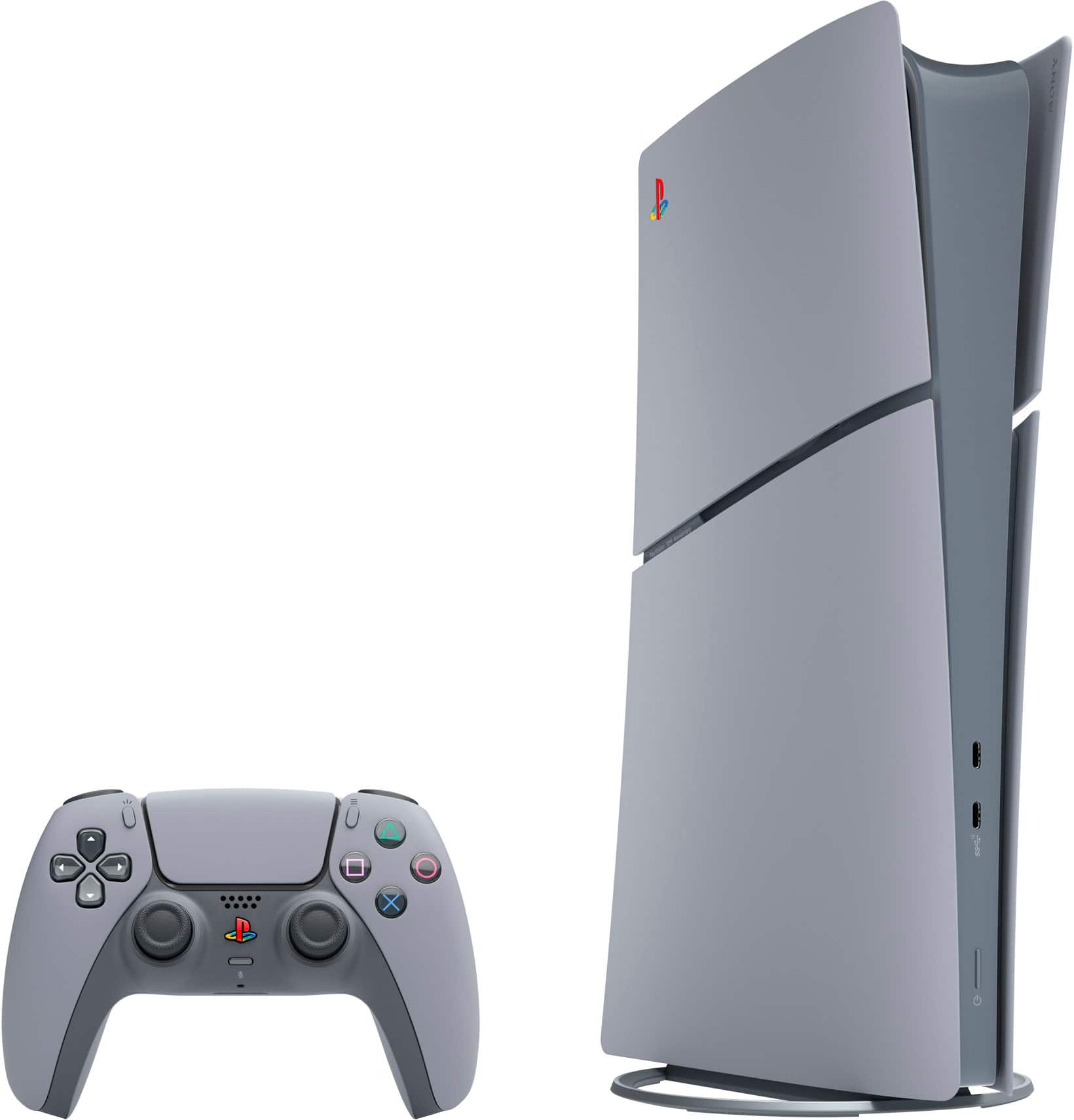
The base PS5 release date landed on November 12, 2020, across North America, Australia, New Zealand, Japan, Singapore, and South Korea, followed by a worldwide rollout on November 19, 2020. Sony launched the flagship machine in two distinct variations: a standard model featuring an Ultra HD Blu-ray disc drive priced at $499.99, and a Digital Edition lacking the disc drive priced at $399.99.
Understanding the full timeline of Sony's hardware iterations helps clarify how the console family evolved past its initial launch. Over the years, the hardware lineup expanded to include redesigned form factors and heavy-duty performance mid-gen refreshes. This overview breaks down the exact launch dates, model variations, hardware specifications, and long-term impact of Sony's ninth-generation console ecosystem.
The Original 2020 Launch Timeline
Sony rolled out the original PlayStation 5 during an unusually complicated global climate marked by supply chain bottlenecks. Pre-orders went live abruptly in September 2020 following a major showcase event, leading to widespread stock shortages that lasted for well over a year.
The launch hardware introduced several generational leaps over the PlayStation 4:
- Custom eight-core AMD Zen 2 CPU paired with custom RDNA 2 graphics architecture.
- High-speed custom solid state drive architecture designed to eliminate traditional loading screens.
- The DualSense wireless controller, featuring adaptive triggers and advanced haptic feedback.
- Broad backwards compatibility supporting roughly 99 percent of the PS4 software library.
Despite initial scarcity, the console established a massive user base. It anchored Sony's hardware strategy for years before physical revisions streamlined manufacturing and lowered production costs.
Transition to the PS5 Slim
Three years after the initial rollout, Sony introduced a revised hardware model commonly referred to as the PS5 Slim, which launched globally in November 2023. This redesign aimed to reduce the physical footprint of the original oversized hardware while maintaining identical processing power.
Key differences in the Slim model include:
- A volume reduction of more than 30 percent compared to the original launch hardware.
- A detachable Ultra HD Blu-ray disc drive option for the Digital Edition, allowing buyers to add physical media support later.
- An upgraded internal solid-state drive capacity, bumped from the original 825GB to a full 1TB.
- Dual side-panel covers with a split matte and gloss finish.
This revision gradually replaced the launch-day inventory on retail shelves worldwide, becoming the standard baseline purchase for new players entering the ecosystem.
The Arrival of the PS5 Pro
To cater to enthusiasts demanding higher frame rates and ray-tracing fidelity without sacrificing performance modes, Sony launched the PS5 Pro on November 7, 2024, at a retail price of $699.99.
The Pro variant targeted specific hardware bottlenecks from the base console:
- An upgraded graphics processor boasting significantly more compute units and faster memory rendering.
- Advanced AI-driven upscaling technology (PlayStation Spectral Super Resolution) to maintain crisp 4K visuals at high frame rates.
- Expanded internal storage featuring a 2TB solid-state drive out of the box.
- Wi-Fi 7 support for faster wireless downloads and lower latency.
While the high price point drew scrutiny from casual buyers, the Pro model catered directly to high-end display owners looking for uncompromising graphical performance. You can check out official details and technical breakdowns directly on the PlayStation Official Site.
Common Misconceptions About Console Generations
Navigating hardware releases often brings confusion regarding software compatibility and generational leaps. Several common myths persist among buyers:
- Myth: Newer hardware models play entirely exclusive games that won't run on base units. Reality: Mid-gen refreshes like the Pro play the exact same software catalog, though patches often unlock higher resolutions or smoother frame rates.
- Myth: Digital editions prevent you from ever accessing older physical media. Reality: While digital consoles lack internal optical drives, digital purchases tied to your account carry forward seamlessly across hardware variations.
- Myth: Upgrading mid-generation resets your trophy progress or save files. Reality: Cloud saves and account synchronization transfer everything instantly once you log in with your credentials.
Frequently Asked Questions
Are original launch PS5 consoles still being manufactured?
No. Sony phased out production of the original launch-day form factor in favor of the sleeker Slim and Pro manufacturing pipelines.
Do all PS5 models use the same controllers?
Yes. The standard DualSense wireless controller works natively across every version of the console, including the base unit, the Slim, and the Pro.
Can I use my old PS4 external hard drive on a PS5?
Yes. You can plug a compatible USB external storage drive directly into a newer console to store and play backward-compatible PS4 titles instantly.
What is next for the PlayStation brand?
While mid-cycle hardware iterations are complete, industry analysts anticipate future generational leaps toward a potential PS6 hardware cycle later in the decade. For broader tech industry news and hardware trends, check out reports from The Verge.



