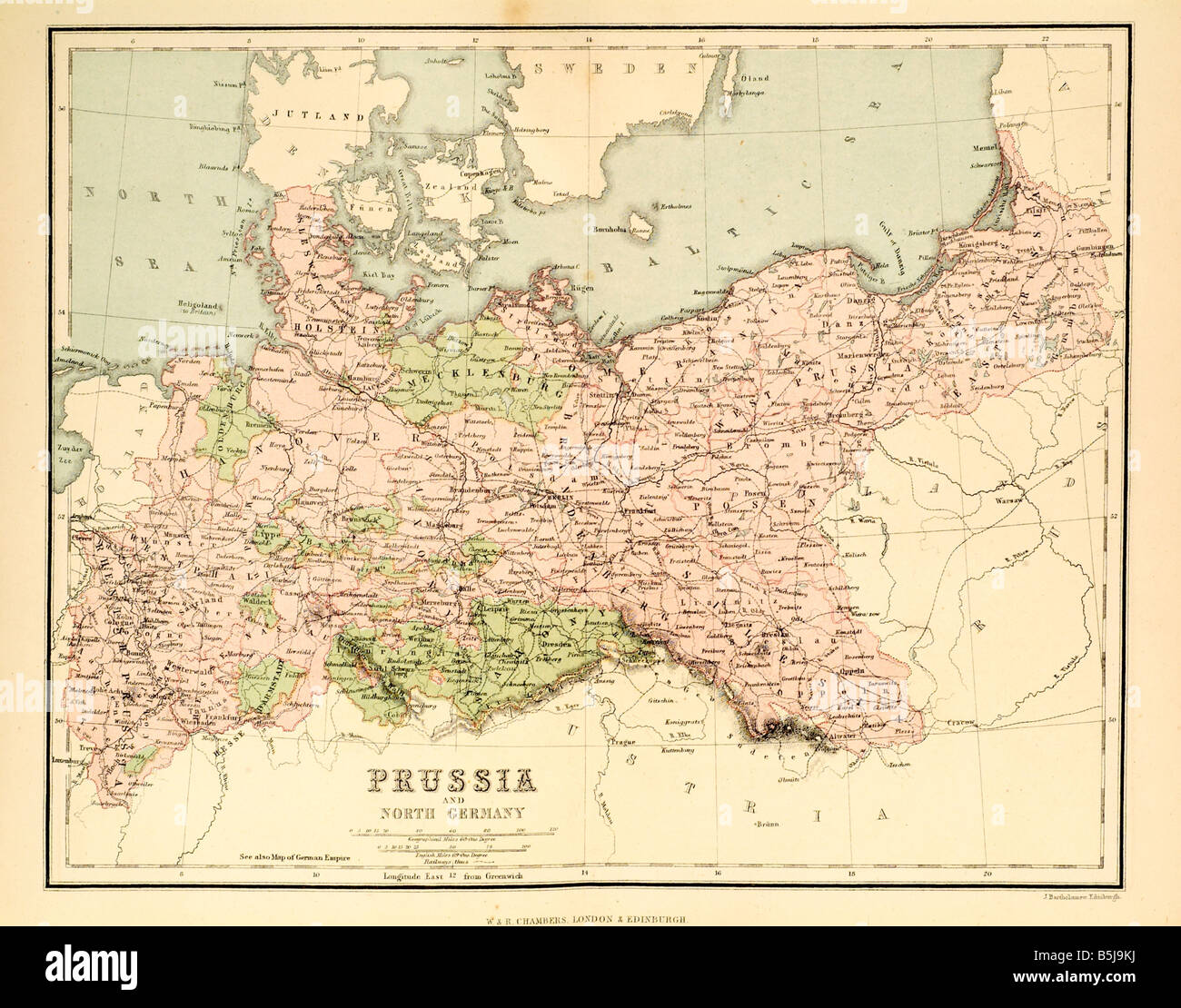
The friction between the Kingdom of Prussia and the Russian Empire defined the geopolitical balance of eighteenth-century Europe. When these two rising powers collided, it wasn't just a border skirmish; it was a fundamental test of two contrasting state models. On one side stood Prussia, a hyper-disciplined militarized state often described as an army with a country. On the other stood Russia, a sprawling autocracy driven by an unstoppable impulse for territorial expansion and westernization. Their inevitable clash during the Seven Years' War nearly wiped Prussia off the map and set the stage for modern European diplomacy.
Understanding this rivalry requires looking beyond simple territorial disputes. Prussia, under Frederick the Great, needed to secure its borders against larger coalitions, while Russia sought hegemony in Eastern and Central Europe. Their strategic doctrines, economic limitations, and command structures dictated how they fought. When their armies met on brutal mid-century battlefields like Gross-Jägersdorf and Kunersdorf, the resulting attrition altered European politics permanently.
The Rise of Two Rival Powerhouses
Before they clashed, both nations underwent radical internal transformations that turned them into formidable military states.
Prussia's Military Transformation
Prussia's transformation began in earnest under King Frederick William I, known as the Soldier King. He centralized taxation, built an ultra-efficient bureaucracy, and poured state revenues into creating one of the most disciplined standing armies in Europe.
- The Canton System: Prussia instituted a localized conscription method that drafted native subjects while maintaining a core of foreign mercenaries.
- Drill and Discipline: The Prussian infantry became famous for its rapid firing rates and rigid line formations, achieved through relentless drilling.
- Strategic Vulnerability: Despite its military excellence, Prussia was geographically hemmed in, lacking natural borders and possessing a fraction of Russia's manpower.
Russia's Western Expansion
Russia's trajectory shifted dramatically under Peter the Great and later Empress Elizabeth. Peter modernized the Russian military, built a formidable navy, and shifted the capital to St. Petersburg to anchor the nation firmly in European affairs.
- Endless Manpower: Unlike Prussia, Russia possessed a vast peasant population that allowed it to absorb staggering casualties and keep fielding new armies.
- Imperial Ambitions: Russia aimed to push its western frontier deep into Poland and the Baltic region, putting it on a direct collision course with Prussian expansion.
- Logistical Hurdles: Russia suffered from vast distances, poor internal infrastructure, and sluggish supply lines that often delayed campaigns.
The Crucible: The Seven Years' War
The rivalry peaked during the Seven Years' War (1756–1763), where Prussia found itself encircled by an alliance of France, Austria, and Russia. For Frederick the Great, Russia represented an existential threat. If Russian armies linked up permanently with Austrian forces, the Prussian state would disintegrate.
The clashes were extraordinarily bloody. At the Battle of Kunersdorf in 1759, a combined Russian and Austrian force inflicted a catastrophic defeat on Frederick, who briefly contemplated suicide as his kingdom collapsed around him. The Russian army even occupied Berlin briefly in 1760. Prussia survived not through superior strength alone, but through brilliant operational maneuvering, interior lines of defense, and sheer stubbornness.
The Miracle of the House of Brandenburg
Prussia was ultimately saved by a geopolitical stroke of luck known as the Miracle of the House of Brandenburg. In 1762, Empress Elizabeth of Russia died. Her successor, Tsar Peter III, was an ardent admirer of Frederick the Great. Peter immediately pulled Russia out of the war, signed a peace treaty, and even allied with Prussia. While Peter was soon overthrown by his wife, who became Catherine the Great, Russia did not rejoin the anti-Prussian coalition, leaving the continent at a strategic stalemate.
Strategic Doctrines Compared
To understand why these empires fought the way they did, we can contrast their core military tenets:
- Prussian Strategy: Focused on the Blitzkrieg of the eighteenth century—striking fast, using interior lines to defeat enemies sequentially, and relying on tactical precision to overcome numerical inferiority.
- Russian Strategy: Focused on strategic depth, relentless attrition, and overwhelming mass. If an army was beaten, Russia could retreat into its vast interior, regroup, and advance again with fresh reserves.
Common Historical Misconceptions
Many casual observers misunderstand the dynamics of this era. Here are a few mistakes to avoid when studying the conflict:
- Assuming Prussia won alone: Prussia survived largely due to British financial subsidies and sudden political changes in St. Petersburg, not purely through its own economic might.
- Viewing Russia as technologically backward: While Russian logistics were frequently disorganized, their artillery and infantry equipment were often on par with—or superior to—their Western counterparts.
- Treating the conflict as a simple border war: This was an ideological and structural struggle over who would control the balance of power in Central Europe.
Frequently Asked Questions
Why did Russia and Prussia become enemies?
They became enemies because their territorial ambitions overlapped directly in Eastern Europe and Poland. As Prussia expanded its borders, it blocked Russia's westward push toward European integration and dominance.
How did Frederick the Great survive the Russian numerical advantage?
Frederick utilized interior lines of communication, allowing him to move his smaller, highly mobile army faster than his opponents could coordinate their massive forces.
What was the ultimate outcome of their rivalry?
While they fought bitterly in the eighteenth century, the rise of Napoleon later forced them into uneasy alliances. Later, both states participated in the partitions of Poland, reshaping the map of Europe together.
Did Russia ever permanently conquer Prussia?
No. Although Russian troops successfully occupied Berlin during the Seven Years' War, political shifts prevented any permanent annexation of the Prussian core territories.
For a deeper dive into European military structures of this period, you can explore the historical overviews provided by Britannica. Additional details on campaign strategies are archived at the Library of Congress.


