Protein synthesis takes place primarily across two distinct cellular compartments: the nucleus and the cytoplasm. The journey begins inside the nucleus where DNA is transcribed into messenger RNA, and finishes in the cytoplasm where ribosomes translate that message into a functional chain of amino acids.
Understanding this dual-location process clarifies how genetic code transforms into the structural and functional machinery of life. While many casual summaries point solely to ribosomes, cellular location changes depending on whether the protein stays inside the cell or gets exported elsewhere.
The Nucleus: Where Transcription Begins
Before any protein can be built, the cell must access its master instruction manual: DNA. Because DNA is too large and chemically precious to leave the safety of the nucleus, the cell creates a portable working copy. This first phase is called transcription.
Inside the nucleus, enzymes unzip a specific section of DNA and synthesize a single-stranded messenger RNA molecule. This mRNA acts as a molecular dispatch note, carrying the precise genetic sequence needed to build a specific protein.
- Chromatin remodeling: Enzymes relax the tightly wound DNA so transcription proteins can access the target gene.
- RNA processing: The raw mRNA transcript undergoes splicing, where non-coding segments are removed and protective caps are added before it exits through nuclear pores.
Once processed, the mRNA leaves the nucleus and enters the cytoplasm, heading straight toward the cellular factories responsible for assembly.
The Cytoplasm and Ribosomes: Where Translation Occurs
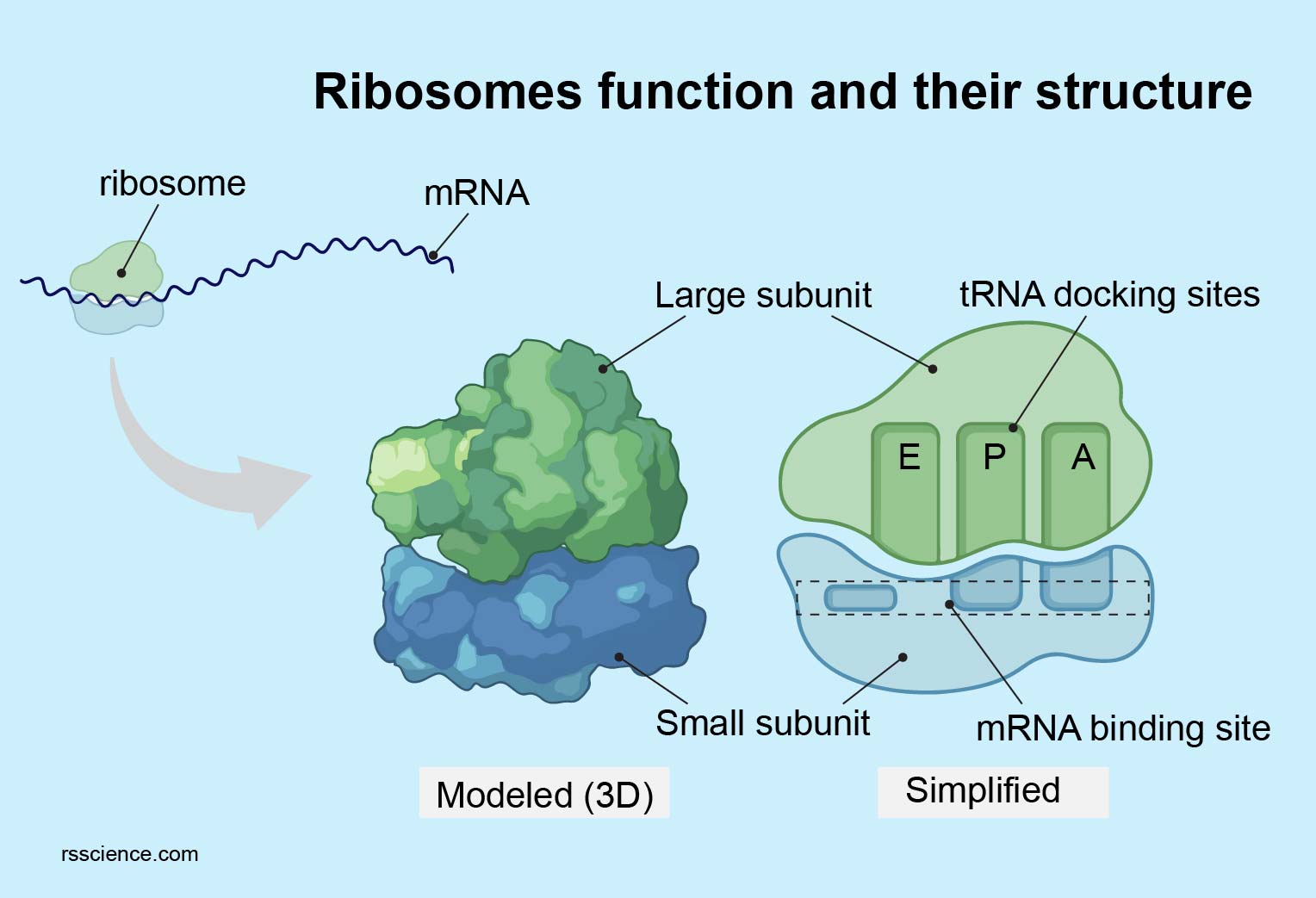
When people ask where protein synthesis happens, they usually mean translation—the actual conversion of nucleic acid language into amino acids. This happens in the cytoplasm at molecular complexes called ribosomes.
Ribosomes consist of two subunits made of ribosomal RNA and proteins. They clamp onto the incoming mRNA strand, read the genetic code in triplets called codons, and recruit transfer RNA molecules carrying matching amino acids.
Depending on the cell's immediate needs, ribosomes operate in two distinct cellular zones:
- Free ribosomes: Floating loosely in the cytosol, these ribosomes synthesize proteins destined to function within the cell's internal fluid, such as enzymes driving glycolysis.
- Bound ribosomes: Attached to the outer membrane of the rough endoplasmic reticulum, these ribosomes build proteins targeted for export, cell membranes, or lysosomes.
As the ribosome moves along the mRNA strand, peptide bonds form between adjacent amino acids, lengthening the polypeptide chain until a stop codon signals completion.
The Endoplasmic Reticulum and Golgi Apparatus: Folding and Shipping
For proteins synthesized by bound ribosomes, the journey doesn't end in the cytoplasm. As the polypeptide chain emerges from the ribosome, it threads directly into the lumen of the rough endoplasmic reticulum.
Inside the endoplasmic reticulum, the linear chain folds into its complex three-dimensional shape. Molecular chaperones assist in proper folding to prevent misfolded structures that could cause cellular dysfunction.
- Glycosylation: Sugars are often attached to the protein backbone inside the endoplasmic reticulum.
- Vesicle transport: The folded protein is packaged into a small membrane bubble called a transport vesicle.
- Golgi processing: Vesicles fuse with the Golgi apparatus, where proteins undergo final chemical modifications and sorting before being dispatched to their final destinations.
Spatial Differences in Eukaryotes Versus Prokaryotes
Where protein synthesis takes place depends heavily on organism type. The compartmentalized process described above applies strictly to eukaryotes (plants, animals, fungi), which possess a true membrane-bound nucleus.
In prokaryotes like bacteria, the process is streamlined. Because bacteria lack a nucleus, transcription and translation happen simultaneously in the cytoplasm. As soon as an mRNA strand begins transcription from DNA, ribosomes attach to the exposed end and start translating. This lack of physical separation allows bacteria to adapt and produce proteins much faster than eukaryotic cells.
Common Misconceptions About Protein Synthesis Locations
Many introductory science resources oversimplify cellular mechanics, leading to persistent misunderstandings. Recognizing these errors helps paint an accurate picture of cellular biology.
- "Proteins are made only in the nucleus." The nucleus only houses DNA and handles transcription; actual protein assembly occurs exclusively outside the nucleus.
- "All ribosomes are permanently attached to the endoplasmic reticulum." Ribosomes move fluidly between a free state in the cytosol and a bound state on membranes depending on the specific protein being coded.
- "Mitochondria don't participate." Mitochondria and chloroplasts contain their own distinct DNA and specialized ribosomes, executing localized protein synthesis independently to support cellular respiration.
Frequently Asked Questions
Does protein synthesis happen in red blood cells?
Mature mammalian red blood cells lack a nucleus and ribosomes, meaning they cannot synthesize new proteins. They rely entirely on the proteins produced by precursor cells before they matured.
Can ribosomes move between the cytoplasm and the endoplasmic reticulum?
Yes. Ribosomal subunits assemble in the nucleolus, migrate to the cytoplasm, and can attach to or detach from the endoplasmic reticulum based on the specific signal sequence of the mRNA they happen to bind.
What happens to mRNA after protein synthesis?
Once translation is complete, messenger RNA molecules are degraded by cellular enzymes called ribonucleases. This prevents the cell from overproducing specific proteins and allows nucleotide components to be recycled.
Why do some proteins require the Golgi apparatus while others do not?
Proteins synthesized by free ribosomes stay inside the cytoplasm or nucleus and rarely need complex modifications. Proteins meant for secretion, cell membranes, or acidic compartments like lysosomes require structural tagging provided by the Golgi apparatus.