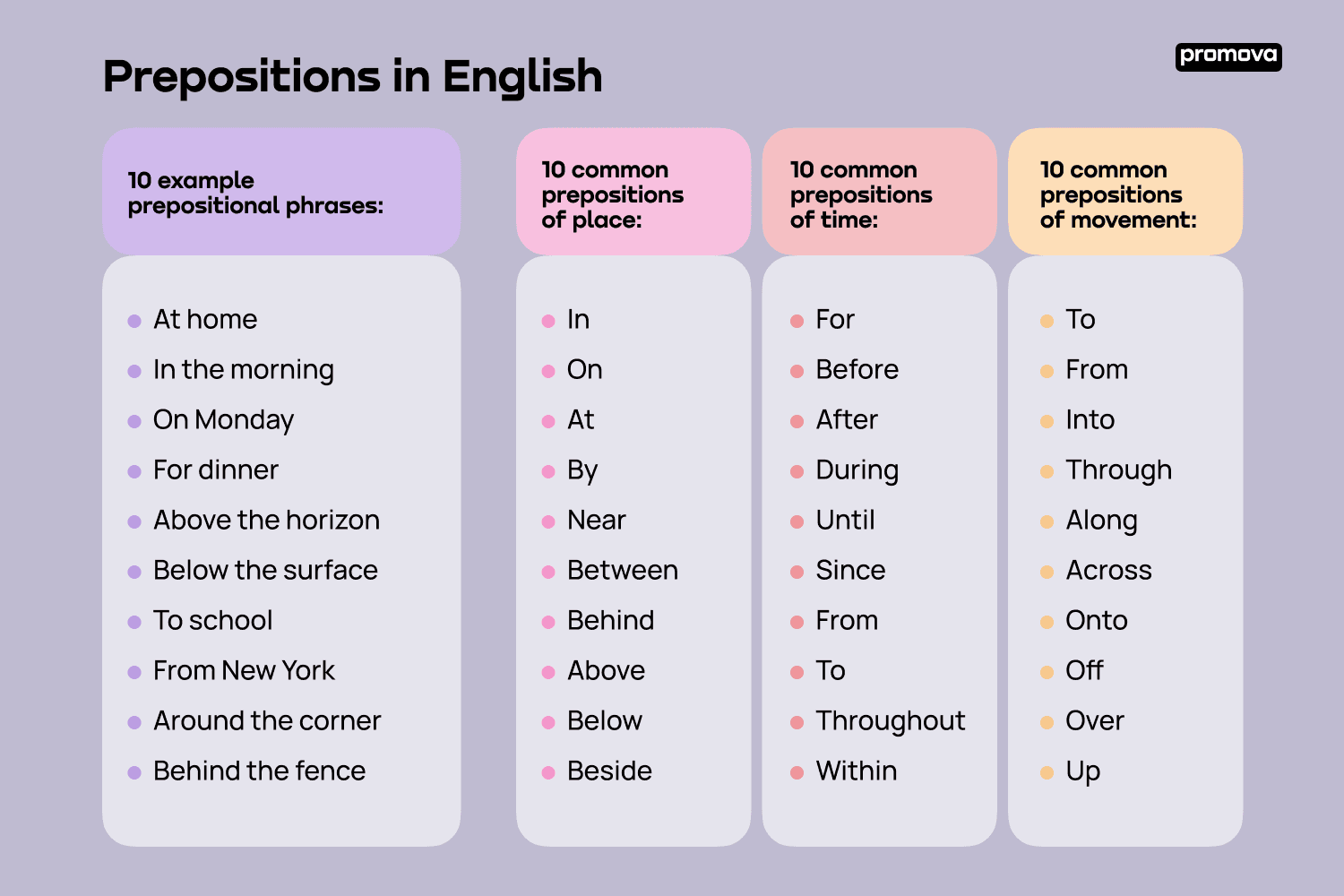
A simple word like "on," "at," or "by" can completely change the direction of a sentence. Prepositions anchor nouns and pronouns to other words, establishing relationships of time, place, and direction. Without them, language breaks down into a collection of isolated concepts. While grammar instruction often reduces them to a simple list of position words, their actual function within syntax runs much deeper.
Understanding how prepositions operate requires looking past standard textbook definitions. They don't just tell you where an object is located; they build logical connections that let writers express complex spatial, temporal, and abstract ideas efficiently.
Defining the Preposition
At its core, a preposition is a word that shows the relationship between a noun (or pronoun) and other words in a sentence. This relationship usually involves space, time, or direction. The word or phrase that follows the preposition is called its object. For instance, in the phrase "under the bridge," "under" is the preposition and "bridge" is its object. Together, they form a prepositional phrase.
Unlike nouns or verbs, prepositions belong to a closed class of words. You don't regularly invent new prepositions the way you invent new nouns or verbs. Instead, the English language relies on a fixed set of primary prepositions, supplemented by compound terms and phrasal variations. They act as the structural mortar holding sentences together, directing how modifiers and objects interact with the main clause.
Objects of Prepositions
Every standard preposition requires an object to complete its function. This object is almost always a noun, pronoun, or gerund.
- Noun objects: She walked through the door.
- Pronoun objects: He handed the parcel to me.
- Gerund objects: They succeeded by working late.
When pronouns serve as the object of a preposition, they take the objective case—such as me, him, her, us, and them. Mixing this up leads to common errors, like saying "between you and I" instead of "between you and me."
Core Categories of Prepositions
Prepositions divide neatly into functional categories based on the relationship they establish. Recognizing these categories helps clarify why a specific word belongs in a specific spot.
Prepositions of Place and Position
These words describe where something is located relative to something else. They anchor subjects in physical space.
- At: Used for specific points or exact locations. (e.g., at the bus stop, at the door)
- In: Used for enclosed spaces, containers, or large areas like cities and countries. (e.g., in the box, in Paris)
- On: Used for surfaces or specific lines. (e.g., on the table, on the wall)
Subtleties matter here. You live in a city, but you live at a specific address. You sit on a chair with a hard seat, but in an armchair that wraps around you.
Prepositions of Time
Time prepositions dictate when an event occurs, helping sequence narratives and schedules.
- At: Used for precise times. (e.g., at 5:00 PM, at midnight)
- On: Used for days and dates. (e.g., on Monday, on July 4th)
- In: Used for longer periods like months, years, centuries, or seasons. (e.g., in October, in 2024, in winter)
These rules become second nature with practice, but non-native speakers often stumble because different languages map time zones and calendars onto different prepositional frameworks.
Prepositions of Direction and Movement
When motion is involved, directional prepositions show where an object is heading.
- To: Indicates movement toward a destination. (e.g., driving to work)
- Toward / Towards: Indicates movement in the general direction of something without necessarily reaching it. (e.g., walking toward the light)
- Through: Indicates movement from one side of an enclosed space to the other. (e.g., tunneling through the mountain)
- Across: Indicates movement from one side to another of a flat, two-dimensional surface. (e.g., swimming across the river)
Simple versus Complex Prepositions
Not all prepositions are single, short words. English features distinct structural types that have evolved over centuries.
Simple Prepositions
Simple prepositions consist of a single word. Most of them are short, foundational terms inherited from Old English. Examples include in, on, at, by, for, from, out, over, through, till, to, under, up, and with. They appear constantly in everyday speech and writing.
Compound Prepositions
Compound prepositions are typically formed by prefixing a preposition to a noun, adjective, or adverb. Words like about (from on + by + out), among, across, around, before, and behind fall into this category. They function identically to simple prepositions but carry slightly more historical weight in their morphology.
Phrasal Prepositions
Phrasal prepositions consist of two or more words—usually a combination of an adverb, adjective, or noun flanked by simple prepositions—that function as a single unit.
- in spite of
- by means of
- in front of
- according to
- prior to
Using phrasal prepositions adds formality and precision to writing. For example, writing "according to the data" is more precise than simply saying "as the data says." However, overusing them can bloat your sentences. Lean prose usually favors simple, direct prepositions whenever possible.
Syntax and Sentence Structure
Prepositions do heavy lifting in syntax, often dictating the rhythm of a sentence. Their placement creates predictable patterns that readers rely on to parse meaning quickly.
Prepositional Phrases as Modifiers
A prepositional phrase acts as an adjectival or adverbial modifier. When it modifies a noun, it answers questions like Which one? or What kind of?
- The book on the top shelf belongs to me. (Adjectival: modifies book)
When it modifies a verb, adjective, or adverb, it answers questions like Where?, When?, or How?
- She completed the assignment with exceptional speed. (Adverbial: modifies completed)
Preposition Stranding
For centuries, prescriptive grammarians warned against ending a sentence with a preposition. Winston Churchill famously mocked this rigid rule by saying, "This is the sort of arrant pedantry up with which I will not put."
In modern English, preposition stranding—leaving the preposition at the end of a clause or sentence—is entirely natural and grammatically sound.
- Formal: To whom are you speaking?
- Natural: Who are you speaking to?
While formal academic writing often prefers keeping the preposition attached to its relative pronoun, everyday speech and modern journalism frequently strand prepositions to maintain a conversational, direct tone.
Common Pitfalls and Usage Errors
Even experienced writers occasionally trip over prepositional rules. Small errors here can completely alter the meaning of a sentence or mark the writing as awkward.
Redundant Prepositions
Writers often crowd their sentences with unnecessary prepositions. Phrases like "revert back," "where are you at," or "meet up with" contain built-in redundancies. If you are reverting, you are already going back; "back" is unnecessary. Keep your writing lean by cutting trailing prepositions that add zero semantic value.
Confusing Similar Prepositions
Certain verbs demand specific prepositions, and mixing them up changes the outcome.
- Angry with a person versus angry at a situation.
- Different from is standard in American and British English, though different than appears frequently in casual US speech.
- Compliment (praise) versus complement (something that completes or brings to perfection). While these are not prepositions themselves, their usage governs how prepositions like with attach to them.
Misplaced Modifiers
Because prepositional phrases modify the nearest noun or verb, placing them too far from their target leads to confusing ambiguity.
- Ambiguous: The chef served the steak to the hungry customer with a sharp knife. (Did the customer have the knife, or the chef?)
- Clear: With a sharp knife, the chef served the steak to the hungry customer.
Frequently Asked Questions
Can a sentence end with a preposition?
Yes. Preposition stranding is a normal, accepted part of English syntax. While rigid formal writing sometimes avoids it to sound more elevated, ending a sentence with a preposition sounds natural in standard conversation and modern prose.
What is the difference between a preposition and an adverb?
Many words—like up, down, before, and after—can function as either prepositions or adverbs. The difference lies in whether they have an object. If the word is followed by a noun or pronoun that it relates to the rest of the sentence, it is a preposition. If it modifies a verb directly without an object, it is an adverb. For example, in "Please walk inside," the word is an adverb. In "Please walk inside the building," it is a preposition.
How do I choose between "in," "on," and "at" for time?
Use "at" for precise clock times and specific milestones (at noon, at 4:30). Use "on" for specific days, dates, and weekends in American English (on Tuesday, on October 5th). Use "in" for extended periods like months, years, decades, seasons, and general parts of the day (in July, in 1995, in the morning).
Are phrasal verbs the same as prepositions?
No. Phrasal verbs combine a verb with an adverb or preposition (called a particle) to create an entirely new meaning, such as "give up" or "look after." While they contain preposition-like words, their structural behavior is completely different from standalone prepositions showing spatial or temporal relationships. You can learn more about structural word classes through resources like The Linguistic Society of America.



