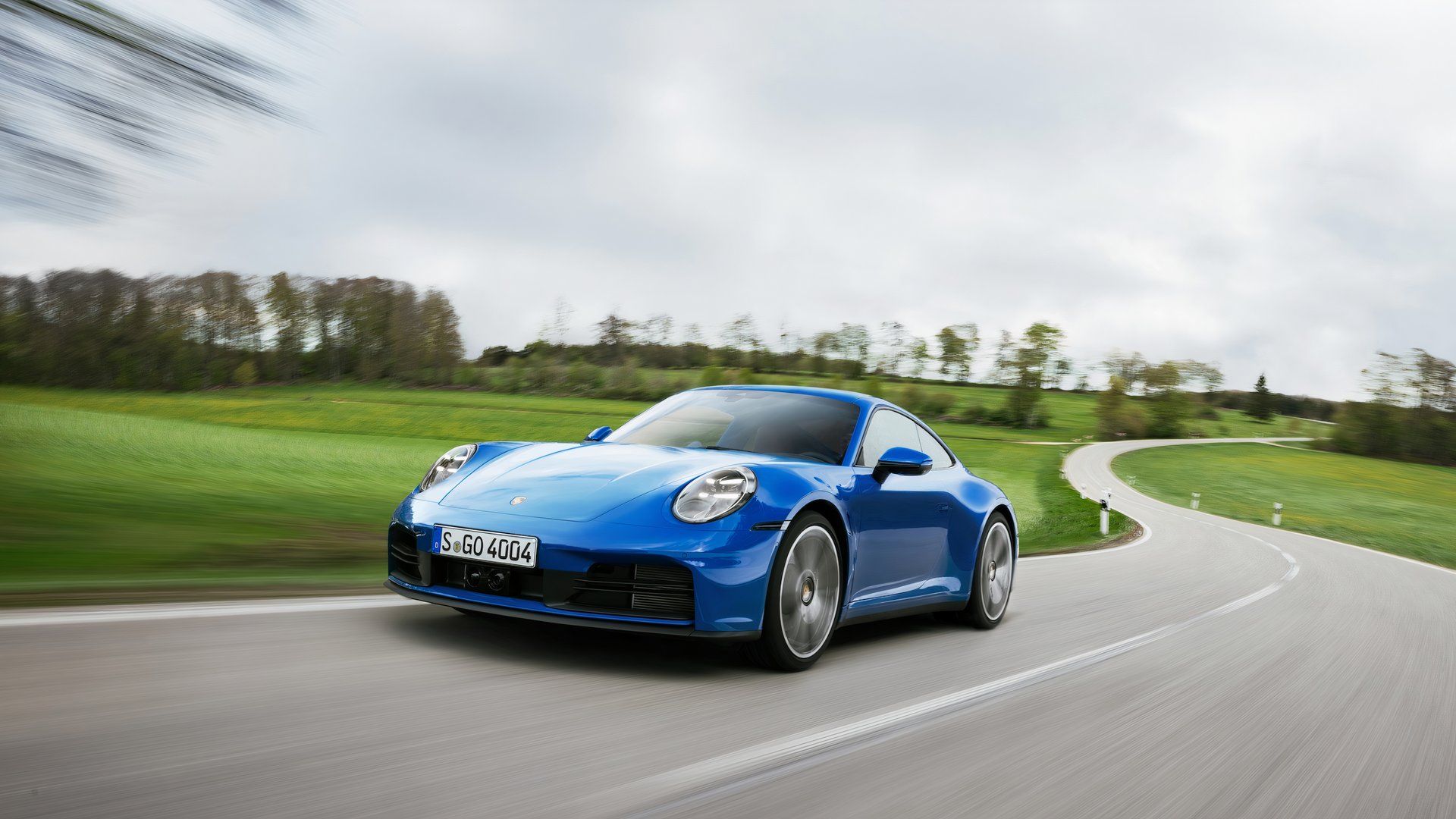
The Porsche 911 stands alone in automotive history. For over six decades, its core formula has remained fundamentally unchanged: a rear-mounted flat-six engine, a fastback silhouette, and daily-drivable usability. While rivals abandoned their layouts, Porsche refined its icon model by model. Understanding this lineage means looking past badge names to see how strict engineering evolution built a legend.
This piece breaks down the definitive Porsche 911 generations, tracking how power plants, chassis technology, and design language shifted from 1964 to the modern era.
The Air-Cooled Foundation (1964–1998)
The early decades established the 911's mechanical identity. Every car from this era relied on air-cooled boxer engines and lightweight architectures, creating a raw driving experience that modern sports cars rarely replicate.
Original 901 and Early F-Series (1964–1973)
Debuting at the 1963 Frankfurt Motor Show (originally named the 901 before Peugeot trademark issues forced a rename), the first 911 used a 2.0-liter air-cooled flat-six engine making 130 horsepower. Designed by Ferdinand "Butzi" Porsche, the car paired a compact 2+2 layout with rear-engine dynamics.
The introduction of the 911 S in 1966 brought Fuchs alloy wheels and 158 horsepower. By 1973, Porsche built the legendary Carrera RS 2.7. Equipped with a 2.100 cc engine punched out to 2.7 liters, a "ducktail" spoiler, and thinner steel panels, it weighed just 1,075 kg and became an instant homologation icon.
The G-Series and the Birth of the Turbo (1974–1989)
To meet strict US bumper regulations, the G-Series introduced impact bumpers. More importantly, 1974 brought the 911 Turbo (Type 930). Featuring a massive "tea tray" rear spoiler and flared wheel arches, the 930 used a turbocharged 3.0-liter (later 3.3-liter) engine that turned the 911 into a widowmaker.
Alongside the Turbo, the mainstream line transitioned through the 911 SC and the refined 3.2 Carrera, which brought a Getster G50 five-speed manual gearbox late in its run.
The 964 Generation (1989–1994)
Porsche claimed 85 percent of the 964 was new compared to the G-Series. Underneath familiar skin, the car featured coil-spring suspension instead of torsion bars, power steering, ABS, and modern aerodynamics.
Crucially, the 964 launched the Carrera 4, bringing all-wheel drive to a production 911 for optimal wet-weather grip. The limited-run Carrera RS also returned, stripping out sound deadening and rear seats for pure track focus.
The 993 Generation (1994–1998)
Many purists consider the 993 the absolute peak of the air-cooled lineage. Penned with integrated bumpers and wider hips, it introduced an advanced multi-link rear suspension that tamed the snappy oversteer of earlier generations.
The 993 Turbo was the first in the lineup to feature twin turbochargers, smoothing out power delivery while pushing output past 400 horsepower. When production ended in 1998, it marked the final chapter of air-cooled production engines.
The Water-Cooled Era and Modern Evolution (1999–Present)
Stricter emissions and thermal management demands forced Porsche to pivot. Water cooling arrived, transforming the car's reliability and daily usability while expanding the model family.
The 996 Generation (1999–2005)
The 996 broke tradition completely. It ditched air cooling for a water-cooled flat-six and adopted a controversial "fried egg" headlight design shared with the Boxster.
Despite initial purist backlash over its softer styling and early intermediate shaft (IMS) bearing vulnerabilities, the 996 platform laid the groundwork for modern performance. It spawned the first road-legal GT3 in 1999 and the twin-turbocharged, ceramic-braked 996 Turbo, cementing its status as a performance bargain today.
The 997 Generation (2005–2012)
Porsche listened to its critics for the 997, returning to round headlamps and a classic interior layout while keeping water-cooled efficiency. The generation split into two halves: the 997.1 and the 997.2, the latter introducing Direct Fuel Injection (DFI) and the lightning-fast PDK dual-clutch transmission.
This era also exploded with specialized variants, including the track-eating GT3 RS, the turbocharged GT2 RS, and the wide-bodied Carrera GTS.
The 991 Generation (2012–2019)
Built on a longer wheelbase with an aluminum-steel composite chassis, the 991 dropped weight while increasing interior space.
The mid-cycle refresh (991.2) caused an enthusiast uproar by turbocharging the base Carrera and Carrera S models, moving away from naturally aspirated engines for standard trims. However, the track-focused GT3 and GT3 RS retained naturally aspirated high-revving power plants, keeping traditionalists happy.
The 992 Generation (2019–Present)
The current 992 generation features muscular, wider bodywork across all standard models, a digital-analog mixed interior cockpit, and an eight-speed PDK transmission.
With the flagship Turbo S hitting 650 horsepower and sprinting to 60 mph in under 2.7 seconds, the 992 handles daily commutes as easily as it sets blistering lap times at the Nürburgring. Porsche even introduced the 911 Dakar, proving the platform's versatility extends to off-road rallying.
Explore official design heritage and specs directly through Porsche AG and track broader automotive milestones via [Car and Driver](https://www.car and driver.com).
Frequently Asked Questions
Which Porsche 911 generation is considered the best investment?
Air-cooled models—specifically the 993 generation and clean G-Series cars like the 3.2 Carrera—generally hold or appreciate in value best. Limited-run GT models from any generation also command strong collector interest.
When did the Porsche 911 switch to water-cooled engines?
The switch happened with the introduction of the 996 generation in 1999. This design replaced the traditional air-cooled boxer architecture used for the previous 35 years.
What is the difference between a Carrera and a 911 Turbo?
A Carrera is the core sports model, traditionally featuring rear-wheel drive (or all-wheel drive in Carrera 4 variants) and naturally aspirated or twin-turbo setup designed for balanced road use. The Turbo sits at the top of the standard lineup, featuring a wider body, standard all-wheel drive, and massive twin-turbo power.
Are older Porsche 911s reliable for daily driving?
G-Series and 964 models can be driven regularly, but they require diligent maintenance, valve adjustments, and attention to oil leaks. The 993 and later generations offer significantly better modern reliability, though pre-purchase inspections for bore scoring on water-cooled models or rust on older chassis are essential.



