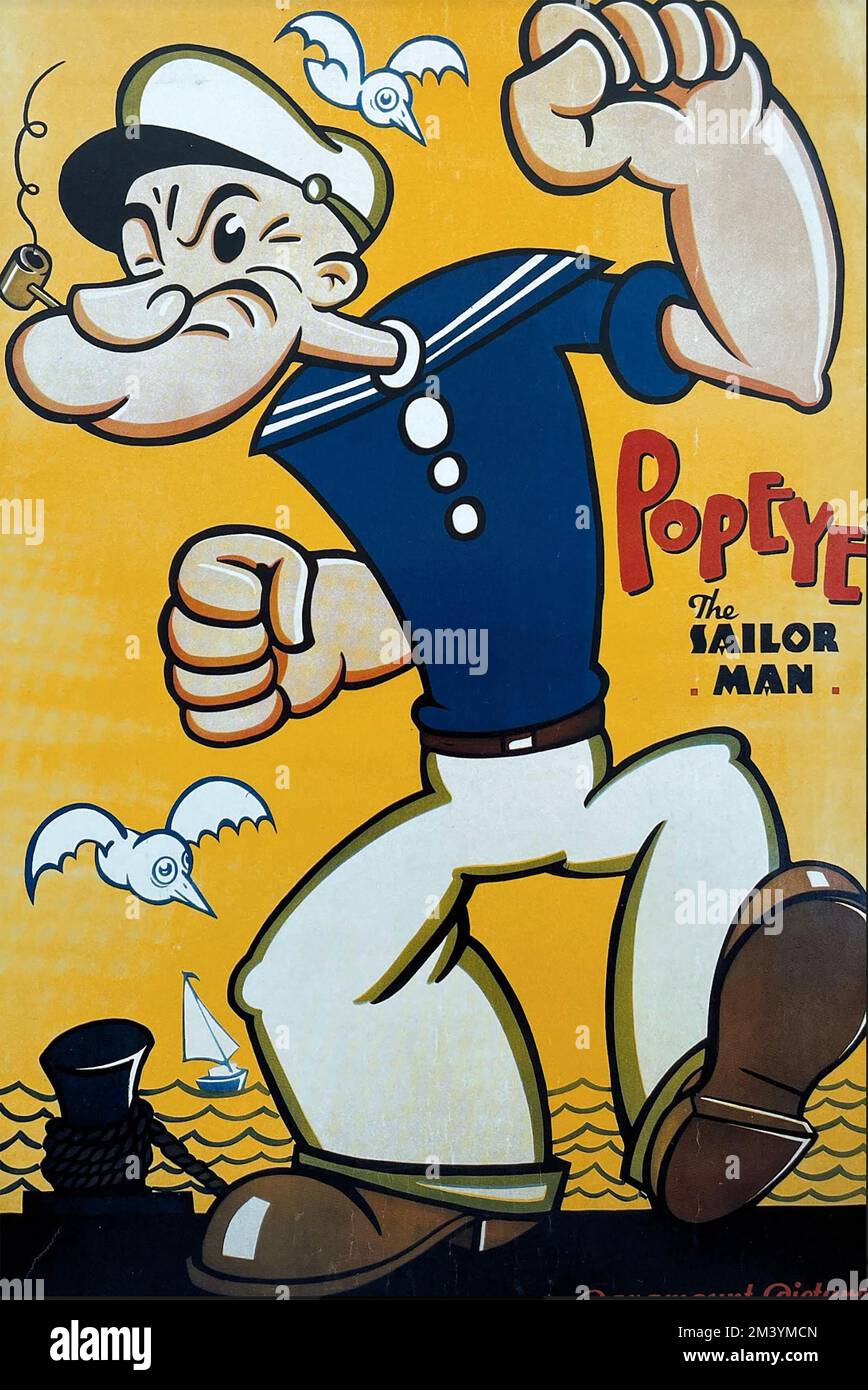
Popeye the Sailor Man didn't start as a cartoon star or a vegetable marketing tool. He crashed into a popular newspaper comic strip five years after it began, completely stealing the spotlight from the original cast. Created by Elzie Crisler Segar, this one-eyed mariner transformed from a minor supporting tough guy into an international symbol of working-class grit, resilience, and anti-authoritarian charm.
The cultural footprint of Popeye extends far beyond old theatrical shorts and canned spinach commercials. He captured the anxieties of the Great Depression, pioneered aggressive commercial merchandising, and established narrative tropes that shaped modern animation. Understanding how a syndicate comic strip built an immortal American icon requires looking past the spinach and examining the brilliant, eccentric world Segar drew every single day.
From Thimble Theatre to a Sailor's Arrival
Before Popeye existed, Elzie Crisler Segar launched Thimble Theatre in 1919 for the King Features Syndicate. The strip originally centered on the quirky romance and sibling squabbles of Castor Oyl and his sister Olive Oyl, alongside their aloof friend Ham Gravy. For nearly a decade, the strip enjoyed modest success as a character-driven domestic comedy, relying on absurd situations rather than physical action.
That formula changed on January 17, 1929. Castor Oyl needed a tough crewman to pilot a ship to Dice Island, so he hired a crusty, squinty-eyed sailor with bulging forearms and a pipe stuck permanently in his mouth. When asked if he was a sailor, the newcomer famously muttered his first lines: "What think ye--th' cow slip over the graveyards?"
Popeye was only supposed to be a one-off character for a specific story arc. But readers fell instantly in love with his unique dialect, unvarnished honesty, and explosive temper. Demand skyrocketed, forcing Segar to bring the sailor back permanently. Within a couple of years, Popeye hijacked the narrative, pushing Castor Oyl to the background and turning Thimble Theatre into the adventures of Popeye and Olive Oyl.
The Recipe for an Anti-Hero
Popeye broke every convention of the traditional comic strip hero. Clean-cut, handsome protagonists dominated adventure strips of the late 1920s, but Popeye was short, bow-legged, grammatically challenged, and prone to settling disputes with his fists. He didn't fight for abstract ideals or national glory. He fought to protect the vulnerable, defend his friends, and stop local bullies like Bluto.
Segar populated Popeye's world with deeply eccentric supporting characters who enriched the storytelling. J. Wellington Wimpy introduced a masterclass in comic laziness, operating as a fast-talking freeloader obsessed with hamburgers. Eugene the Jeep, a magical multi-dimensional creature that could walk through walls and solve impossible problems, added surreal fantasy elements to the strip long before modern pop culture embraced magical realism.
This mix of gritty realism and bizarre fantasy gave the strip its unique texture. Popeye wasn't bulletproof or born with royal lineage. He worked hard, spoke his mind, and stood up to corrupt politicians and giant gangsters. Readers living through tough economic realities saw something deeply reassuring in a hero who didn't need wealth or status to conquer insurmountable odds.
The Max Fleischer Animation Boom
The transition from print to motion pictures solidified Popeye's status as a global icon. In 1933, Paramount Pictures and Max Fleischer Studios adapted the character into theatrical animated shorts. Fleischer, famous for pioneering fluid movement and surreal cartoon aesthetics with Betty Boop, brought Popeye, Olive, and Bluto to vibrant life with synchronized sound and musical numbers.
The Fleischer cartoons introduced several elements that people associate with Popeye today, even though they originated or evolved on screen rather than in the print strip:
- The Spinach Trope: While Popeye ate spinach occasionally in the comic strip for general health, the animated shorts turned it into an explosive catalyst for superhuman strength. Eating the leafy green became a dramatic turning point in every single cartoon.
- The Theme Song: "I'm Popeye the Sailor Man," written by Sammy Lerner in 1933, became one of the most recognizable character themes in entertainment history.
- The Punchline: The physical escalation of the shorts always ended with Bluto getting launched into the sky, leaving behind a custom-shaped hole in walls, ships, or mountains.
These theatrical shorts dominated box offices throughout the 1930s, often competing directly with Walt Disney's Mickey Mouse. During the darkest years of the Great Depression, moviegoers packed theaters specifically to watch Popeye punch his way through impossible odds, providing cheap, high-energy escapism.
Marketing Madness and the Spinach Miracle
Popeye also revolutionized how entertainment properties sold commercial products. Long before modern superhero franchises relied on toy sales and breakfast cereal tie-ins, Popeye merchandise flooded the market. By the mid-1930s, children could buy Popeye clocks, toys, comic books, soap, and board games.
The most staggering commercial impact, however, hit the American agricultural industry. During the 1930s, US spinach growers faced declining sales as families struggled to afford fresh produce. The association with Popeye triggered a massive cultural shift. Spinach consumption in the United States surged by roughly thirty percent during the decade. Canning companies featured Popeye's image directly on their labels, making him the first cartoon character to successfully drive public health and dietary trends at a national scale.
Common Misconceptions About Popeye's History
Pop culture history often simplifies the timeline of classic characters, leading to persistent myths about how Popeye came to be.
- Myth: Popeye was created specifically to promote spinach consumption to children.
- Fact: Popeye existed for over a year in the comic strip before spinach became his primary source of miraculous strength, and the habit originated organically as a joke about strength-boosting foods before advertisers latched onto it.
- Myth: Bluto was Popeye's primary rival throughout the entire run of the comic strip.
- Fact: In Segar's original comic strip, Bluto appeared in only a single story arc. The enduring rivalry between Popeye and Bluto was largely cemented by the Max Fleischer animated shorts, while the comic strip utilized a rotating cast of villains, including the Sea Hag.
Frequently Asked Questions
When did Popeye first appear in comic strips?
Popeye made his debut on January 17, 1929, in Elzie Crisler Segar's syndicated comic strip Thimble Theatre, published by King Features Syndicate.
Did Popeye always have his trademark pipe and squint?
Yes. From his very first panel appearance in 1929, Segar drew him with a corncob pipe, a sailor's cap, oversized forearms with anchor tattoos, and a perpetually squinted eye.
Why did Popeye eat spinach?
In the comic strip, Popeye originally attributed his physical strength to rubbing the feathers of a rare magical bird called a Whiffle Hen. The spinach motif gained prominence primarily through the 1933 Max Fleischer animated shorts to explain his sudden bursts of power.
Who created Popeye?
American cartoonist Elzie Crisler Segar created Popeye during the tenth year of running Thimble Theatre. Segar wrote and illustrated the strip until his death in 1938.



