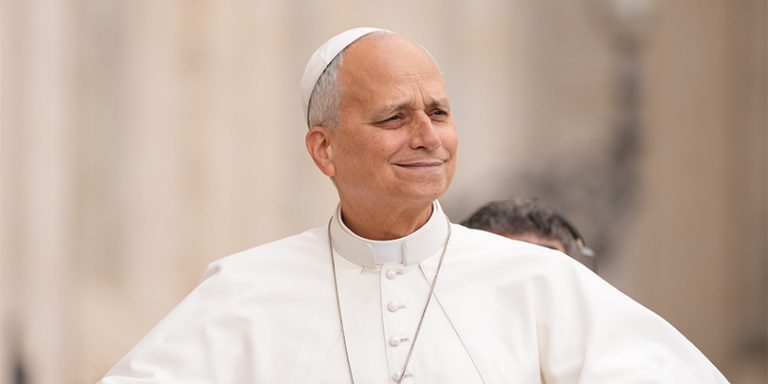
Pope Paul VI stood roughly 5 feet 10 inches tall (about 173 to 175 cm), presenting a slim, austere physical presence that matched his cerebral and deeply introspective leadership style. Elected to the papacy in June 1963, Giovanni Battista Montini guided the Roman Catholic Church through the tumultuous conclusion of the Second Vatican Council and the challenging post-conciliar era. While queries regarding his physical stature often stem from internet trivia, understanding his actual life requires looking past minor details to examine how a physically slender diplomat reshaped modern global Catholicism.
Early Life and Rise Through the Vatican Ranks
Born in Concesio, Italy, in September 1897, Montini grew up in an intellectually vibrant, politically active household. His father edited a prominent Catholic newspaper, exposing young Giovanni to journalism, social justice, and statecraft early on. He entered the seminary and was ordained a priest in 1920, quickly catching the attention of Vatican superiors for his sharp intellect and administrative capability.
Rather than serving purely in local parish work, Montini spent decades inside the Vatican Secretariat of State. During World War II, he played a critical role managing the Vatican's humanitarian office, helping refugees, tracking prisoners of war, and coordinating relief efforts across war-torn Europe. This extensive bureaucratic background forged his cautious, methodical approach to governance.
In 1954, Pope Pius XII appointed Montini as the Archbishop of Milan, a sprawling industrial diocese where he earned the moniker "archbishop of the workers" by directly engaging labor unions and addressing urban poverty. Pope John XXIII elevated him to the cardinalate in 1958, setting the stage for his eventual election to the Chair of Peter following John XXIII's death in 1963.
Guiding Vatican II and Modernizing the Church
When Paul VI inherited the papacy, the Second Vatican Council was already underway. Pope John XXIII had convened the council to address the role of the Church in the modern world, but it fell to Paul VI to steer its remaining three sessions to completion and implement its sweeping reforms.
This era tested his diplomatic skills. Progressive bishops pushed for rapid modernization, while traditionalists resisted sweeping changes to liturgy and governance. Paul VI sought a middle path, emphasizing collegiality, ecumenism, and international outreach. He became known as the "pilgrim pope" for traveling outside Italy—visiting the Holy Land, India, the United States, and the Philippines—to meet directly with global leaders and non-Catholic religious figures.
Key Controversies and Social Teachings
Paul VI's pontificate wasn't without intense friction. His 1968 encyclical Humanae Vitae reaffirmed the traditional Catholic ban on artificial birth control, sparking widespread dissent among theologians and lay Catholics in Western nations. Despite the fierce backlash, he maintained the ruling, prioritizing traditional doctrinal continuity over contemporary secular trends.
Simultaneously, his social encyclicals, such as Populorum Progressio, heavily emphasized global economic justice, the rights of developing nations, and the abolition of poverty. He established the World Day of Peace and continually advocated for international diplomacy during the height of the Cold War. His life and papal records are documented comprehensively by Britannica and historical archives at Vatican News.
Frequently Asked Questions
What was Pope Paul VI's birth name?
His birth name was Giovanni Battista Enrico Antonio Maria Montini.
How long did Pope Paul VI reign?
He served as pope for just over fifteen years, from June 1963 until his death in August 1978.
When was Pope Paul VI canonized?
Pope Francis beatified him in 2014 and formally canonized him as a saint in the Catholic Church on October 14, 2018.
Why is Pope Paul VI historically significant?
He successfully closed and implemented the reforms of the Second Vatican Council, internationalized the Papacy through historic global travels, and expanded Catholic social teaching regarding global economic development and peace.



