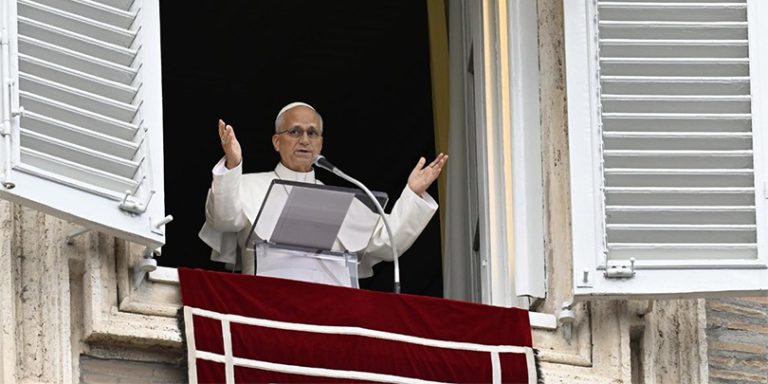
On October 13, 1884, Pope Leo XIII finished celebrating Mass in his private Vatican chapel. According to traditional accounts, he suddenly stopped at the foot of the altar, staring into space with an ashen, horrified expression. He stood motionless for roughly ten minutes before retreating to his office to pen a short text that would shape Catholic worship for decades: the Prayer to Saint Michael. Decades later, this episode morphed into a fiery legend involving a direct dialogue between Jesus and Satan, a promised century of supreme diabolical power, and a chilling preview of the twentieth century.
Unpacking this narrative requires separating historical documentation from pious legend. While Pope Leo XIII was deeply concerned about secularism, Freemasonry, and the political pressures facing the Vatican, the dramatic conversation between God and the devil did not appear in contemporary records. Understanding how the story evolved provides a fascinating look at how religious folklore forms around pivotal historical figures.
The Genesis of the Legend
The most widely repeated version of the vision claims that Leo XIII overheard a dialogue echoing the prologue of the Book of Job. In this account, Satan boasted that he could destroy the Church if granted enough time and power. The narrative states that Jesus gave the devil a timeframe of seventy-five to one hundred years to test the institution.
Upon snapping out of his trance, the pope allegedly rushed to his desk to write the original, much longer version of the Saint Michael prayer. He ordered it to be recited at the end of every Low Mass across the universal Church, a practice that continued until the liturgical reforms of the 1960s.
Yet, historical investigations paint a more nuanced picture.
- Silence in the Archives: No eyewitness accounts or official Vatican documents from 1884 record the alleged dialogue between Christ and Satan.
- Delayed Publication: The specific details of the conversation did not circulate in print until decades after the pope's death in 1903, emerging through oral traditions and devotional writings.
- Chronological Discrepancies: Different retellings place the event in 1880, 1884, or 1888, while the mandate for the Leonine Prayers was formally issued in 1886.
Scholars such as Kevin Symonds have investigated these claims extensively, noting that while Leo XIII experienced profound spiritual burdens, the specific dialogue involving a century-long lease on destruction is a later legendary accretion.
Why Pope Leo XIII Was Uniquely Concerned With Satan
Even without a cinematic vision, Leo XIII had plenty of real-world reasons to worry about the trajectory of modern society. Born Vincenzo Gioacchino Pecci in 1810, his pontificate spanned from 1878 to 1903, a period marked by radical political upheaval.
The Papal States had been annexed by the newly unified Kingdom of Italy in 1870, leaving the pope a self-described "prisoner in the Vatican." European politics were dominated by fierce anticlericalism, the rise of militant secularism, and the spread of Marxist ideology. Leo XIII viewed these cultural shifts not merely as political disagreements, but as a spiritual war.
In his 1884 encyclical Humanum Genus, he issued severe warnings against Freemasonry and naturalism, viewing them as forces actively trying to dismantle Christian morality. His anxieties mirrored the broader Catholic defensive posture during an era of rapid modernization, industrialization, and scientific skepticism.
The Evolution of the Saint Michael Prayer
Regardless of whether a supernatural dialogue occurred, Leo XIII firmly believed the Church needed robust spiritual defenses. The prayer he composed asked Saint Michael the Archangel to protect the faithful against the wickedness and snares of the devil.
For nearly eighty years, millions of Catholics recited this prayer at the conclusion of Mass. The practice was suppressed following the Second Vatican Council, as liturgical reformers sought to streamline rites. However, interest in the prayer experienced a resurgence in subsequent decades, championed by figures like Pope John Paul II and Pope Francis as a tool for spiritual resilience.
For a deeper dive into the theological context of spiritual warfare during this era, read this analysis on Catholic spiritual traditions.
Common Misconceptions About the 1884 Vision
- The Pope Collapsed: Many modern retellings claim Leo XIII fainted or died momentarily during the event. Contemporary notes simply describe him standing transfixed or deeply shaken.
- The Original Prayer is Identical: The text most people recite today is a condensed version. The original 1884 text included explicit exorcistic lines directed against Satan and the apostate angels.
- Official Doctrine: The Vatican has never officially endorsed the narrative of the Jesus-Satan dialogue as public revelation or dogma. It remains a piece of pious folklore rather than an article of faith.
Frequently Asked Questions
Did Pope Leo XIII actually write the Saint Michael prayer?
Yes. Historical records confirm that Leo XIII authored the original prayer and mandated its use in the Vatican liturgy during the late nineteenth century.
Why was the prayer removed from Mass in the 1960s?
Following the reforms of Vatican II, liturgical planners sought to simplify the conclusion of the Mass, removing several auxiliary prayers that had been added in previous centuries, including the Leonine Prayers.
Is the vision recognized as an official miracle by the Church?
No. The Church classifies the narrative of the conversation between Christ and Satan as private tradition or legend rather than an officially authenticated private revelation.
What is the primary purpose of the Saint Michael prayer?
The prayer asks the archangel for protection against spiritual temptation, moral decay, and hostile cultural forces opposing traditional Christian values.



