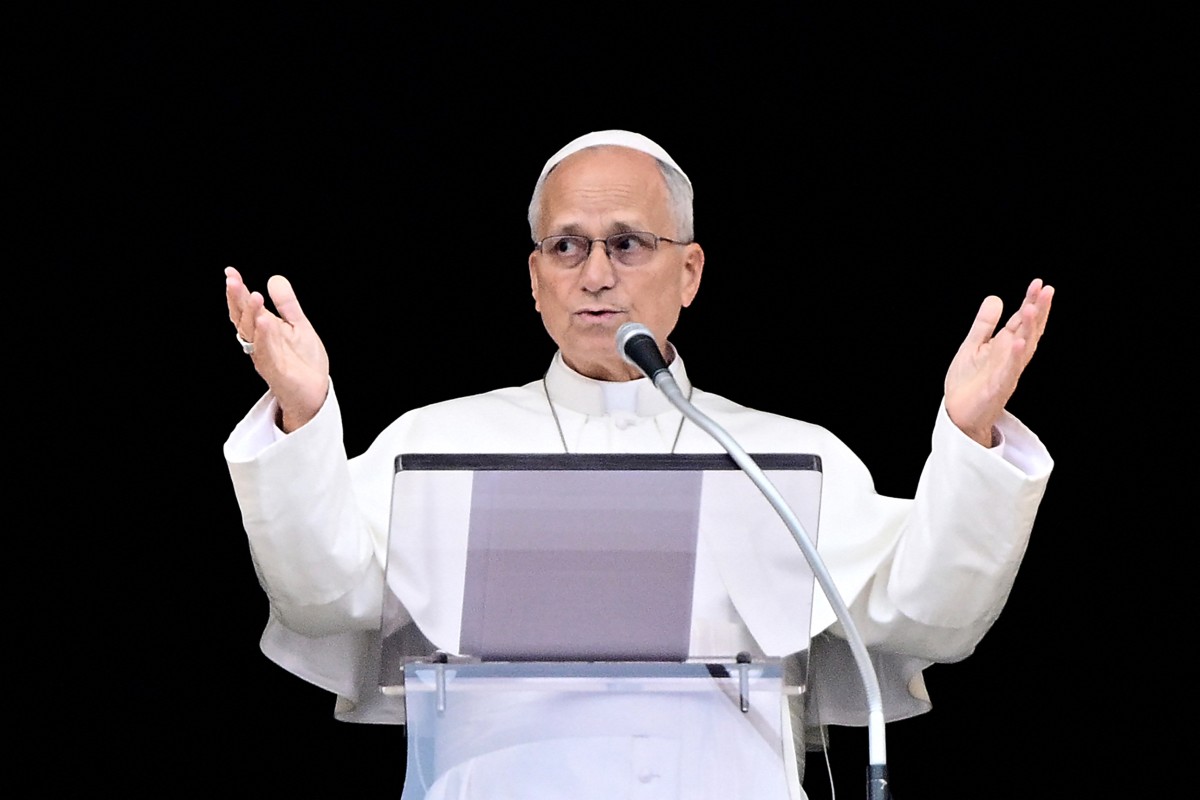
The pope before Pope Francis was Pope Benedict XVI, born Joseph Alois Ratzinger. He served as the head of the Catholic Church from his election in April 2005 until his historic resignation in February 2013. Rather than reigning until his death—the customary practice for modern popes—he chose to step down due to advancing age and declining physical strength. This decision reshaped modern perceptions of the papacy and paved the way for the election of Jorge Mario Bergoglio as Pope Francis.
Understanding Benedict's pontificate requires looking past surface-level headlines. He was a brilliant academic, a conservative theologian, and a reluctant leader who left a complex imprint on the global church.
Early Life and Academic Career
Joseph Ratzinger was born on April 16, 1927, in Marktl am Inn, Germany. His early life unfolded during the rise of the Nazi regime. Conscripted into an anti-aircraft auxiliary unit as a teenager, he later deserted the German army toward the end of World War II and spent a brief period in an Allied prisoner-of-war camp.
Following the war, Ratzinger pursued theological and philosophical studies, receiving his ordination to the priesthood alongside his brother Georg in 1951. He quickly established a reputation as a brilliant mind. By his thirties, he was a prominent professor of theology at several prestigious German universities, including Bonn, Münster, Tübingen, and Regensburg.
As a young theological expert, or peritus, Ratzinger played a visible role during the Second Vatican Council (Vatican II) in the 1960s. His early writings aligned with reform-minded movements within the church. Over time, however, the student protests and ideological shifts of 1968 caused him to adopt a more conservative stance, viewing certain secular movements as threats to core Christian doctrine.
Rise to the Vatican and Prefect of the Congregation
In 1977, Pope Paul VI appointed Ratzinger as the Archbishop of Munich and Freising, elevating him to the rank of cardinal shortly thereafter. Four years later, in 1981, Pope John Paul II summoned him to Rome to lead the Congregation for the Doctrine of the Faith (CDF).
For nearly a quarter-century, Ratzinger served as John Paul II’s primary doctrinal enforcer. Earning monikers from the media like "God's Rottweiler," he worked to maintain orthodox teachings, discipline dissenting theologians, and clarify church stances on contentious social and moral issues. Despite his stern public image within the curia, colleagues often described him as soft-spoken, deeply courteous, and intensely focused on scholarship.
By the time John Paul II’s health began to fail in the early 2000s, Ratzinger was already past the standard retirement age and looked forward to returning to Germany to write books and study. Instead, the College of Cardinals elected him as the 265th pope on April 19, 2005, taking the name Benedict XVI to signal a link to Benedict XV, a noted champion of peace during World War I.
Key Themes of the Pontificate of Benedict XVI
Benedict XVI's eight-year papacy focused heavily on intellectual clarity, liturgical tradition, and the dialogue between faith and reason.
- The Pursuit of Truth: His papal motto, Cooperatores Veritatis ("Cooperators of the Truth"), defined his approach. He argued that modern society suffered from a relativistic worldview that rejected objective truth.
- Writings and Encyclicals: He authored three major encyclicals: Deus Caritas Est (God is Love) in 2005, Spe Salvi (Saved by Hope) in 2007, and Caritas in Veritate (Charity in Truth) in 2009. These documents explored Christian charity, hope, and global economic justice through a theological lens.
- Interfaith and Cultural Dialogue: Benedict engaged secular intellectuals and leaders of other faiths, famously delivering the Regensburg Lecture in 2006, which sparked intense global debates on the relationship between reason and religion.
The Historic Resignation
On February 11, 2013, Benedict XVI announced in Latin to a gathering of cardinals that he would resign his office, effective February 28, 2013. He cited advanced age and declining strength, stating that he no longer possessed the physical and mental vigor required to govern the global church effectively.
This move shocked the Catholic world. It marked the first time a pope voluntarily resigned since Gregory XII in 1415, and the first time in centuries. By stepping down, Benedict set a precedent for aging pontiffs, choosing humility over clinging to absolute power. He assumed the title "pope emeritus" and spent his final years in quiet prayer and study at the Mater Ecclesiae monastery within Vatican City, until his death on December 31, 2022, at the age of 95.
Frequently Asked Questions
Why did Pope Benedict XVI resign instead of serving for life?
Benedict XVI resigned because he felt his physical and mental faculties were diminishing due to old age. He noted that modern papal duties required a level of stamina he no longer possessed, making voluntary retirement the most responsible choice for the church.
What was Pope Benedict's title after he stepped down?
He retained the title of Pope Emeritus and continued to wear a simple white cassock without the traditional papal zucchetto and cape.
How did Pope Benedict XVI differ from Pope Francis?
Benedict was primarily an intellectual German theologian focused on doctrinal precision and traditional liturgy. Francis is an Argentine pastoral leader who emphasizes grassroots engagement, social justice, and institutional reform.
Did Pope Benedict XVI write books while in office?
Yes. Despite his heavy administrative workload, he famously completed a three-volume scholarly study titled Jesus of Nazareth, writing it during his personal time outside of official papal documents.



