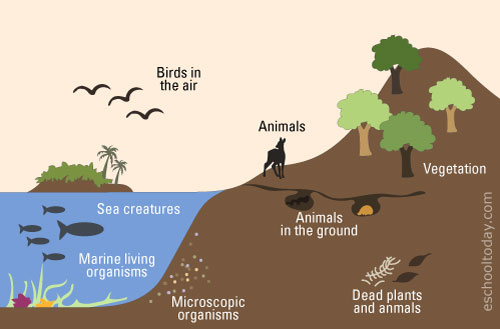
Operating human societies within a stable ecological ceiling requires balancing economic progress with planetary limits. For decades, traditional growth models treated natural resources as infinite inputs and waste sinks as limitless. That approach collided with empirical reality. Scientists at the Stockholm Resilience Centre mapped out nine planetary boundaries—non-negotiable biophysical thresholds that regulate Earth system stability. Crossing these boundaries risks triggering abrupt, irreversible environmental changes. Reconciling human development with these thresholds means redefining progress away from raw material extraction and toward systems that operate within Earth's regenerative capacity.
Understanding this balance starts with recognizing that human well-being depends directly on biosphere integrity. When clean water, stable climates, and fertile soils degrade, socioeconomic stability follows. The core challenge isn't halting development, but redirecting it. Nations and corporations must decouple material consumption from quality of life. This requires shifting from resource-intensive extraction to circular production models, investing in renewable energy systems, and redesigning food networks to protect soil biology rather than deplete it.
The Science of Planetary Boundaries
The planetary boundaries framework identifies critical Earth system processes that maintain the stable climate and environmental conditions of the Holocene—the geological epoch during which human civilization developed. Of the nine established boundaries, several are already transgressed, pushing the planet into dangerous territory.
- Biosphere Integrity: Comprising genetic diversity and functional diversity, this boundary underpins all other Earth systems. High extinction rates and habitat loss weaken ecosystem resilience against shocks.
- Climate Change: Atmospheric carbon concentrations exceeding 350 to 450 parts per million disrupt thermal equilibrium, melting ice sheets and destabilizing weather patterns.
- Biogeochemical Flows: Massive over-application of nitrogen and phosphorus fertilizers creates agricultural runoff, spawning coastal dead zones and destroying aquatic life.
- Land-System Change: Converting forests, wetlands, and natural grasslands into monoculture farmland or urban sprawl reduces carbon sequestration and fragments wildlife corridors.
Exceeding these limits creates compounding feedback loops. For instance, Amazon rainforest degradation turns a major carbon sink into a carbon source, accelerating regional drying and further threatening biodiversity.
Decoupling Human Well-Being from Resource Use
Human development traditionally relied on a linear economic model: extract resources, manufacture goods, use them briefly, and discard the waste. This model drives every major ecological transgression. Reconciling development with planetary limits requires resource decoupling, meaning economies grow while material footprints shrink.
Countries meeting high human development indexes while maintaining lower per capita ecological footprints demonstrate that quality of life doesn't require runaway resource consumption. Achieving this globally involves specific operational changes:
- Material Efficiency: Redesigning products for longevity, repairability, and total recyclability so that manufacturing demands fewer raw inputs.
- Energy Transition: Phasing out coal, oil, and natural gas in favor of solar, wind, and geothermal infrastructure to stabilize the climate boundary.
- Agricultural Reform: Adopting regenerative farming techniques—such as cover cropping, no-till methods, and reduced synthetic fertilizer use—to restore soil microbiomes and curb nutrient runoff.
According to the Intergovernmental Panel on Climate Change, deep reductions in greenhouse gas emissions across all sectors are mandatory to prevent catastrophic climate tipping points while lifting vulnerable populations out of poverty.
Economic Risks of Ecological Overshoot
Ignoring Earth's biophysical limits carries severe economic costs. Traditional finance often views environmental degradation as an externality, but systemic ecological collapse directly threatens financial stability. The World Economic Forum consistently rates biodiversity loss and ecosystem collapse among the top global risks over a ten-year horizon.
Supply chain disruptions illustrate this vulnerability. Extreme weather events damage port infrastructure, prolonged droughts ruin agricultural yields, and depleted fisheries collapse regional coastal economies. When natural capital erodes, insurance markets withdraw coverage from high-risk flood or fire zones, shifting massive financial burdens onto taxpayers and governments.
Businesses responding to these risks are adopting natural capital accounting. Instead of tracking only financial profit, forward-thinking enterprises measure their impacts on water usage, biodiversity, and carbon footprints, treating ecological health as a core balance sheet asset.
Common Pitfalls in Sustainability Strategies
Many corporate and governmental sustainability initiatives fail because they rely on flawed assumptions or superficial metrics. Recognizing these traps helps organizations implement effective strategies.
- Carbon Offsetting Illusion: Relying heavily on future tree-planting offsets while continuing high fossil fuel emissions creates a dangerous time lag. Trees take decades to sequester carbon, whereas industrial emissions enter the atmosphere immediately.
- Greenwashing and Vague Targets: Setting net-zero targets decades into the future without interim, audited milestones allows organizations to greenwash business-as-usual practices.
- Ignoring Local Trade-Offs: Scaling up biofuel crop production to replace fossil fuels can inadvertently drive massive land-system changes, destroying natural forests and displacing indigenous communities.
Effective strategies require absolute reductions in resource throughput, not just relative efficiency gains that get canceled out by overall volume growth.
Frequently Asked Questions
What are planetary boundaries?
Planetary boundaries are scientific limits defining the safe operating space for humanity with respect to Earth's life-support systems. Staying within these boundaries prevents irreversible environmental shifts.
Can human development continue while respecting ecological limits?
Yes. Human development focuses on health, education, equity, and living standards. These outcomes don't require consuming more physical resources if economies shift toward services, circular manufacturing, and renewable energy.
Which planetary boundaries have already been crossed?
According to international scientific updates, humanity has transgressed several boundaries, including climate change, biosphere integrity (biodiversity loss), biogeochemical flows (nitrogen and phosphorus cycles), and novel entities (synthetic chemicals and plastics).
How does biodiversity loss impact human economies?
Biodiversity loss degrades essential ecosystem services such as natural pollination for crops, water purification by wetlands, and coastal protection by mangroves, directly threatening food security and infrastructure stability.



