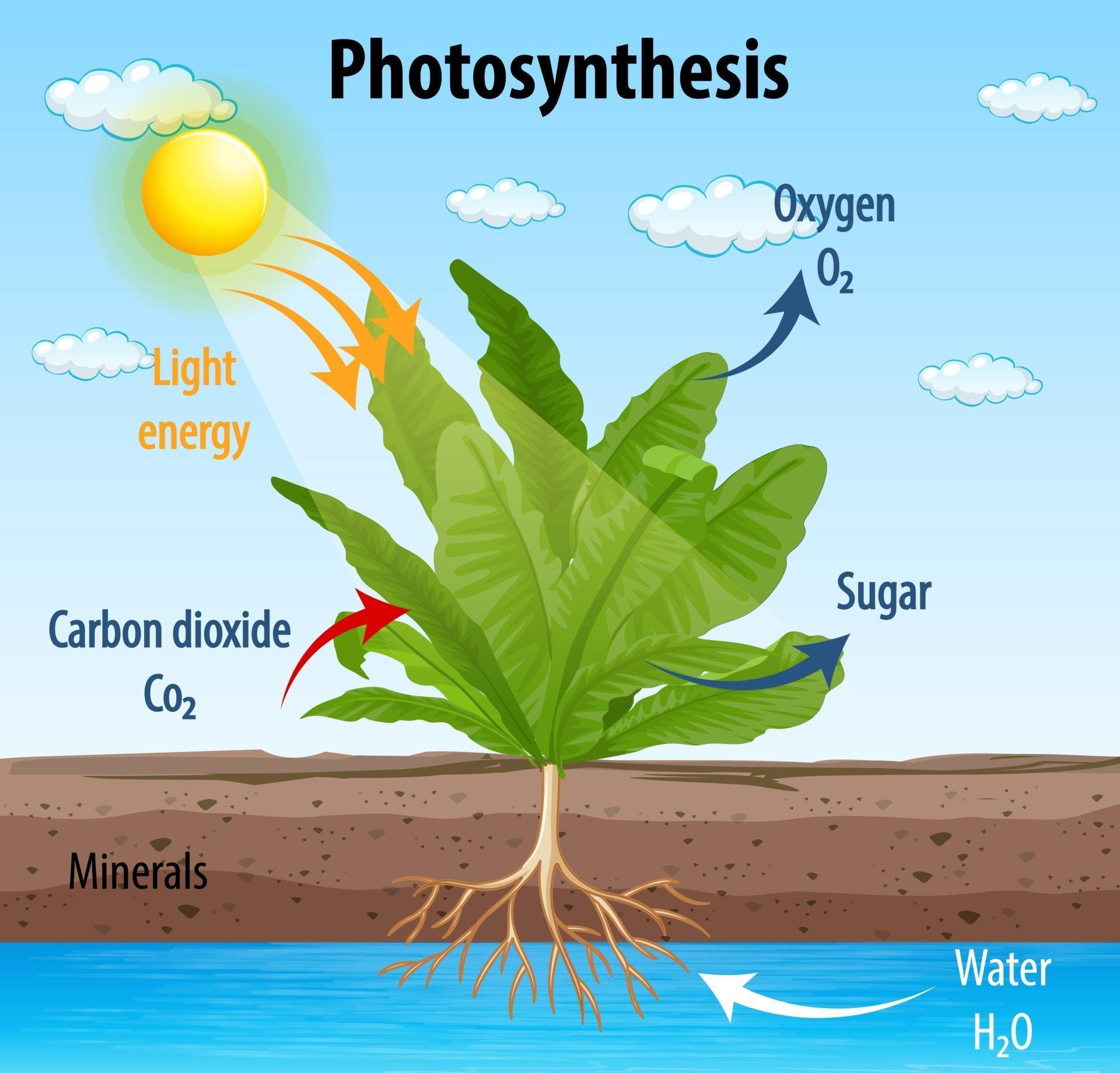
We usually picture green meadows and dense forest canopies when we think of plants capturing sunlight. Yet, nature operates under few restrictions. Photosynthesis occurs in the darkest, hottest, and wildest places on Earth, driving biological activity where survival seems impossible. From pitch-black hydrothermal vents miles beneath the ocean surface to frozen polar glaciers and arid desert crags, life finds a way to harness energy.
Understanding how organisms perform photosynthesis in extreme settings expands our knowledge of biology and hints at how life might persist on other worlds. Let's look at how specialized life forms defy harsh conditions to convert light and chemicals into usable energy.
Deserts and Arid Landscapes
Deserts present severe challenges for any living thing. Intense heat, blistering sunlight, and scarce water make standard biological processes difficult. Yet, resilient organisms have evolved unique mechanisms to thrive in these sun-baked expanses.
Cacti and other succulents handle arid climates by modifying their internal chemistry. They use a specialized pathway known as Crassulacean Acid Metabolism (CAM). Instead of opening their pores during the heat of the day—which would cause rapid dehydration—they open them at night to collect carbon dioxide. They store this gas as an acid until daylight returns, allowing them to photosynthesize while keeping water loss to a minimum. To see the bigger picture, we recommend the excellent analysis by Science Magazine.
Lichens represent another masterclass in survival across arid regions. Composed of a symbiotic partnership between fungi and algae or cyanobacteria, lichens attach to bare rock faces exposed to direct sun and wind. The fungal partner provides structure and absorbs moisture from the morning dew or thin air, while the algal partner handles photosynthesis. This partnership allows lichens to endure complete desiccation, waiting out months of drought before snapping back to life with a single rain shower.
The Deepest Oceanic Depths
For centuries, scientists assumed that sunlight was an absolute requirement for life's primary energy engine. That assumption shifted with the discovery of hydrothermal vents on the ocean floor.
At depths where sunlight never penetrates, hydrothermal vents release superheated water laden with minerals. While most organisms near these vents rely on chemosynthesis—converting chemical energy from minerals like hydrogen sulfide—certain bacteria utilize a faint, ambient glow. Deep-sea hydrothermal vents emit a faint infrared glow from thermal radiation. Specialized green sulfur bacteria near these vents capture this weak geothermal light to perform photosynthesis in complete darkness.
Seamounts, which are underwater mountains rising from the ocean floor, also host unique photosynthetic communities. Their peaks often push closer to the photic zone, where trace amounts of sunlight filter down, supporting specialized deep-water algae and coral partnerships that defy typical depth limits.
Glaciers and Polar Regions
Polar ice sheets and alpine glaciers appear sterile at first glance, coated in snow and biting cold. However, melting ice creates transient liquid micro-habitats that support vibrant communities of extremophile algae and cyanobacteria.
Species such as Snow algae thrive directly inside ice sheets and snowpacks. These organisms produce specialized pigments that act as natural sunscreen, protecting their cellular machinery from intense ultraviolet radiation bouncing off white snow. As these algae bloom, they color the snow pink or green, forming vast ecosystems that span miles across polar landscapes.
Ice-trapped microbes also utilize cryoconite holes—small, dust-filled wells formed when windblown sediment melts slightly into the ice. Within these pockets, algae and bacteria photosynthesize during the sunlit summer months, proving that sub-zero temperatures don't halt biological energy production.
Adapting to the Extremes: Key Survival Traits
Organisms surviving in extreme environments share several evolutionary adaptations that make unconventional photosynthesis possible:
- Pigment Diversity: Beyond standard chlorophyll, extremophiles utilize accessory pigments that capture different wavelengths of light, including infrared or ultraviolet radiation.
- Cellular Protection: Specialized sugars and proteins protect internal cell structures from freezing temperatures, high salinity, or cellular damage caused by extreme radiation.
- Metabolic Flexibility: Many extremophilic plants and algae can switch between active growth during favorable windows and a dormant state during prolonged dry or dark spells.
To read more about how extremophiles adapt to severe conditions, check out the National Science Foundation research portal or explore ecological studies via NASA Astrobiology.
Frequently Asked Questions
Can photosynthesis happen without direct sunlight?
Yes. While typical plants need sunlight, organisms near deep-sea hydrothermal vents utilize faint geothermal infrared radiation to drive photosynthesis in total darkness.
How do desert plants avoid drying out while photosynthesizing?
Many desert plants use CAM photosynthesis, keeping their stomata closed during the scorching day and opening them only at night to absorb carbon dioxide.
What are extremophiles?
Extremophiles are organisms that thrive in physical or geochemical conditions that are detrimental to most life on Earth, such as extreme heat, cold, pressure, or dryness.
Why is studying extreme photosynthesis important?
It broadens our understanding of the limits of biology, aiding research into how life might survive on other planets or moons with harsh climates.



