Philadelphia and New York City stand just 90 miles apart on the American Eastern Seaboard, yet they operate on entirely different frequencies. This close proximity has forged a multi-century rivalry built on contrasting urban philosophies, economic structures, cultural identities, and sports animosities. While New York acts as the colossal global capital of finance, media, and unyielding acceleration, Philadelphia anchors itself in foundational American history, blue-collar grit, and a more human-scaled neighborhood rhythm. Understanding this corridor rivalry requires looking past surface-level stereotypes to examine how geography, architecture, economics, and everyday lifestyle choices separate these two titans.
The historical roots of this friction trace back to the colonial era and the birth of the United States. Philadelphia served as the primary crucible for American independence, hosting the Continental Congress and housing the drafting of the Constitution. For a brief period, it was the nation's capital. New York, meanwhile, quickly outpaced its southern neighbor through maritime dominance, immigration surges, and unbridled capitalist expansion, transforming into the financial epicenter of the Western world. That early displacement left Philadelphia with a perpetual, fiercely guarded underdog identity, while New York cemented a global swagger that rarely looks back.
Urban Form and Architecture: Density Versus Neighborhood Grid
The physical build of both cities shapes how residents move, work, and interact every single day. New York City is defined by verticality, extreme density, and an intricate subterranean transit web. Manhattan's skyscraper canyons create a hyper-efficient grid where millions navigate vertical office towers and high-rise apartments.
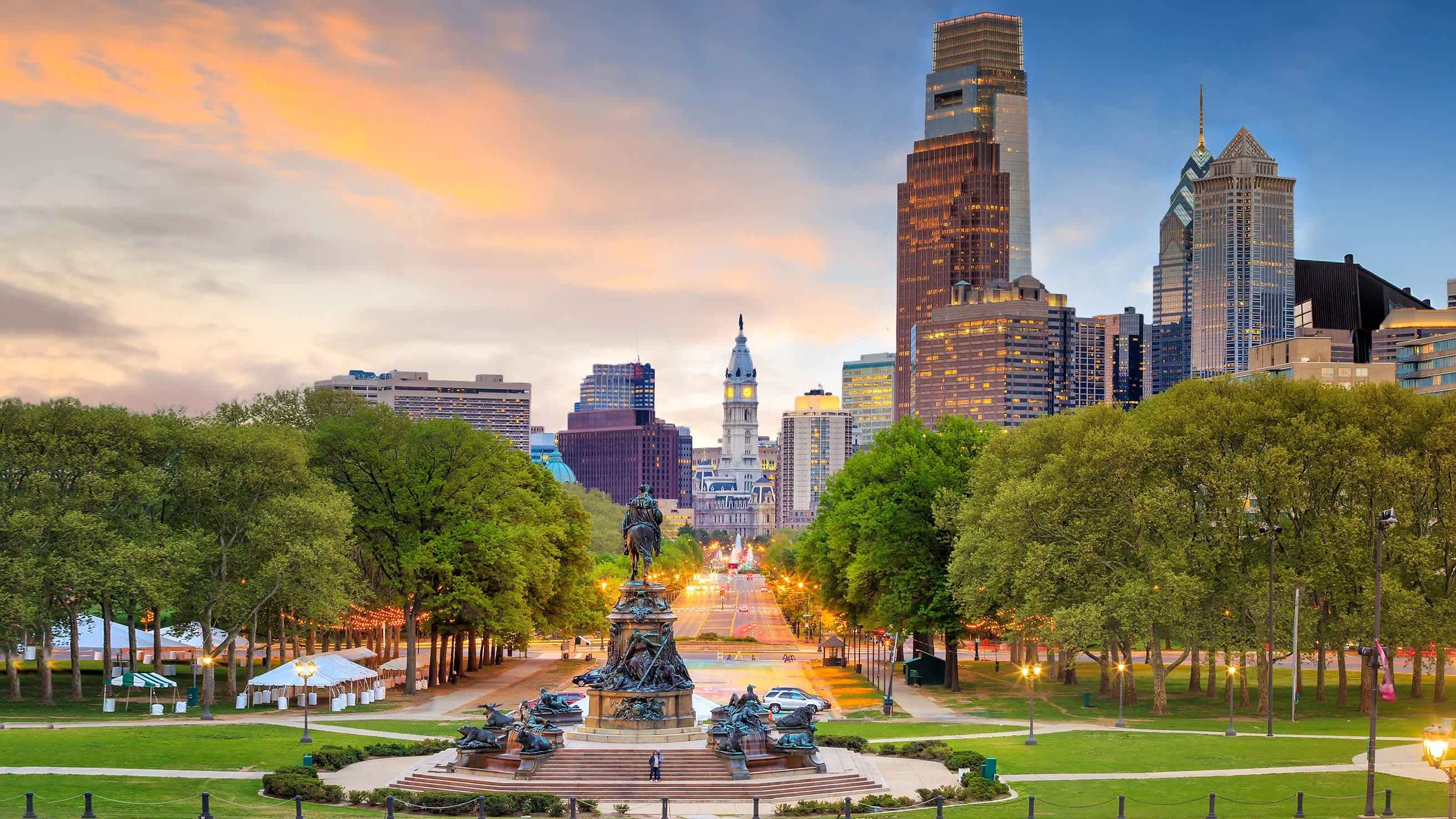
Philadelphia takes a radically different architectural approach. It is primarily a city of rowhouses, low-rise brick buildings, and walkable squares mapped out by William Penn. This horizontal layout creates distinct neighborhoods like Rittenhouse Square, Northern Liberties, and South Philadelphia, each maintaining a distinct village feel within a major metropolis.
- Density and Verticality: New York relies heavily on high-rise living and twenty-four-hour transit lines that never truly sleep.
- Human Scale: Philadelphia's lower profile allows for manageable walking commutes and an intimate neighborhood atmosphere that resists isolation.
- Public Space: New York balances its concrete expanse with Central Park and sprawling waterfront esplanades, whereas Philadelphia integrates massive green spaces like Fairmount Park directly into its urban fringe alongside historic squares.
Economic Realities and Cost of Living
Economic structures in both metros dictate professional trajectories and lifestyle affordability. New York functions as a global powerhouse across multiple sectors. Careers in investment banking, global corporate law, mainstream media, fashion, and international tech converge within its boundaries. Salaries match this stratospheric scale, but they are met with a crushing cost of living. Renting or buying property in Manhattan, Brooklyn, or prime Queens requires immense financial leverage.
Philadelphia offers a diversified economic engine anchored heavily by healthcare, higher education, biotechnology, logistics, and regional finance. While median salaries trail those in New York, the relative cost of living is drastically lower. Professionals relocating down the interstate frequently find that their purchasing power stretches significantly further, allowing for homeownership in vibrant urban neighborhoods on a single middle-class income—a luxury that has grown scarce in New York.
For deeper economic insights into regional labor markets, consult the Bureau of Labor Statistics.
Cultural Identity and Creative Expression
Culture in New York is a relentless collision of global influences. Because millions of immigrants have funneled through its ports for centuries, the city acts as a continuous laboratory for art, theater, culinary innovation, and music. Every neighborhood functions as an enclave for a different corner of the world, creating an ever-shifting mosaic that prizes individual ambition and reinvention.
Philadelphia's cultural identity runs deep with homegrown pride. It is a city that doesn't care to impress outsiders, relying instead on a rich legacy of soul music, gritty independent art scenes, public murals, and a legendary culinary footprint that extends far beyond cheesesteaks to a world-class modern restaurant renaissance.
- The Food Scene: New York offers hyper-exclusive Michelin-starred dining alongside authentic cuisine from nearly every nation on earth. Philadelphia features an acclaimed BYOB restaurant culture, vibrant Italian Market traditions, and a fiercely independent culinary community.
- Art and Institutions: New York hosts global giants like the Metropolitan Museum of Art and Broadway. Philadelphia counters with the world-class Philadelphia Museum of Art, the Barnes Foundation, and an unmatched collection of outdoor public sculptures and murals.
The Sports Battlegrounds
No examination of this corridor is complete without looking at professional sports, where civic pride turns into tribal warfare. The proximity of the fanbases ensures that matchups in baseball, basketball, and football carry immense emotional weight.
In Major League Baseball, the rivalry between the Philadelphia Phillies and the New York Mets or New York Yankees generates intense divisional and World Series friction. In the NBA, the historic clashes between the Philadelphia 76ers and the New York Knicks regularly ignite Eastern Conference tensions. On the gridiron, the NFC East battles between the Philadelphia Eagles and the New York Giants pit two storied, passionate fanbases against one another in stadiums filled with generations of shared animosity.
For official sports schedules and league updates, check Major League Soccer or major sports governing bodies.
Frequently Asked Questions
How long does it take to travel between Philadelphia and New York City?
Traveling between the two cities typically takes about 75 to 90 minutes via Amtrak or regional rail lines like SEPTA and NJ Transit connecting through Trenton. Driving can take anywhere from two to three hours depending heavily on traffic along the New Jersey Turnpike.
Which city is more affordable for young professionals?
Philadelphia is significantly more affordable. Rent, property taxes, dining out, and general services cost substantially less than comparable options in New York City, making it an attractive destination for young professionals seeking financial breathing room.
How do the public transit systems compare?
New York City operates a sprawling, 24-hour subway system that covers all five boroughs with immense frequency. Philadelphia relies on a more compact system consisting of subways, regional rail, trolleys, and buses managed by SEPTA, which provides solid core coverage but less round-the-clock frequency than New York.
Are the job markets similar in both cities?
They differ significantly in scale and focus. New York dominates global finance, media, and corporate enterprise. Philadelphia excels in healthcare, higher education, pharmaceuticals, life sciences, and regional corporate services with a generally more relaxed corporate culture.



