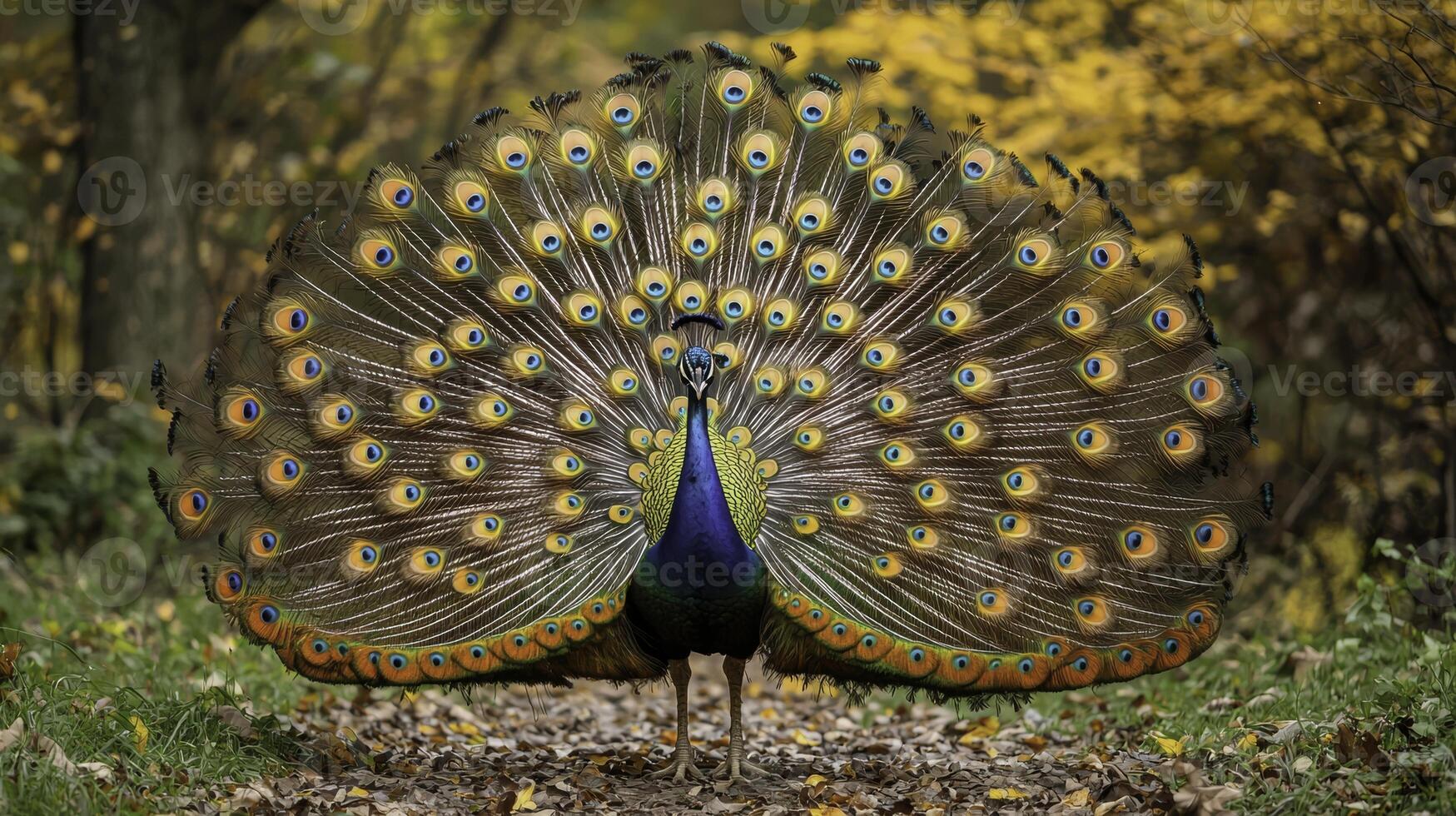
When you compare avian courtship displays, few birds command attention quite like the Indian peafowl and the wild turkey. Both species belong to the order Galliformes—ground-dwelling birds known for heavy bodies, strong legs, and elaborate polygynous breeding systems. Yet, their strategies for securing a mate differ dramatically. While a peacock relies on a solo performance of vibrant optical illusions, a turkey relies heavily on cooperative social hierarchies and group dominance.
Understanding how these two gallinaceous birds approach reproduction reveals distinct evolutionary adaptations. Peacocks invest entirely in personal ornamentation and individual stamina, whereas turkeys use coalition-based displays that involve structural dominance among male peers. By examining their unique courtship rituals, vocalizations, and breeding timelines, you gain a clear picture of how sexual selection shapes these iconic birds.
Peacock Courtship and Individual Display Mechanics
The mating system of the Indian peafowl (Pavo cristatus) is defined by lek-like gathering sites where males congregate to display for visiting females, known as peahens. A mature male boasts a train of up to 150 elongated upper covert feathers adorned with iridescent eyespots, or ocelli. When a peahen approaches, the peacock triggers a mechanical rattle by vibrating his train at frequencies exceeding 25 hertz, producing a low-frequency hum that humans barely hear but females feel through the ground.
Peacocks don't just flash their feathers; they direct them precisely. During the peak of courtship, the male drops his wings and shakes his train forward, creating a shimmering wall of color that catches sunlight to maximize ultraviolet reflectance. Peahens inspect these displays with meticulous scrutiny. Research published by the San Diego Zoo Wildlife Alliance indicates that females evaluate the density, symmetry, and color brilliance of the eyespots as honest indicators of parasite resistance and immune health.
Vocalizations and Territorial Defense
Beyond visual spectacle, vocal communication plays a major role in peacock reproduction. Males emit loud, piercing calls—often transcribed as a harsh "may-aow"—to broadcast their location across forest clearings. These calls serve a dual purpose: attracting distant females and advertising territorial occupancy to rival males. Unlike songbirds, peacocks maintain loose territories rather than defending rigid nesting grounds, focusing their energy entirely on courtship display stations.
Wild Turkey Mating and Social Hierarchy Dynamics
Wild turkeys (Meleagris gallopavo) take a cooperative approach to reproduction. In contrast to the solitary performance of a peacock, male turkeys—known as gobblers or toms—frequently form close coalitions, often consisting of brothers. These coalitions travel together through breeding ranges, displaying synchronized strutting behaviors to attract groups of hens.
Within a turkey coalition, a strict dominance hierarchy emerges. The dominant male secures the vast majority of mating opportunities, while subordinate brothers help defend the group and ward off rival coalitions. This cooperative strategy increases the overall visibility and protection of the group against predators like coyotes and great horned owls during vulnerable courtship displays.
The Strut and Gobble Ritual
A male turkey's courtship routine centers on the classic "strut." The gobbler drops his wings so the primary flight feathers drag on the ground, fans his tail into an upright vertical semi-circle, and inflates his blue-and-red head caruncles and snood—a fleshy appendage hanging above the bill. As he struts, he emits a deep, resonating "gobble" that can carry up to a mile through dense timber.
According to guidelines from the Cornell Lab of Ornithology, gobblers rely heavily on auditory advertising at dawn before transitioning to visual strutting zones where hens congregate. Once a hen selects a dominant tom, mating is brief, and the female departs immediately to locate a secluded ground nest hidden in tall grasses or brush.
Key Differences Between Peacock and Turkey Reproduction
Comparing these two species highlights distinct evolutionary pathways within the same avian order. The primary differences involve social structure, ornament energy investment, and post-mating parental care.
- Social Strategy: Peacocks operate as solitary competitors on informal leks, whereas wild turkeys utilize cooperative coalitions led by a dominant male.
- Plumage Investment: Peacocks invest in a massive, specialized train of upper tail coverts used exclusively for sexual display. Turkeys utilize modified body feathers, wingtips, and facial skin modifications (snoods and caruncles) that change color based on blood flow and hormone levels.
- Vocal Strategy: Peacocks use sharp, echoing caterwauls. Turkeys utilize booming gobbles combined with rhythmic chest-drumming and spitting sounds.
- Nesting and Brooding: Neither male provides parental care. Peahens lay clutches of four to eight eggs in shallow ground scrapes, while turkey hens incubate ten to fourteen eggs in well-concealed woodland depressions.
Common Misconceptions About Gallinaceous Mating
Backyard bird keepers and wildlife observers often confuse domestic poultry behavior with wild biological imperatives. A common myth is that male turkeys and peacocks hold permanent harems throughout the year. In reality, stable harems do not exist; associations between males and females during breeding season are temporary, lasting only as long as it takes for the female to accept fertilization.
Another misconception is that brighter colors guarantee instant mating success. While coloration matters, female selection is multidimensional. Peahens and turkey hens test male stamina, spatial awareness, and behavioral vigor. A peacock with a massive train that stumbles during his rattle display or a gobbler that loses focus during a coalition face-off will consistently fail to attract mates, regardless of how impressive their physical ornaments appear.
Frequently Asked Questions
Do peacocks and turkeys ever hybridize in the wild?
No. Although both belong to the order Galliformes, they belong to entirely different families (Phasianidae for peacocks, Meleagrididae for turkeys). Genetic divergence prevents successful cross-breeding between these distinct taxonomic lineages.
How long does the breeding season last for these birds?
For both species, breeding is triggered by lengthening daylight hours in spring. The season typically spans from March through June, peaking in April and May when hormonal surges drive intense vocalization and display activity.
Do male turkeys lose their tail feathers like peacocks do?
No. Peacocks shed their entire train of decorative upper tail coverts annually in late summer through a post-breeding molt. Turkeys retain their standard fan-shaped tail feathers year-round, only replacing them during standard, gradual feather replacement cycles.
Which bird has a more complex courtship display?
Biologists generally consider the peacock's display more visually complex due to the intricate physics of mechanical tail-rattling and synchronized eyespot presentation. However, wild turkey displays involve advanced multi-bird social coordination that requires sophisticated peer communication.



