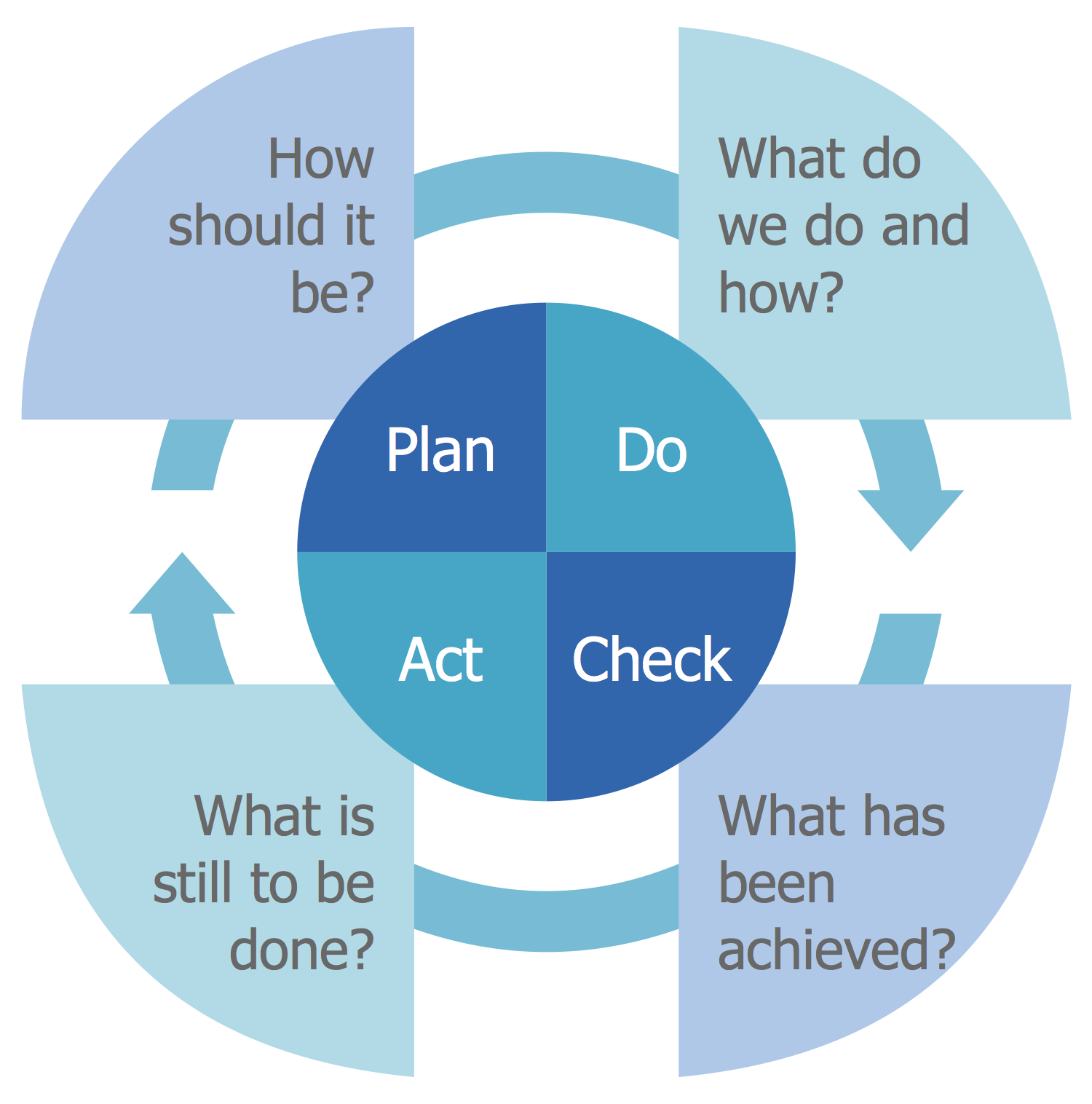
The PDCA cycle—Plan, Do, Check, Act—is a four-step management method used to control and continuously improve processes and products. Originally developed by Walter Shewhart in the 1930s and later popularized by W. Edwards Deming, it provides a repeatable framework for testing changes, measuring outcomes, and scaling what works without risking large-scale operational disruption.
If you're trying to solve persistent workflow bottlenecks or reduce error rates, jumping straight to permanent operational changes rarely works. Instead, teams use this iterative loop to run small-scale experiments, analyze performance data, and standardize successful adjustments. Let's break down how each phase works in practice, where projects typically stall, and how to execute the cycle effectively.
Understanding the Four Phases of the PDCA Cycle
Executing the cycle requires moving sequentially through four distinct stages. Skipping steps or rushing through the planning phase usually leads to inconclusive data during the evaluation stage.
1. Plan: Define the Problem and Formulate a Hypothesis
The planning phase determines whether your improvement initiative succeeds or fails. You aren't just brainstorming ideas; you're isolating a specific performance gap and building a structured hypothesis.
Start by mapping the current state of your process. If customer onboarding takes too long, don't guess why. Collect data to find out exactly which step causes the delay. Once you identify the root cause—perhaps manual data entry between systems—define what success looks like with specific metrics.
- State the problem clearly using baseline data.
- Identify root causes using analytical tools like the Asq Quality Tools Guide.
- Define quantifiable objectives, such as reducing processing time by twenty percent.
- Outline the resources, timeline, and personnel required for the test.
2. Do: Execute the Small-Scale Test
Once the plan is set, you implement the change on a restricted, controlled scale. This isn't a company-wide rollout. It's a pilot test designed to check feasibility in a real-world environment.
For example, if you want to test a new automated form for onboarding, launch it with a single team or a single client cohort for two weeks. During this phase, train the participants, monitor execution closely, and log any unexpected friction points. Keep the scope tight so you can isolate variables.
3. Check: Measure Results Against Expectations
The check phase requires stepping back to analyze the data gathered during the pilot. You need to compare your actual results against the baseline metrics and targets established in the planning phase.
Ask yourself straightforward questions. Did the automated form reduce processing time? Did it introduce new errors? If performance didn't improve, you need to understand why. Was the software too complex, or was training insufficient? This phase relies entirely on objective metrics rather than team impressions.
4. Act: Standardize or Pivot
Based on your evaluation, you take one of two paths. If the test met your goals, you standardize the change. You update documentation, roll out the new process to the rest of the organization, and make it the new baseline.
If the pilot failed or fell short of expectations, you don't abandon the effort entirely. You use the lessons learned to refine your hypothesis, return to the planning phase, and test a different approach. This is why the framework is a cycle rather than a linear checklist.
Real-World Implementation in Operations
Applying this framework outside of manufacturing requires adapting the scale to your specific environment. Consider how a mid-sized software support team might use the cycle to cut ticket resolution times.
In the Plan phase, the team reviews support logs and discovers that fifty percent of initial replies ask for information the customer already provided. They hypothesize that adding a mandatory triage form to the support portal will cut back-and-forth messaging.
During the Do phase, they roll out the triage form to a single product line for three weeks. In the Check phase, data shows that initial response times dropped by thirty percent, but customer satisfaction dipped slightly because the form felt too long.
In the Act phase, they standardize the triage process by shortening the form from ten fields to four, retaining the speed gains while restoring customer satisfaction. For a deeper dive into organizational standard work, check out resources from the National Institute of Standards and Technology.
Common Pitfalls and How to Avoid Them
Even though the framework is simple, teams frequently run into execution traps that stall momentum.
- Rushing the Plan phase: Skipping root-cause analysis means you're testing solutions for the wrong problem. Spend adequate time defining the issue before writing code or changing workflows.
- Making pilots too large: If your test scope is too broad, you can't control variables or isolate what caused a shift in metrics. Keep pilots small and focused.
- Treating it as a one-off project: The cycle is designed to be continuous. Once you standardize a change, you immediately look for the next bottleneck.
Frequently Asked Questions
How long should one full PDCA cycle take?
The duration depends entirely on the scope of the problem. A simple administrative tweak might complete a full cycle in two weeks, while a complex supply chain modification could take three to six months per iteration.
Is PDCA the same as Six Sigma's DMAIC?
They share similar philosophies, but they serve different purposes. PDCA is a general, rapid-cycle framework for ongoing operational adjustments. DMAIC (Define, Measure, Analyze, Improve, Control) is typically used for deep, data-heavy statistical problem solving in complex manufacturing or transactional environments.
What should I do if my pilot test fails?
A failed test isn't a wasted effort; it's valuable diagnostic data. Use the insights gained during the check phase to adjust your hypothesis, modify your approach, and run a new, smaller test.
Can individuals use PDCA for personal productivity?
Yes. You can apply the cycle to personal habits, such as managing your daily schedule. Plan your ideal workflow on Monday, test it through Wednesday, check your output on Thursday, and adjust your routine for the following week.


