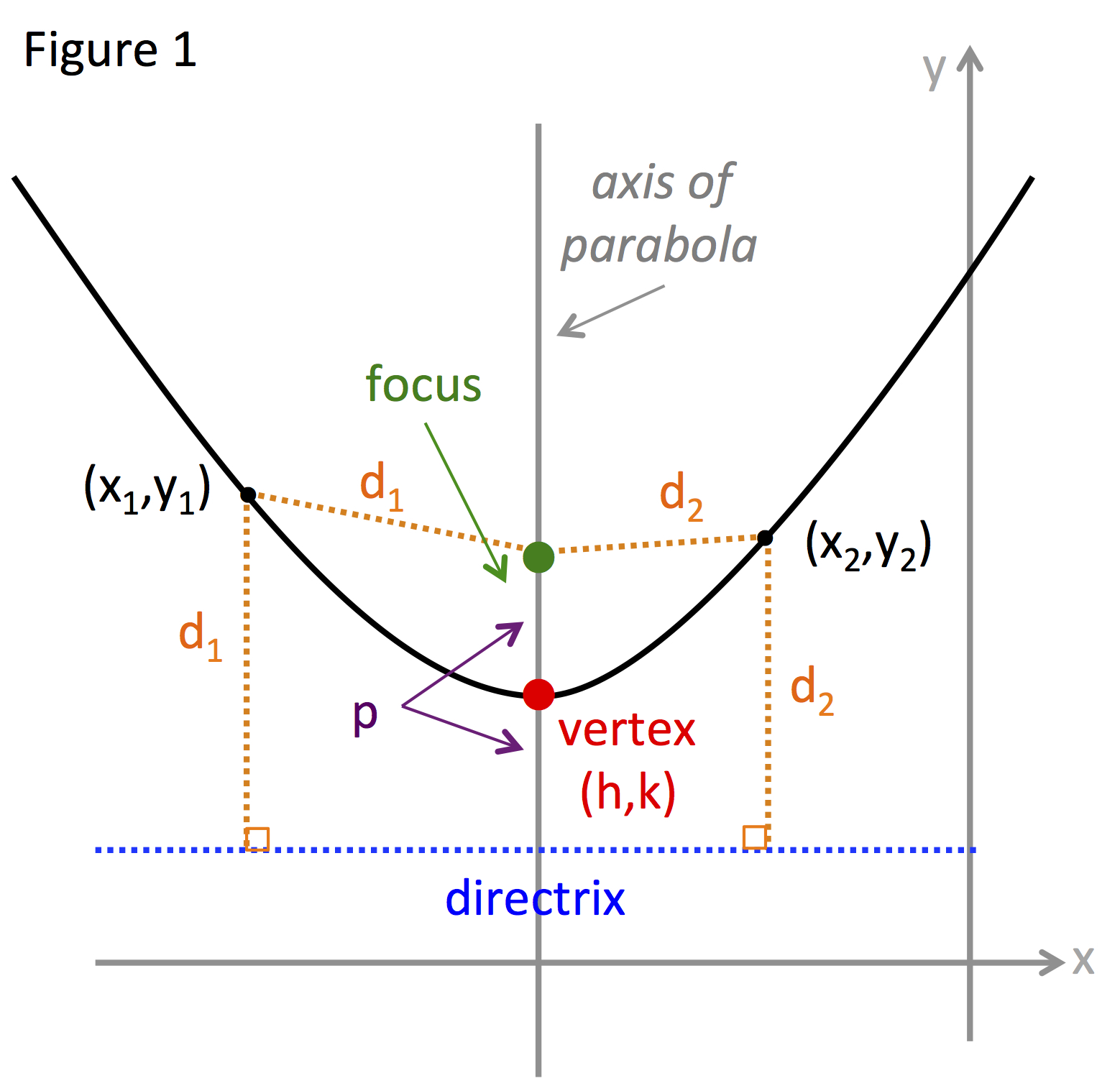
A parabolic curve is a symmetrical, U-shaped plane curve where every point is equidistant from a fixed point called the focus and a fixed straight line known as the directrix. This unique geometric shape dictates how objects move through space, how satellite dishes focus signals, and how speculative financial assets behave during extreme bubbles. If you've ever thrown a baseball or watched a rocket launch, you've witnessed this trajectory in action. It's not just a theoretical concept from high school algebra; it's a fundamental blueprint woven into both natural laws and human economics.
Understanding a parabola requires looking at its core equation, $y = ax^2 + bx + c$. The coefficient $a$ determines how wide or narrow the curve appears and whether it opens upward or downward. When $a$ is positive, the curve opens upward like a cup, holding water. When $a$ is negative, it opens downward like an umbrella shedding rain. This simple algebraic rule underpins complex physical and financial phenomena. We'll explore how this curve governs ballistics, optics, and market trends, breaking down the mechanics so you can spot them in the wild.
The Geometry and Equation Behind the Curve
Every parabola has a specific anatomical structure. You can't grasp its utility without knowing the parts. At the heart of the curve sits the focus, a point sitting inside the curve's bend. Opposite the focus is the directrix, a straight line that never touches the curve. The vertex is the turning point where the curve reaches its maximum or minimum value, marking the exact spot where the slope changes direction.
The standard quadratic formula gives us the profile, but the geometric definition creates its practical magic. Because of the way the curve is constructed, any line parallel to the axis of symmetry that hits the inside surface will bounce directly toward the focus. This reflective property turns a simple geometric curve into a functional tool. For additional context on this topic, detailed analysis can be read on The New York Times.
If you want to calculate points on a parabola, you'll use coordinate geometry. For example, if your vertex is at the origin $(0,0)$, the equation simplifies to $y = ax^2$. Changing the value of $a$ stretches or compresses the shape vertically. If $a = 1$, the curve grows moderately. If $a = 5$, the arms shoot upward sharply, creating a narrow valley.
Physics in Motion: Gravity and Projectiles
When you toss an apple to a friend, the object traces a parabolic path through the air. Gravity exerts a constant downward acceleration, while horizontal momentum carries the object forward. Combined, these two forces forge a trajectory that mimics a downward-opening parabola. Galileo Galilei first proved this mathematical relationship in the seventeenth century, showing that projectile motion breaks down into independent horizontal and vertical components.
Air resistance complicates real-world throws, turning the pure mathematical curve into a slightly asymmetric arc known as a ballistic trajectory. At low speeds, air drag matters very little, and the parabolic approximation holds true. That's why artillery gunners, basketball players, and structural engineers rely on quadratic equations to predict landing zones and structural loads.
Physics also applies this shape in reverse through reflection. Flashlights, car headlights, and radio telescopes rely on parabolic reflectors. A light bulb or receiver placed at the exact focal point emits or catches parallel rays of energy. A flashlight bulb sends light rays crashing into a parabolic mirror, which bounces them outward into a straight, focused beam. Without this geometry, your car headlights would scatter light in every direction instead of illuminating the road ahead. You can read more about how optical physics shapes everyday tools on NASA's science portal.
Parabolic Moves in Financial Markets
Financial markets don't obey physical gravity, but they frequently mimic parabolic curves during speculative manias. A parabolic move in trading happens when an asset's price accelerates upward at an increasing rate, creating a steep, almost vertical curve on a price chart. This pattern signals extreme buyer enthusiasm, often fueled by fear of missing out rather than underlying economic value.
During these phases, prices double, triple, and quadruple in shorter time frames. The mathematical curve shifts from a linear climb to an exponential explosion. However, because these moves lack sustainable support, they rarely end well. Once buying pressure exhausts itself, the asset usually suffers a sharp collapse, reversing down the same steep slope it climbed.
Spotting these structures requires watching moving averages and volume indicators. When volume spikes alongside a vertical price chart, traders get nervous. Markets eventually succumb to gravity, proving that human psychology follows predictable geometric patterns when caught in a frenzy. Historical market crashes from the U.S. Securities and Exchange Commission archives often feature these violent boom-and-bust curves.
Architecture and Engineering Applications
Builders have relied on parabolic arches for centuries because of how they distribute weight. When a heavy load rests on top of a parabolic arch, the downward force translates outward along the curve toward the supporting pillars. This efficiency allows engineers to span wide gaps without interior columns, making it a staple in bridge design and dome construction.
Suspension bridges use a related shape for their main cables. While the cables supporting a deck form a catenary curve under their own uniform weight, adding a heavy, evenly distributed roadway flattens that shape into a close approximation of a parabola. This distribution prevents stress concentrations, ensuring the bridge can withstand heavy traffic and high winds.
When designing skateparks, civil engineers use transition ramps built on precise parabolic curves. These shapes provide a smooth transition from flat ground to vertical walls, allowing skaters to maintain momentum without abrupt jolts. Mathematics dictates safety and performance in recreational spaces just as much as it does in skyscrapers.
Common Misconceptions About Parabolas
Many people confuse a parabola with a circle or a standard exponential curve. While a circle has a constant radius, a parabola's curvature changes continuously as you move away from the vertex. It never flattens out into a straight line, nor does it close back in on itself like an ellipse.
Another frequent mix-up involves confusing parabolas with catenaries. A chain hanging freely between two poles forms a catenary, which looks similar to a parabola at a glance but relies on hyperbolic cosine functions rather than quadratic ones. Knowing the difference matters in engineering, where using the wrong curve could lead to structural miscalculations under load.
People also assume that parabolic market tops look symmetrical on the way down. In reality, financial collapses are usually much faster and more violent than the preceding climb, meaning the backside of a market parabola drops off a cliff rather than mirroring the smooth ascent.
Frequently Asked Questions
What is the difference between a parabola and an exponential curve? A parabola is defined by a quadratic equation where the variable is squared ($x^2$), while an exponential curve has the variable in the exponent ($2^x$). Exponential curves grow much faster over the long term than parabolas do.
Why do satellite dishes use this specific shape? A satellite dish uses a parabolic shape to focus weak signals coming from distant satellites onto a single receiver placed at the focal point, amplifying the signal strength effectively.
Can a parabola open sideways? Yes. Swapping the roles of $x$ and $y$ in the equation yields a horizontal parabola that opens to the left or right. These don't pass the vertical line test, but they remain valid geometric curves.
How do you find the vertex of a parabola? You can find the x-coordinate of the vertex using the formula $x = -b / (2a)$ derived from the standard quadratic equation, then plug that value back in to find the y-coordinate.
Are parabolas found in nature outside of physics? Water splashing outward from a single point or the path of certain comets looping around the sun both exhibit parabolic or near-parabolic geometries.


