Pandan cake packs roughly 200 to 350 calories per standard 80-gram slice. That bright green, chiffon-style sponge relies on a blend of flour, eggs, sugar, and coconut milk or cream, creating an airy texture that masks a surprisingly dense macronutrient profile.
If you're tracking daily macros or baking a traditional Southeast Asian chiffon cake at home, knowing how individual ingredients influence the final calorie count helps you adjust recipes without ruining the flavor. Let's break down the exact calorie counts, macronutrients, and common pitfalls that drive up the calorie count.
Calorie Breakdown by Style and Serving Size
A standard slice of pandan cake isn't a uniform item; its calorie density shifts based on whether it's baked as a traditional chiffon cake, layered with coconut custard, or topped with buttercream.
A traditional chiffon-style pandan cake uses whipped egg whites to achieve its signature cloud-like rise. Because it skips heavy butter in favor of vegetable oil or coconut milk, a standard 70-to-80-gram slice sits comfortably at 200 to 240 calories.
When bakeries incorporate thick layers of kueh or santan (rich coconut cream) glaze, the calorie count climbs significantly. A single slice of pandan layer cake or sponge cake frosted with coconut cream can easily reach 320 to 380 calories due to the added saturated fats and refined sugars.
Macronutrient Profile of Traditional Pandan Cake
Understanding where the calories come from requires looking past the total number and examining the split between carbohydrates, fats, and proteins.
Carbohydrates form the largest share of the nutritional profile, typically contributing 30 to 40 grams per slice. These carbs come primarily from all-purpose or cake flour, tapioca starch (often used to adjust crumb tenderness), and granulated sugar. Fiber content remains minimal, usually under 1 gram per slice, unless whole-leaf pandan paste or coconut pulp is retained in home-ground extracts.
Fats range from 6 to 14 grams per slice, heavily dictated by the dairy or coconut fat used. Using fresh coconut milk introduces lauric acid and other medium-chain triglycerides, while commercial versions relying on cheap vegetable oils shift the fat profile toward omega-6 fatty acids.
Protein sits at a modest 4 to 6 grams per slice, supplied almost entirely by the eggs. Because traditional chiffon recipes require separating up to five or six eggs to whip stiff meringues, the protein content is slightly higher than standard butter cakes of the same weight.
Key Ingredients That Shift the Scale
Modifying a pandan cake recipe allows you to control the nutritional output. Each core ingredient plays a direct role in the final caloric density.
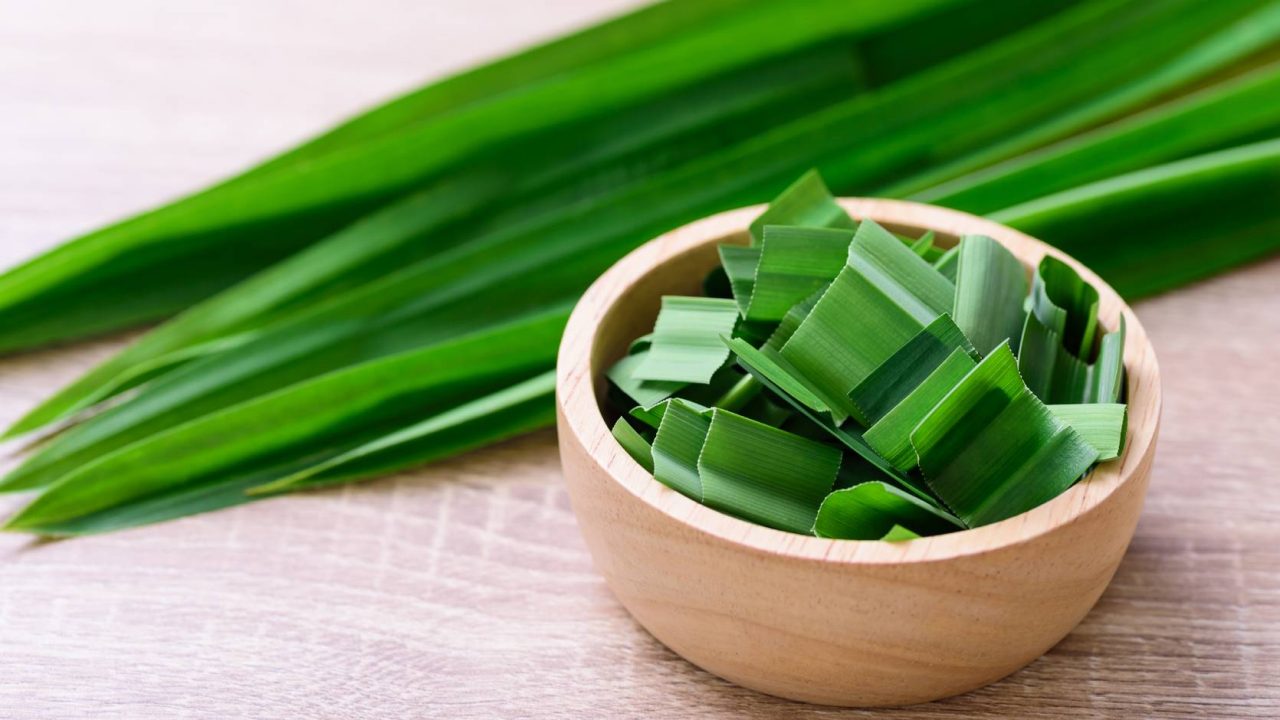
- Pandan Extract: Natural juice extracted from pounded Pandanus amaryllifolius leaves adds negligible calories and pure aromatic compounds, while commercial pastes or artificial food coloring often pack hidden corn syrup and sugars.
- Coconut Milk vs. Water: Substituting rich coconut cream with thin coconut milk or plain water drops the fat content by up to 60 percent, reducing a 250-calorie slice down closer to 180 calories.
- Sugar Content: Sponge cakes require sugar not only for sweetness but to stabilize the egg-white foam. Dropping the sugar below a certain threshold causes the cake to collapse, limiting how much you can reduce calories without altering texture.
According to the U.S. Department of Agriculture FoodData Central, standard chiffon cake nutrition benchmarks align closely with these figures, though commercial Asian bakery variants often skew higher in sugar.
Common Mistakes When Estimating Dessert Calories
It's easy to miscalculate how much energy you're consuming when enjoying traditional baked goods.
Eyebrating slice sizes is the most common error. A bakery slice cut to 100 grams contains nearly 30 percent more calories than an 75-gram slice cut at home. Weighing your food on a digital kitchen scale provides true accuracy.
Another misstep involves ignoring hidden toppings. Many street vendors and modern cafes serve pandan chiffon smothered in coconut flakes, gula melaka (palm sugar) syrup, or cheese shreds. A drizzle of palm sugar syrup adds an extra 50 to 80 calories per tablespoon, turning a light snack into a heavy dessert.
Frequently Asked Questions
Is pandan cake healthier than standard butter cake?
Pandan cake is generally lighter in saturated fat than a heavy pound cake or butter cake because it relies on whipped egg whites rather than solid butter for its rise. However, it still contains significant refined sugar and carbohydrates, so it isn't a diet food.
Can I freeze pandan cake without changing its calories?
Freezing changes the physical structure of water and starch molecules inside the crumb, but it does not alter the caloric or macronutrient value. Wrap slices tightly in plastic wrap to prevent freezer burn before storing.
Does real pandan leaf offer nutritional benefits?
Fresh pandan leaves contain minor traces of antioxidants, alkaloids, and volatile oils. While these compounds impart subtle wellness properties in traditional herbal medicine, the amount present in a slice of cake is too small to provide meaningful health benefits.
Why is my homemade pandan cake dense instead of fluffy?
A dense crumb usually stems from deflated egg whites during the folding process or insufficient whipping of the meringue. To keep the cake light and maintain its lower calorie-to-volume ratio, fold the meringue into the batter gently using a spatula rather than an electric mixer.



