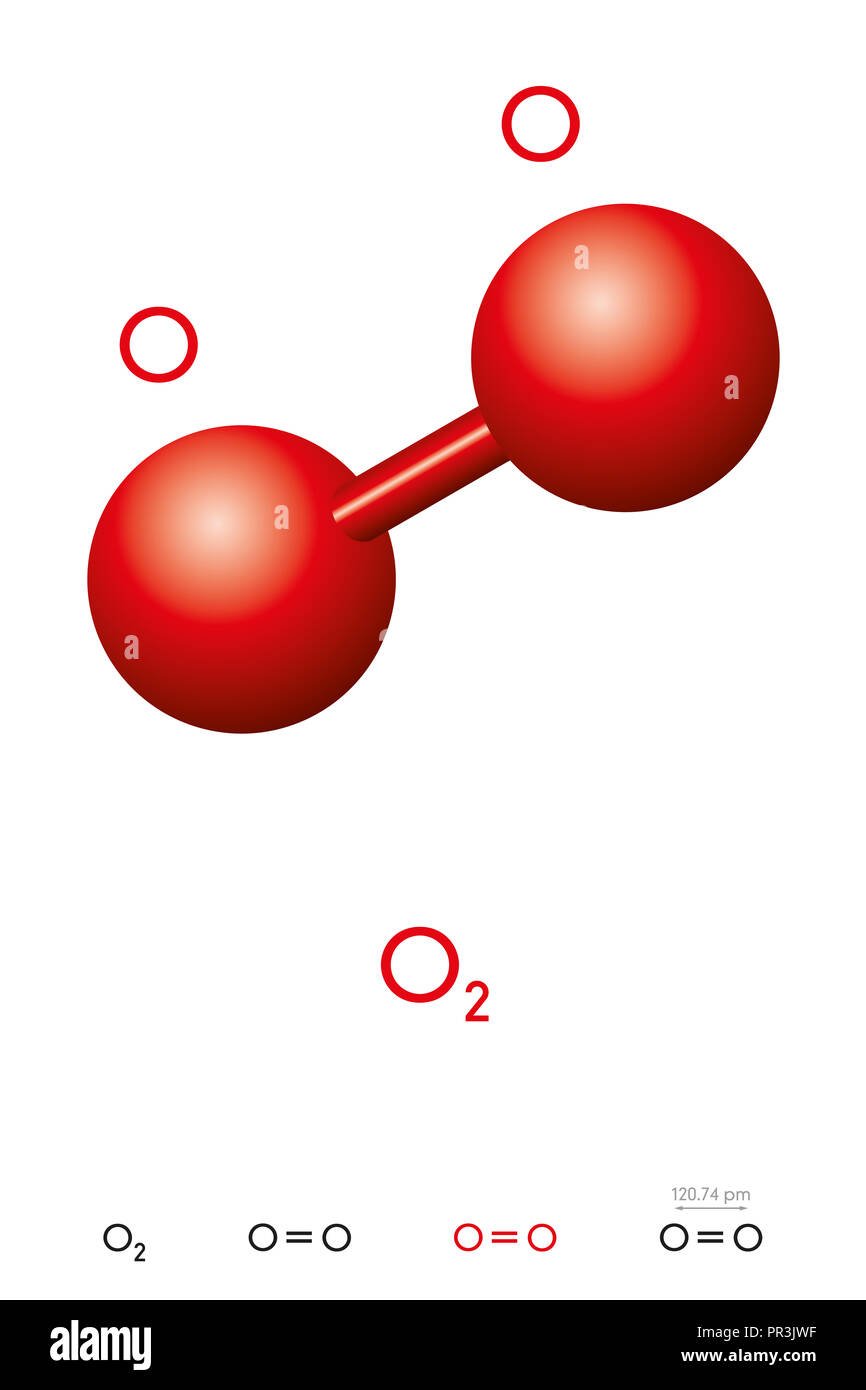
Oxygen is a nonmetal. It sits firmly in Group 16 of the periodic table, where it shapes everything from biological respiration to industrial steelmaking. When you look at its atomic properties, oxygen lacks every trait that defines a metal. It doesn't conduct electricity well, it shatters instead of bending when solid, and it loves to steal electrons rather than give them up.
Understanding this classification goes beyond a simple periodic table quiz. The chemical divide between metals and nonmetals governs how materials react, why fires burn, and how your cells generate energy. Let's break down why oxygen is classified as a nonmetal, how its physical and chemical traits prove it, and why this matters for the physical world.
Where Oxygen Lives on the Periodic Table
The periodic table isn't just a random grid of elements. It's a map organized by atomic structure and electron configurations. A diagonal zigzag line separates the table, with metals dominating the left and center sides, while nonmetals cluster in the upper right.
Oxygen lives in period 2, group 16. It shares this group—known as the chalcogens—with sulfur, selenium, tellurium, and polonium. Because it sits high on the right side of the zigzag line, it's surrounded by other classic nonmetals like nitrogen and fluorine.
Every element's placement depends on its valence electrons. Oxygen has six valence electrons in its outer shell. It needs eight for a stable configuration, meaning it actively seeks out two more electrons. Metals, by contrast, have low electronegativity and prefer to give up their valence electrons. This fundamental difference in electron hunger draws the permanent line between metals and nonmetals.
Physical Properties: Why Oxygen Defies Metallurgy
If you want to know whether an element is a metal, you test its physical behavior. Metals shine, conduct heat, and bend under pressure. Oxygen does none of these things.
Electrical and Thermal Insulation
Metals conduct electricity easily because of a free-flowing "sea" of delocalized electrons that carry current across the material. Oxygen gas doesn't have this structure. Its atoms pair up into diatomic molecules ($O_2$) held together by tight covalent bonds. Because electrons stay locked between the atoms rather than roaming free, oxygen acts as an insulator rather than a conductor.
Thermal conductivity follows the exact same rule. Oxygen can't transfer heat efficiently through molecular movement compared to copper or aluminum, making it useless for heat sinks or electrical wiring.
Mechanical Behavior in Solid States
At standard room temperature and pressure, oxygen is a gas. But if you drop its temperature below $-218.8^\circ C$, it freezes into a pale blue solid. If you strike that solid ice, it shatters instantly. It lacks ductility and malleability entirely. You can't hammer solid oxygen into thin foils or draw it into wires. It fractures along weak crystal planes—a classic mechanical trait of solid nonmetals.
Chemical Behavior: The Ultimate Electron Acceptor
While physical traits offer clues, chemical reactivity seals the deal. Nonmetals are defined by their tendency to gain electrons or share them via covalent bonding during chemical reactions.
Oxygen is one of the most aggressive oxidizing agents in the universe. It pulls electrons away from almost every other element on the periodic table to form chemical compounds called oxides. When iron reacts with oxygen, it forms iron oxide—rust. When carbon reacts with oxygen, it releases heat in a combustion reaction.
This craving for electrons drives redox reactions. In these processes, oxygen is reduced while oxidizing its partner. Metals behave in the exact opposite way, acting as reducing agents that donate electrons to form positive ions (cations). Oxygen forms negative ions (anions) or shares pairs, sealing its status as a nonmetal.
Real-World Impact: Biology and Industry
This chemical classification dictates how oxygen functions in practical environments.
In human biology, aerobic respiration relies entirely on oxygen's nonmetallic nature. Mitochondria use oxygen as the final electron acceptor in the electron transport chain. Because oxygen readily pulls electrons through the cellular machinery, it helps release the energy stored in glucose to power your muscles and organs.
In metallurgy, paradoxically, oxygen's nonmetallic nature is used to refine metals. During steel production in a Basic Oxygen Furnace, engineers blow pure oxygen through molten pig iron. The oxygen reacts with unwanted carbon and silicon impurities, burning them off as gases and leaving behind purified steel. Here, oxygen acts as a chemical scavenger, proving that understanding nonmetals is crucial for shaping metals.
Common Misconceptions About Elemental Classification
People often get confused because oxygen can react with almost everything, leading some to think it might possess metallic traits under extreme pressure.
- The "Gas vs. Solid" Confusion: Many assume nonmetals must be gases, while metals are solids. While most nonmetals are gases or brittle solids (and mercury is a liquid metal), physical state at room temperature doesn't determine chemical classification. Bromine is a liquid nonmetal, and carbon is a solid nonmetal.
- Metalloids vs. Nonmetals: Some confuse reactive nonmetals with metalloids (like silicon or boron). Metalloids sit directly on the zigzag dividing line and display mixed semiconductor properties. Oxygen sits far to the right, firmly in nonmetal territory with zero metallic crossover.
- Liquid Oxygen Density: Even when liquefied or solidified under cryogenic conditions, oxygen retains its molecular covalent bonding structure and electrical non-conductivity, never taking on a metallic crystal lattice.
Frequently Asked Questions
Is oxygen ever considered a metal under high pressure?
Under extreme laboratory pressures exceeding one million atmospheres, solid oxygen can enter metallic phases where it conducts electricity and forms crystal lattices. However, this is an exotic state of matter achieved only in extreme physics experiments; its standard chemical classification remains strictly nonmetallic.
Why doesn't oxygen conduct electricity even when liquid?
Liquid oxygen consists of discrete $O_2$ molecules. Even though the molecules are closer together than in a gas, electrons remain strongly bound within their covalent bonds and are not free to migrate across the liquid. Without free-flowing charge carriers, electrical current cannot pass through.
How does oxygen's electron configuration dictate its reactivity?
Oxygen has an atomic number of 8, with an electron configuration of $1s^2 2s^2 2p^4$. With six electrons in its outer valence shell, it needs two more to achieve a stable octet configuration. This drives its high electronegativity and aggressive bonding behavior with metals and other nonmetals alike.
Where can I check other element classifications on the periodic table?
You can review the standard categorization of elements and their properties directly through the International Union of Pure and Applied Chemistry or explore periodic tables curated by the Royal Society of Chemistry.


