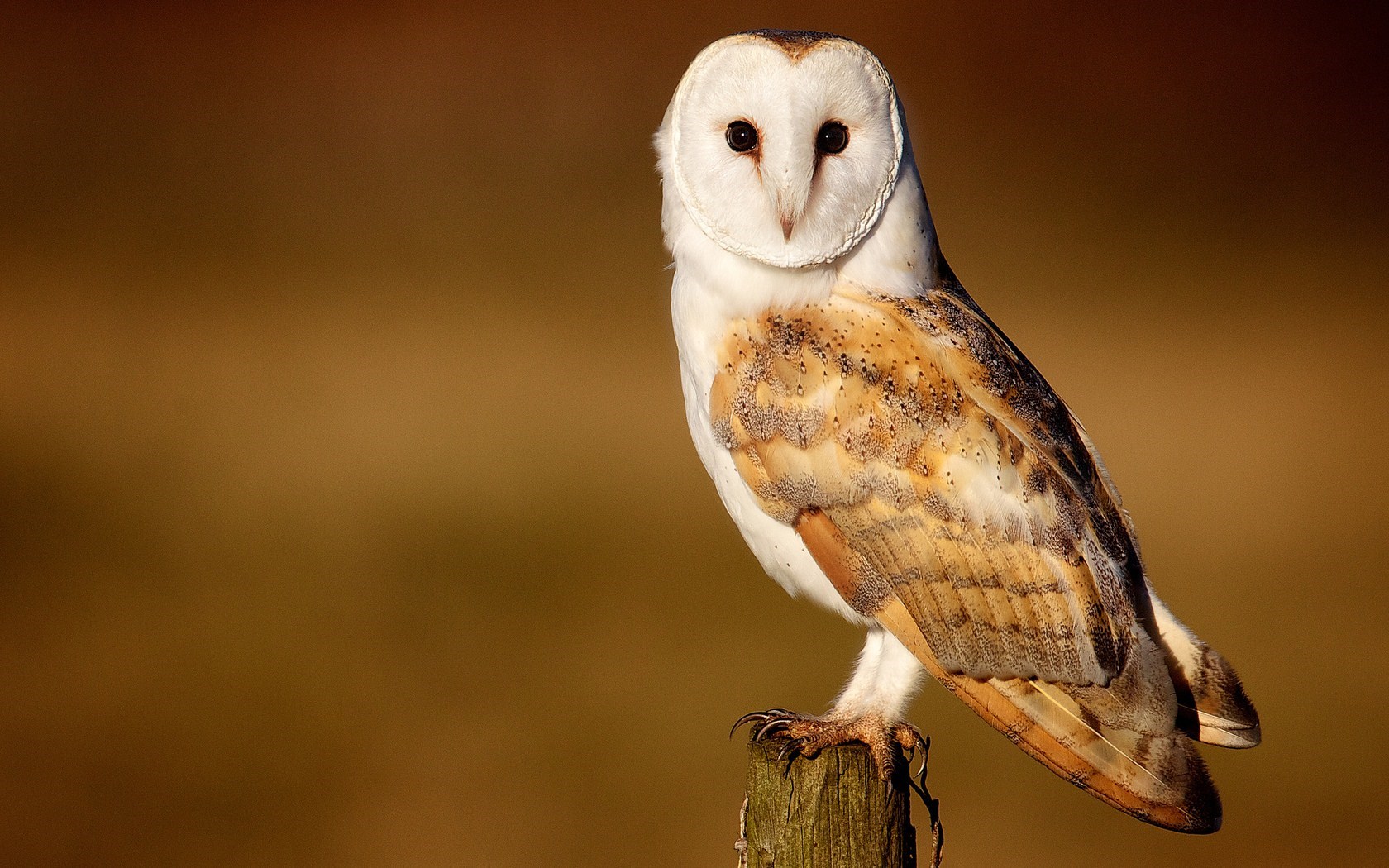
When people think of an owl's hunting toolkit, they usually picture ghost-like silent wings or facial discs that funnel sound. Yet the bill remains one of the most overlooked precision instruments in the avian world. Tucked beneath a curtain of specialized bristles, an owl beak serves a critical purpose that goes far beyond simple eating. It acts as a mechanical anchor, a tactile sensor, and a final dispatch tool when subduing fast-moving prey.
Unlike songbirds that use slender bills for picking seeds or hawks that rely heavily on their beaks for initial kills, owls operate under a different set of evolutionary rules. Understanding how these hooked keratin structures function reveals why they are perfectly engineered for nocturnal and low-light predation.
Anatomy of an Owl Beak
An owl's bill is crafted entirely for strength, leverage, and gripping power rather than fine manipulation. Composed of a hard horny outer layer of keratin over a bone core, the structure features several distinct anatomical traits.
- Downward Curvature: The entire bill curves sharply downward, ending in a distinct hook. This downward angle ensures that the beak never obstructs the owl's binocular field of vision, allowing it to track prey right up to the moment of impact.
- The Cere: Located at the base of the upper mandible, a fleshy or leathery membrane called the cere houses the nostrils. In many species, dense bristles grow outward from this region, functioning much like whiskers to help the bird sense objects close to its face.
- Flexible Cranial Hinge: Unlike most birds where the upper mandible is rigidly fused to the skull, owls possess a flexible strip of tissue at the upper hinge. This allows the upper jaw to flex slightly upward, increasing the gap size to swallow large prey whole or accommodate bulky items.
- Scissor-Like Margins: The sharp edges of the upper and lower mandibles overlap precisely. As the lower jaw moves, it acts in a scissor-like fashion to slice through skin and tissue.
According to the Cornell Lab of Ornithology, specialized adaptations in raptor skulls optimize bite force relative to body weight, ensuring that even medium-sized owls can dispatch robust rodents efficiently.
How the Beak Operates During a Hunt
The sequence of an owl strike relies heavily on coordination between talons and the bill. While the feet and powerful talons take the brunt of the impact to crush and immobilize prey, the beak steps in for the final phase.
Because owls have a notoriously poor sense of smell, they cannot track prey via scent trails. Instead, they rely on pinpoint hearing and acute low-light vision to strike. Once captured in the talons, wriggling prey like voles or mice are brought up toward the face. The hooked tip of the bill delivers a swift, precise bite to the cervical vertebrae of the animal, snapping its neck.
Furthermore, the bristled feathers surrounding the base of the bill play a hidden sensory role. When an owl handles a struggling mammal in total darkness, these facial bristles provide tactile feedback, letting the bird know exactly where the prey is positioned relative to its mouth without needing to see it.
Ecological Variations Across Species
Not all owl beaks are identical. Natural selection has shaped the bill dimensions of different species to match their primary diet and hunting environments.
+------------------------+---------------------------------------------------+
| Owl Species Group      | Primary Beak Characteristics & Diet Focus         |
+------------------------+---------------------------------------------------+
| Barn Owls (Tytonidae)  | Elongated, narrow bill; optimized for probing     |
|                        | grass and consuming small meadow rodents.         |
+------------------------+---------------------------------------------------+
| Horned Owls (Bubo)     | Massive, deeply hooked, and immensely thick;      |
|                        | built for taking down larger prey like rabbits.   |
+------------------------+---------------------------------------------------+
| Elf Owls (Micrathene)  | Tiny, delicate bill; specialized for catching     |
|                        | insects on the wing or picking beetles from bark. |
+------------------------+---------------------------------------------------+
Larger forest-dwelling species, such as the Eurasian Eagle-Owl, possess high-impact bills capable of crushing bone and tearing tough muscle tissue. Conversely, insectivorous owls feature lighter, shorter structures designed for snap-capturing flying bugs.
Common Misconceptions About Owl Beaks
Several myths surround how owls eat and use their facial features. Clearing these up provides a clearer picture of their biology.
- Do owls tear up all their food into tiny pieces? No. Smaller prey items, such as small mice or insects, are often swallowed entirely in a single gulp. Larger prey is torn into manageable chunks, but bones, fur, and teeth are avoided or later regurgitated as compact pellets.
- Is the beak used for defense? While an owl will snap its bill defensively or hiss when a nest is threatened, its primary defensive weapons are its sharp talons and powerful wings. The beak is reserved primarily for feeding and preening.
- Can owls breathe with a mouse in their mouth? Yes. The external nostrils on the cere remain clear of obstructions during feeding, and specialized respiratory adaptations allow them to manage airflow while handling struggling food items.
Frequently Asked Questions
Do owls use their beaks to groom their feathers?
Yes, preening is an essential daily activity. Owls use the tip of their hooked bill to distribute oils from the uropygial gland near the base of their tail, keeping their specialized silent-flight feathers waterproof and properly aligned.
Why are owl beaks often hidden by feathers?
The dense facial disc feathers and forward-facing bristles serve to channel sound waves directly into the facial ear openings. Covering the upper portion of the bill minimizes acoustic interference and enhances their stealth hunting capabilities.
Can an owl regrow its beak if damaged?
An owl beak is made of living bone covered in a growing layer of keratin, much like a human fingernail or a mammalian claw. Minor surface scratches or tip wear can grow out over time, but severe fractures to the underlying bone are usually fatal because the bird loses its ability to hunt and feed.
How do baby owls develop their bills?
Hatchlings are born with a small temporary projection on the upper mandible called an egg tooth, which they use to break through the shell. This tiny structure drops off shortly after hatching, and the permanent hooked bill rapidly develops as the chick transitions to a diet of whole meat provided by the parents.
For more detailed insights into raptor physiology and avian conservation, explore resources provided by the Audubon Society.



