Oscillations govern everything from the ticking of a grandfather clock to the alternating current powering your home. Yet, writers, engineers, and students often use terms like vibration, sway, and pulsation interchangeably. Precision matters in mechanics, where confusing a gentle sway with a destructive vibration can lead to structural failure.
An oscillation is a repetitive variation around a central equilibrium value over time. Understanding the exact distinctions between its synonyms allows engineers, scientists, and writers to describe mechanical systems with absolute accuracy. This guide decodes the lexicon of motion, detailing what these terms mean and how they apply in real-world scenarios.
Defining Oscillation: The Scientific Foundation
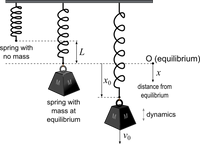
At its mechanical core, an oscillation describes a system moving back and forth repeatedly between two states or around a central point of equilibrium. Think of a mass suspended on a steel spring. Pull the mass downward, and the restoring force pulls it back upward. Inertia carries it past the resting point, creating a continuous loop of motion.
Physicists measure oscillations using specific variables:
- Amplitude: The maximum displacement from the equilibrium position.
- Period: The time required to complete one full back-and-forth cycle.
- Frequency: The number of completed cycles per second, measured in Hertz (Hz).
- Damping: The gradual loss of energy and reduction in amplitude over time due to friction or air resistance.
While oscillation serves as the formal mathematical term used in differential equations and wave mechanics, everyday communication relies on a rich vocabulary of specialized synonyms.
Core Synonyms for Back-and-Forth Motion
Each synonym for oscillation carries unique physical characteristics regarding speed, scale, and origin.
Vibration
A vibration is a rapid, high-frequency oscillation, often occurring at a microscopic level or producing audible sound. While all vibrations are oscillations, not all oscillations qualify as vibrations.
For example, the hum of an electric transformer or the jitter of a smartphone motor running on silent represent classic vibrations. They tend to have higher frequencies and are frequently unwanted side effects in mechanical design. Automotive engineers track engine vibrations using accelerometers to detect misfires or worn-out bearings before mechanical failure occurs.
Swing and Sway
When motion slows down into a large, graceful arc, swing and sway take over as the preferred descriptors.
- Swing: Implies a fixed pivot point and a regular pendulum arc. A playground swing, a wrecking ball, or a metronome on a piano all exhibit swinging motion.
- Sway: Suggests fluid, flexible adaptation to external forces without a fixed mechanical pivot. Skyscraper towers sway slightly in high winds to dissipate lateral kinetic energy, and tall pines bend back and forth during a storm.
Pulsation and Fluctuation
When motion involves cyclical changes in intensity, pressure, or flow rather than physical displacement through space, we describe it using pulsation or fluctuation.
- Pulsation: Refers to rhythmic throbbing or surges in pressure, such as blood moving through the human aorta or output from a positive-displacement water pump.
- Fluctuation: Describes irregular, non-uniform variations in value over time, such as daily temperature shifts or stock market volatility.
Mechanical Classification of Oscillatory Systems
Understanding how oscillations behave requires looking at how energy enters and leaves the system. Mechanics categorize these movements into three distinct types.
Free Oscillations
A free oscillation occurs when a system is disturbed once and allowed to move naturally without ongoing external forces. A guitar string plucked in a quiet room vibrates at its natural frequency until internal damping exhausts its kinetic energy. The frequency depends entirely on the mass, tension, and geometry of the string.
Forced Oscillations
When an external periodic force acts continuously on a system, it drives forced oscillations. A washing machine spinning an unbalanced load of laundry creates a forced oscillation throughout the appliance chassis. If the driving frequency matches the natural frequency of the chassis, resonance occurs, causing amplitudes to spike dramatically and potentially causing structural damage.
Damped Oscillations
In real-world environments, friction and air resistance remove energy from moving systems. A car's suspension system uses hydraulic shock absorbers to create damped oscillations, ensuring that hitting a pothole results in a single controlled compression and rebound rather than endless bouncing.
Common Mistakes in Describing Motion
Even technical writers occasionally mix up mechanical terms. Avoiding these errors keeps communication clear and precise.
- Confusing amplitude with frequency: Amplitude measures distance or intensity, while frequency measures speed or cycles per second. A wave can have a massive amplitude while moving very slowly.
- Calling random noise a vibration: True vibration is periodic or steady-state. Random mechanical rattling often stems from loose fasteners rather than harmonic vibration.
- Treating resonance as a synonym for vibration: Resonance is a specific condition where a system amplifies energy transfer at a specific driving frequency, not a type of motion itself.
Practical Applications in Engineering
Engineers rely on precise terminology when designing structures that resist dynamic loads. Suspension bridges, skyscraper foundations, and aircraft wings must account for harmonic motion to prevent catastrophic fatigue failures.
For instance, the Tacoma Narrows Bridge collapse in 1940 demonstrated the destructive power of aeroelastic flutter—a self-sustaining oscillation driven by steady winds. Modern civil engineers use tuned mass dampers—heavy pendulums suspended inside skyscrapers like Taipei 101—to counteract building sway during typhoons and earthquakes.
Frequently Asked Questions
What is the difference between oscillation and wave motion?
An oscillation is a single repeating back-and-forth movement at a specific point or within a localized system. A wave is an oscillation that propagates energy through space or a medium from one location to another.
Can oscillations occur without gravity?
Yes. Mechanical systems like mass-spring setups or electromagnetic oscillations (such as radio waves generated by oscillating electrical circuits) rely on elasticity, inertia, or electromagnetic fields rather than gravitational pull.
Why do oscillating systems eventually stop moving?
Unless energy is actively added to the system from an outside source, thermodynamic friction, air drag, and internal material resistance convert kinetic energy into thermal energy, causing the oscillations to damp out completely.
Are all vibrations harmful?
No. While unwanted vibrations cause machinery wear and structural fatigue, controlled vibrations power ultrasonic cleaners, mobile device haptics, quartz watch movements, and musical instruments.



