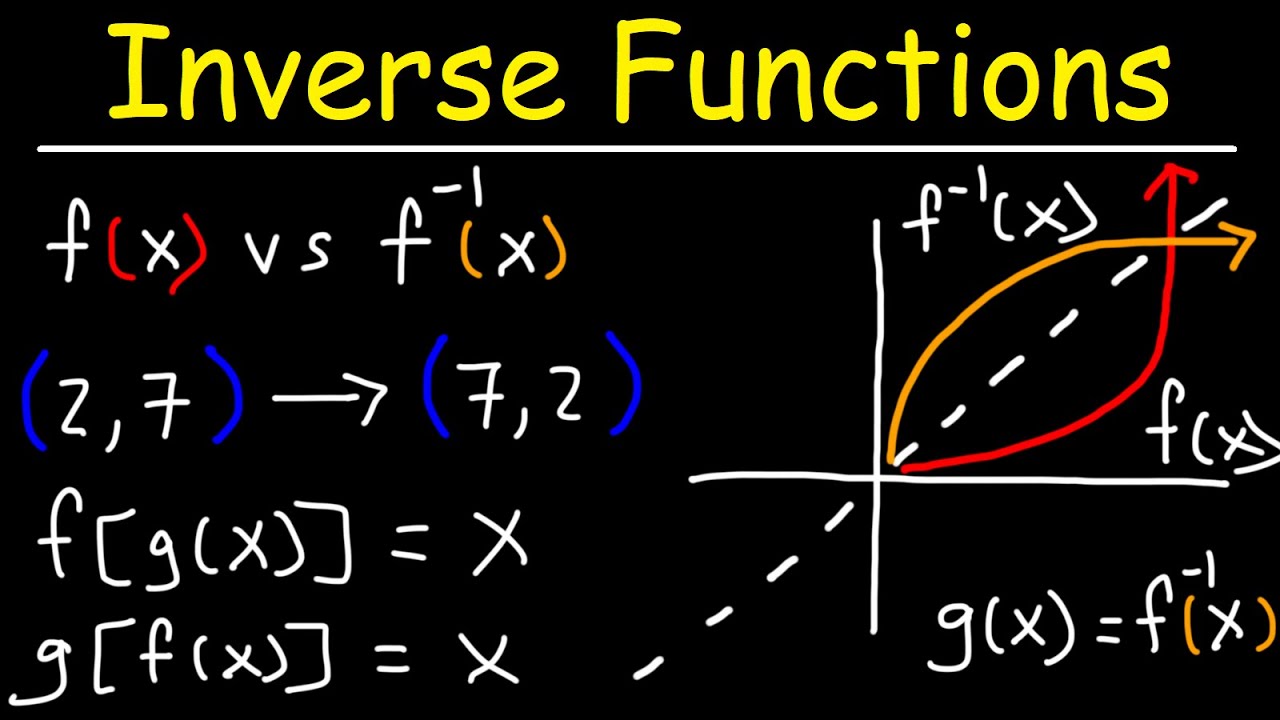
When you study algebra, math operations always come in pairs. Addition pairs with subtraction, and multiplication pairs with division. In the realm of higher-order arithmetic, the opposite of the square root is the exponent, specifically squaring a number. Understanding how these opposing forces interact lets you solve equations, calculate growth rates, and dismantle complex mathematical expressions with ease.
At its core, exponentiation multiplies a number by itself repeatedly, while the square root reverses that process to find the original building block. If you raise a base to the second power, you square it. To undo that action, you apply a square root. This bidirectional relationship forms the backbone of quantitative problem-solving across physics, finance, and engineering.
Decoding the Exponential Foundation
Before you can master the inverse, you need to understand how exponentiation works. An exponent tells you how many times a base number appears as a factor in multiplication.
For example, $4^3$ means you multiply 4 by itself three times: Similar analysis regarding this has been provided by BBC.
$4 \times 4 \times 4 = 64$
In this expression, 4 is the base and 3 is the exponent. Instead of writing out a long chain of multiplication, the exponent acts as shorthand.
Math rules govern how you manipulate these expressions. When you multiply two identical bases, you add their powers. When you divide them, you subtract the powers.
- Product Rule: $a^m \times a^n = a^{m+n}$ (for example, $3^2 \times 3^3 = 3^5 = 243$)
- Quotient Rule: $a^m \div a^n = a^{m-n}$ (for example, $5^4 \div 5^2 = 5^2 = 25$)
- Power Rule: $(a^m)^n = a^{m \times n}$ (for example, $(2^2)^3 = 2^6 = 64$)
These properties ensure that numbers behave predictably, whether you're working with small integers or massive values in computer science and data encryption.
The Counterpart: Unpacking Square Roots
If exponents build numbers up through repeated multiplication, roots break them down to their core components. The square root symbol, $\sqrt{}$, asks a specific question: what number, when multiplied by itself, yields this exact value?
Take the number 25. The square root of 25 is 5 because $5 \times 5 = 25$. This operation directly reverses the squaring process.
This relationship scales up to higher powers. The cube root ($\sqrt[3]{}$) undoes a number raised to the third power, while the fourth root undoes a fourth-power calculation. These are known collectively as nth roots.
- Exponent Form: $7^2 = 49$
- Root Form: $\sqrt{49} = 7$
When you encounter an unknown variable trapped inside a square or cube, you use the appropriate root to isolate that variable and solve the equation.
Solving Equations Using Inverse Operations
The true test of mathematical literacy is putting these inverses to work in practical scenarios. Consider geometry. The area of a square is calculated using the formula $A = s^2$, where $s$ represents the side length.
If you know a room's floor plan has an area of 81 square meters, you set up the equation:
$81 = s^2$
To find the missing side length, you apply the opposite of squaring to both sides by taking the square root:
$s = \sqrt{81}$
$s = 9$ meters
Engineers, financial analysts, and programmers use this exact logic daily. Calculating compound interest rates, determining projectile velocity in physics, and scaling digital images all rely on balancing exponents with their root counterparts.
Fractional Exponents and Higher Roots
Math notation often bridges exponents and roots using fractions. A rational exponent is simply an exponent that represents a root.
For instance, raising a number to the power of $\frac{1}{2}$ is mathematically identical to taking its square root. Similarly, raising a number to the power of $\frac{1}{3}$ is the same as taking its cube root:
$8^{\frac{1}{3}} = \sqrt[3]{8} = 2$
This unified notation lets you simplify complex radical expressions without switching between entirely different mathematical systems. You can read more about foundational number theory through resources like Khan Academy.
Common Mistakes to Avoid
When students learn to balance exponents and roots, several pitfalls frequently trip them up. Avoiding these errors saves time and prevents calculation drift.
- Confusing coefficients with exponents: Writing $2 \times 3$ instead of $2^3$ is a common slip. Remember that $2^3$ equals 8, while $2 \times 3$ equals 6.
- Forgetting positive and negative roots: When you solve $x^2 = 16$, remember that both $4$ and $-4$ are valid answers because $(-4) \times (-4)$ also equals 16.
- Misapplying distribution rules: You cannot distribute a square root across addition. $\sqrt{a + b}$ does not equal $\sqrt{a} + \sqrt{b}$. Test this with numbers: $\sqrt{9 + 16} = \sqrt{25} = 5$, whereas $\sqrt{9} + \sqrt{16} = 3 + 4 = 7$.
Frequently Asked Questions
What is the difference between a square root and a cube root?
A square root finds a number that multiplies by itself twice to yield the target value. A cube root finds a number that multiplies by itself three times. For example, the square root of 64 is 8, while the cube root of 64 is 4.
Why do negative numbers cause issues with square roots?
In standard real number arithmetic, you cannot take the square root of a negative number because no real number multiplied by itself yields a negative product. That specific problem requires imaginary and complex numbers, using the unit $i$.
Are fractional exponents always roots?
Yes. Any exponent in the form of $\frac{1}{n}$ represents the nth root of the base number. More complex fractions, such as $\frac{2}{3}$, combine both powers and roots, where the numerator is the power and the denominator is the root degree.
How do modern calculators compute square roots?
Calculators don't guess roots; they use iterative numerical approximation algorithms, such as the Newton-Raphson method, to converge rapidly on the exact decimal value of a square or cube root. You can explore calculation mechanics further via NIST.


