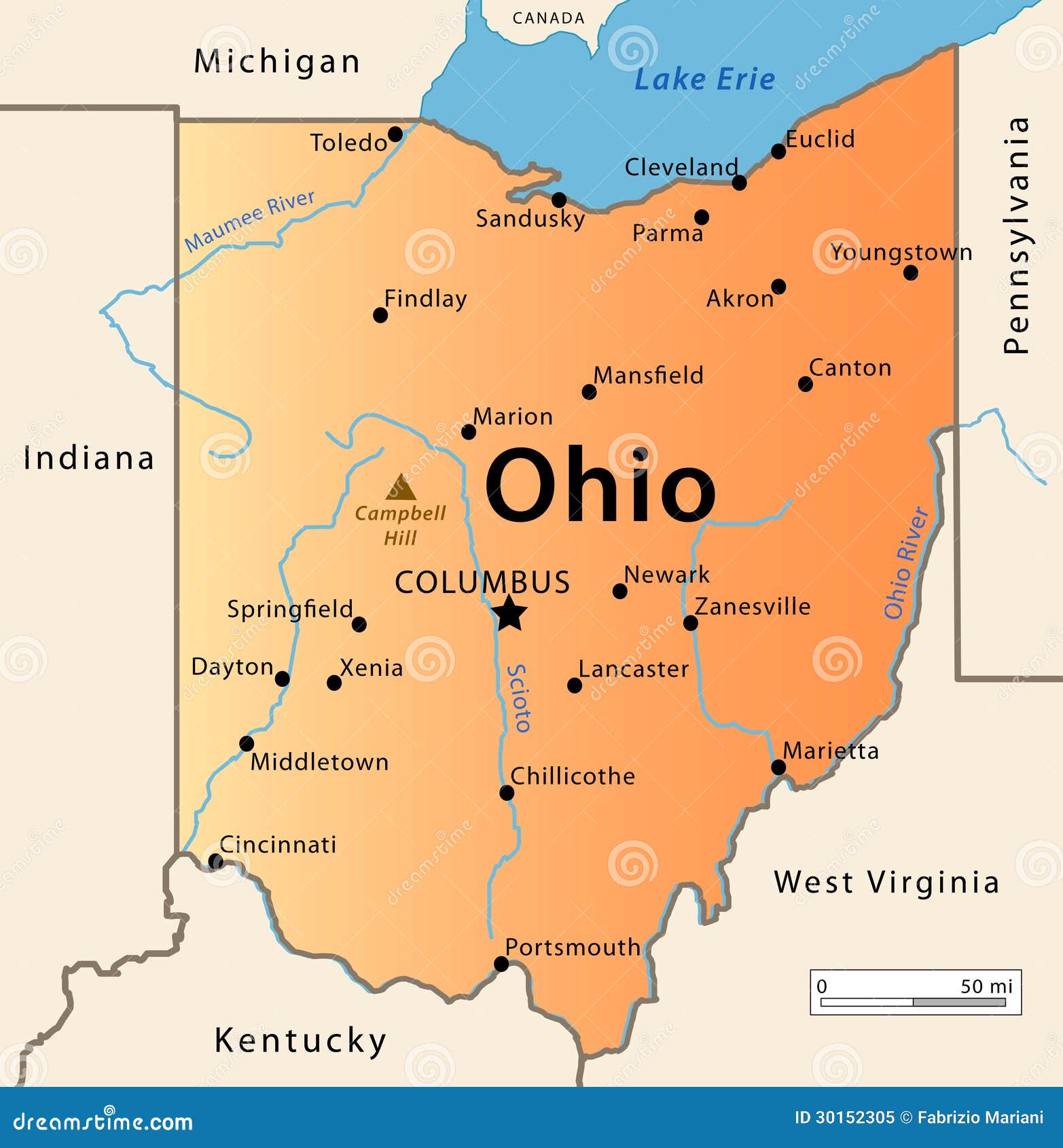
Almost all of Ohio operates on the Eastern Time Zone, observing Eastern Standard Time during the winter and Eastern Daylight Time in the summer. For residents, businesses, and interstate travelers, this single hourly designation dictates everything from stock market trading hours to logistics dispatch windows and broadcasting schedules. While the time zone alignment seems straightforward on paper, managing a state that sits on the western edge of its zone introduces unique scheduling nuances, travel considerations, and operational adjustments for local enterprises.
Understanding how time is structured across the Buckeye State helps organizations optimize shift handovers, freight management, and customer service hours. When you coordinate operations spanning multiple time zones, recognizing Ohio's specific positioning relative to Central Time neighbors like Indiana and Kentucky prevents costly coordination errors.
The Geographic and Legal Foundation of Ohio's Time Zone
The United States is divided into distinct statutory time zones regulated by federal law under the Department of Transportation. Ohio falls squarely within the Eastern Time Zone, a classification established by federal statute and maintained through decades of regulatory adjustments.
Unlike neighboring Indiana, which historically featured a split between Eastern and Central times before unifying almost entirely under the Eastern zone, Ohio has maintained a uniform Eastern designation statewide. This uniformity simplifies intrastate commerce, ensuring that a business in Cincinnati shares the exact same clock time as a facility in Cleveland, Youngstown, or Toledo.
However, because Ohio sits on the western frontier of the Eastern Time Zone, solar time—the actual position of the sun overhead—differs noticeably between the state's eastern and western borders. Cities like Steubenville experience sunrise and sunset earlier than cities like Van Wert or Greenville. This geographical stretching of a single time zone means that western Ohio experiences later summer sunsets, a factor that influences evening construction work, agricultural harvesting schedules, and outdoor recreational programming.
Business Operations and Interstate Coordination
For Ohio businesses, operating on Eastern Time offers distinct advantages and specific logistical hurdles. Because the major financial hubs of New York, Washington, D.C., and Boston share the same clock, financial markets, banking hours, and corporate headquarters align seamlessly with Ohio's standard business day.
Financial and Corporate Synchronization
Banks, stock exchanges, and federal regulatory agencies operate on Eastern Time. Ohio businesses execute transactions, wire transfers, and corporate filings without needing to calculate time offsets for daily deadlines. This alignment aids supply chain management, particularly for manufacturing and distribution firms that rely on just-in-time inventory delivery systems running between the Midwest and the Atlantic seaboard.
Managing Cross-Border Logistics
While Ohio shares its western border with Indiana, which is predominantly Eastern, and Kentucky, which is split between Eastern and Central times, logistics managers must pay close attention to transit times. A freight carrier dispatching a shipment from Cincinnati to Louisville, Kentucky, crosses into the Central Time Zone, effectively gaining an hour on the clock for westbound travel, but losing an hour on eastbound return trips.
- Dispatch Planning: Fleet managers build buffer windows into drivers' schedules to account for time zone transitions when servicing customers near state borders.
- Warehouse Cutoffs: Distribution centers operating multi-shift schedules synchronize shift changeovers carefully to prevent bottlenecks during peak parcel pickup times tied to national carrier hubs.
- Customer Support: Call centers based in Ohio serving national client bases must adjust staffing levels to accommodate callers from Pacific and Mountain time zones, extending evening coverage to match western business hours.
Safety, Emergency Services, and Infrastructure
Time zone consistency plays a critical role in public safety, emergency dispatching, and critical infrastructure management across Ohio. Emergency communication centers rely on synchronized atomic clocks to log incident reports, dispatch first responders, and coordinate multi-agency responses.
When Daylight Saving Time begins and ends, emergency services implement specific protocols to manage the shift. Public safety answering points double-staff or review shift logs during the autumn "fall back" hour to ensure that incident reports logged during the repeated 1:00 AM to 2:00 AM hour do not create duplicate records or dispatch errors.
Transportation infrastructure also relies heavily on precise timekeeping. The Federal Aviation Administration mandates Coordinated Universal Time for all flight planning and air traffic control communications, but local commercial flight schedules at airports like Cleveland Hopkins International and John Glenn Columbus International rely on Eastern Time to keep passenger itineraries clear.
Daily Life and Social Rhythms
For Ohio residents, the Eastern Time Zone shapes daily routines, media consumption, and seasonal activities. The timing of local news broadcasts, school district bell schedules, and municipal services aligns with standard eastern conventions.
The most notable impact on daily life occurs twice a year during the transition to and from Daylight Saving Time. Springing forward in March forces residents to adjust sleep schedules, which studies consistently link to short-term spikes in morning traffic accidents and workplace fatigue. Conversely, falling back in November grants an extra hour of sleep but plunges afternoon commutes into darkness much earlier, altering evening driving habits and pedestrian safety measures.
To mitigate these disruptions, local employers and school boards increasingly adopt flexible scheduling policies during time change weeks, allowing employees and students time to adjust to the altered circadian rhythm.
Common Misconceptions About Ohio Time
Several persistent myths surround timekeeping in Ohio, often stemming from confusion over neighboring state borders or historical adjustments.
- Myth: Parts of western Ohio observe Central Time. Fact: The entire state of Ohio operates strictly on Eastern Time. No counties observe Central Time, unlike parts of neighboring Indiana and Kentucky.
- Myth: Daylight Saving Time is optional for local municipalities. Fact: Under federal law and state guidelines, Daylight Saving Time is observed uniformly statewide unless federal legislation alters the standard.
- Myth: Solar noon occurs at 12:00 PM everywhere in the state. Fact: Due to Ohio's width within the time zone, true solar noon happens later in western Ohio than in eastern Ohio.
Frequently Asked Questions
Does any part of Ohio use Central Time?
No. Every county in Ohio operates on the Eastern Time Zone. While some neighboring states have split time zones, Ohio maintains a uniform time across all 88 counties.
When does Ohio change its clocks for Daylight Saving Time?
Ohio follows the federal standard set by the U.S. Naval Observatory, moving clocks forward one hour on the second Sunday in March and back one hour on the first Sunday in November.
How does Ohio's time zone affect remote workers with national teams?
Remote workers based in Ohio operate one hour ahead of Central Time, three hours ahead of Pacific Time, and five hours ahead of Hawaii. This requires careful calendar management to ensure meetings scheduled for late afternoon in Ohio do not conflict with end-of-day commitments for western colleagues.
Why do some western Ohio cities experience later sunsets than eastern cities?
Because the Eastern Time Zone extends far to the west, cities on the western edge of Ohio are physically located further west geographically, causing the sun to set later relative to the clock than it does in eastern border towns.



