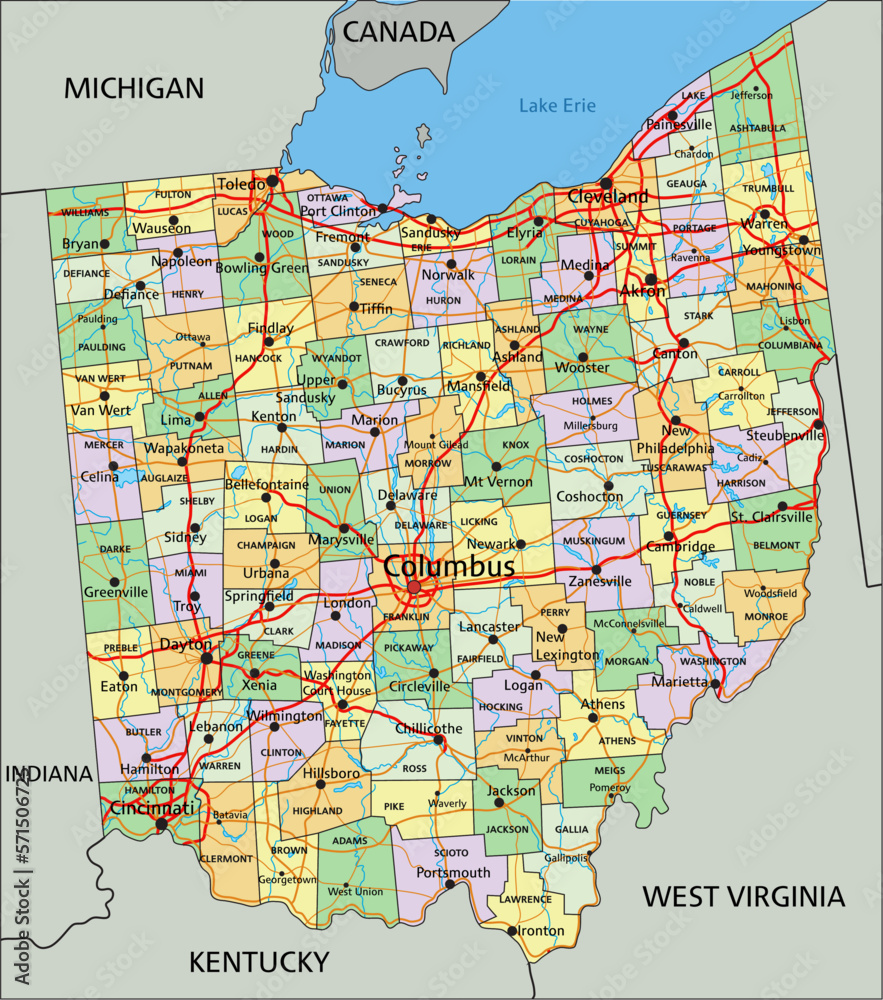
Ohio operates entirely within the Eastern Time Zone, sharing its clock synchronization with major East Coast hubs like New York City, Atlanta, and Miami. Whether you're scheduling a cross-country business call between Cleveland and Manhattan or tracking Amtrak train arrivals, Ohio observes Eastern Standard Time (EST) during the winter months and Eastern Daylight Time (EDT) in the summer.
While it's easy to assume the entire state matches its eastern neighbors effortlessly, Ohio's position near the western edge of the time zone creates unique quirks in solar time, seasonal daylight shifts, and historical boundary decisions.
1. Ohio Shares the Eastern Time Zone With New York
Ohio and New York sit side-by-side in the Eastern Time Zone, meaning clocks tick in exact unison from Cincinnati to Montauk. During standard time, both states sit five hours behind Coordinated Universal Time (UTC-5), shifting to four hours behind (UTC-4) when daylight saving time is active.
This shared alignment eliminates friction for financial markets, media broadcasts, and corporate supply chains linking the Midwest to the Northeast. A logistics manager dispatching a freight truck from Columbus to Albany doesn't need to calculate hour adjustments, streamlining regional commerce across the Rust Belt and Mid-Atlantic. You can check official time offsets via the National Institute of Standards and Technology.
2. The Entire State Stays Unified on Eastern Time
Unlike neighboring states such as Indiana, Kentucky, or Tennessee—which split their territories between Eastern and Central time zones—Ohio is entirely unified. Every single one of its 88 counties, from the shores of Lake Erie down to the banks of the Ohio River, keeps identical time.
This uniformity prevents local confusion for commuters crossing county lines. Someone driving from Toledo down to Dayton never has to manually adjust dashboard clocks or worry about missing appointments due to regional time splits.
3. Solar Noon Differs Significantly From Clock Noon
Because Ohio sits on the western fringe of the Eastern Time Zone, clock time doesn't always match solar time. True solar noon—the moment the sun reaches its highest point in the sky—occurs much later in western Ohio than it does along the Atlantic Coast.
In eastern border towns like East Liverpool, solar noon aligns closely with standard clock measurements. However, in western cities like Van Wert or Greenville, the sun peaks nearly half an hour later than it does in New York City. This geographic stretch means western Ohio experiences later sunsets during summer evenings, stretching daylight past 9:00 p.m. during June.
4. Seasonal Clock Changes Follow Federal Rules
Ohio observes both Eastern Standard Time and Eastern Daylight Time, shifting twice a year under federal guidelines regulated by the U.S. Department of Transportation.
- Spring Forward: On the second Sunday in March, clocks jump ahead one hour at 2:00 a.m. local time, transitioning the state to EDT.
- Fall Back: On the first Sunday in November, clocks turn backward one hour at 2:00 a.m., returning Ohio to EST.
These transitions dictate everything from school bus schedules to energy consumption patterns across municipal power grids.
5. Historical Adjustments Shaped Modern Borders
Time zones weren't always standardized. Before the late nineteenth century, individual Ohio towns ran on local solar time, causing massive chaos for railroad scheduling. Railroad companies forced the initial creation of standard time zones in 1883, and the federal Standard Time Act of 1918 officially codified these boundaries.
Over the decades, the Interstate Commerce Commission adjusted regional boundaries as industrial transit expanded. Ohio's current footprint firmly settled into the Eastern zone due to its heavy economic ties with eastern manufacturing and financial centers.
Frequently Asked Questions
Does any part of Ohio use Central Time?
No. All 88 counties in Ohio operate exclusively on Eastern Time.
When do clocks change in Ohio?
Clocks move forward one hour on the second Sunday in March and move backward one hour on the first Sunday in November.
Why does the sun set so late in western Ohio during summer?
Because Ohio sits on the western edge of the Eastern Time Zone, its geographic longitude pushes solar noon later relative to standard clock time, resulting in extended evening daylight.
Do neighboring states share the same time zone?
Yes, Pennsylvania, West Virginia, and New York share the Eastern Time Zone, while Indiana and Michigan are also entirely or mostly Eastern, bordering western parts of Ohio that transition toward Central time across state lines.



