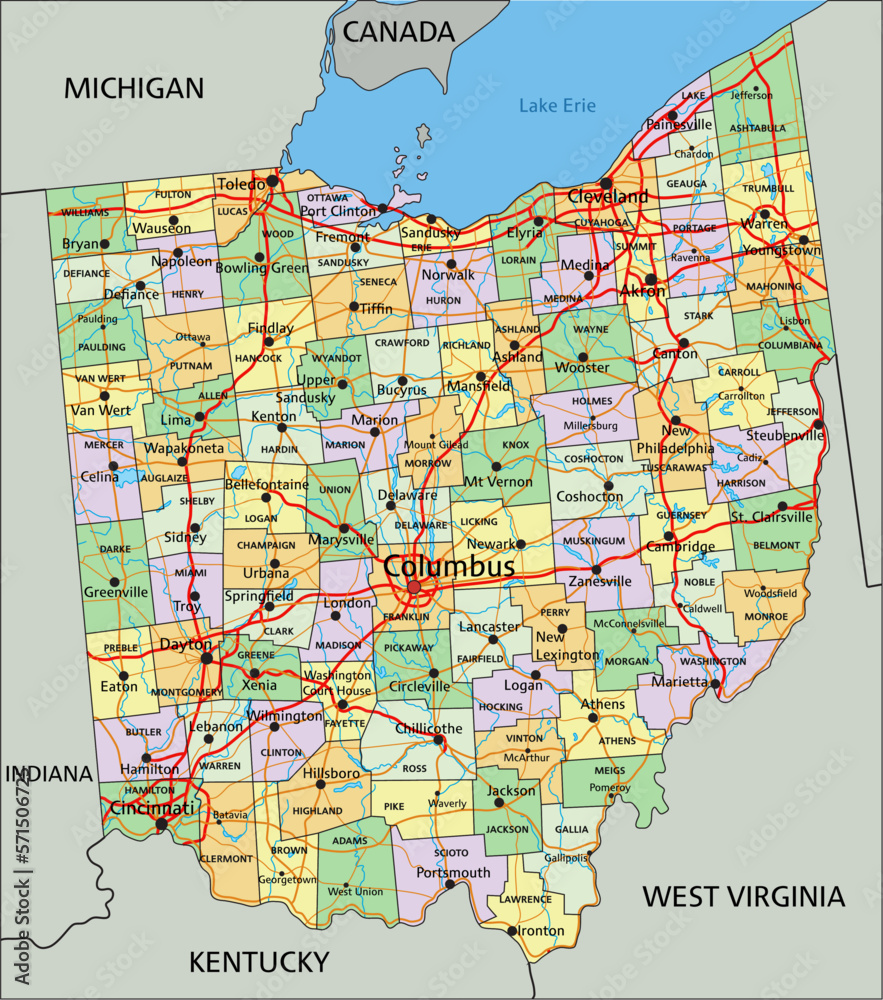
Ohio time operates entirely within the Eastern Time Zone, except for a small sliver in the west, but maintaining this uniformity required decades of chaotic local adjustments, railroad standardization, and legislative battles. Before the late nineteenth century, every town in Ohio kept its own local solar time based on the exact moment the sun crossed its meridian. Noon in Cleveland was a few minutes different from noon in Cincinnati, making coordination across the state an operational nightmare.
Railroad expansion in the 1880s forced a radical rethink of how time was measured. Trains needed reliable schedules to prevent collisions on single tracks, leading railway operators to force standard time zones onto the public long before the federal government made it official. Today, Ohio remains a fascinating case study in how geographic boundaries, industrial necessity, and seasonal legislative shifts collided to shape modern timekeeping.
The Chaos of Local Solar Time Before 1883
In the early decades of Ohio's settlement, towns relied on local apparent solar time. Clocks were set by sundials or transit instruments at local astronomical observatories, meaning a traveler moving west from Steubenville to Dayton would notice clocks ticking out of sync by several minutes. This variation caused few problems when travel meant horse-drawn carriages, but the advent of the steam locomotive rendered local solar time dangerous.
When two trains shared a single track running in opposite directions, conductor pocket watches had to match precisely. Even a discrepancy of five minutes could result in a catastrophic head-on collision. Railroad companies took matters into their own hands on November 18, 1883, dividing the United States into four distinct standard time zones: Eastern, Central, Mountain, and Pacific.
Ohio found itself straddling the boundary line between the Eastern and Central zones. Major cities like Cleveland and Columbus quickly adopted Eastern Time to stay synchronized with East Coast financial markets, while parts of western Ohio flirted with Central Time. The transition faced heavy resistance from traditionalists who argued that railroad time was artificial and ignored true solar noon. Municipal councils debated for months over whether city hall clocks should follow municipal law or railroad schedules.
The Federalization of Time and the Standard Time Act
For decades, standard time remained a private agreement among railways, shipping companies, and major municipalities. It wasn't until March 19, 1918, that Congress passed the Standard Time Act, officially placing the federal government in charge of time zones and introducing daylight saving time to conserve fuel during World War I.
The 1918 law formally placed Ohio within the Eastern Time Zone boundary, though the Interstate Commerce Commission (ICC) held the authority to adjust zone lines upon petition from local governments. During the interwar period, numerous rural Ohio counties petitioned the ICC to switch back and forth between Eastern and Central time to better align with local agricultural markets, livestock auctions, and radio broadcasting schedules.
The repeal of wartime daylight saving after World War I triggered a patchwork of local ordinances across Ohio. Some cities, like Cleveland, voted to stay on fast time year-round to maximize evening leisure hours for factory workers, while neighboring rural towns stuck to standard time. This split timekeeping created profound confusion for commuters, bus lines, and postal services operating across county lines.
The Uniform Time Act and Modern Standardization
To end the chaos of mismatched local clocks, Congress passed the Uniform Time Act of 1966. This federal legislation mandated that if a state observed daylight saving time, it had to begin and end on uniform dates nationwide, and the entire state had to observe the same time rules unless an exemption or boundary adjustment was granted by the ICC.
Ohio fully integrated into the federal schedule under the Uniform Time Act, establishing the familiar pattern of springing forward on the first Sunday in April and falling back on the last Sunday in October. This brought stability to Ohio's manufacturing sector, which relied on synchronized supply chains stretching across Michigan, Pennsylvania, and Indiana.
In 2007, the federal government extended daylight saving time by an additional four months under the Energy Policy Act of 2005, moving the spring transition to March and the fall transition to November. While intended to reduce energy consumption, this shift sparked renewed debates among Ohio lawmakers regarding the health and productivity impacts of disrupting circadian rhythms.
Geographic Anomalies and Boundary Adjustments
While the vast majority of Ohio operates on Eastern Standard Time (EST) and Eastern Daylight Time (EDT), the state's time zone boundaries have not been entirely static. Over the years, the ICC and its successor, the Department of Transportation, reviewed petitions from various border communities seeking relief from inconvenient time zone placements.
The most notable historical adjustments involved Ohio's western border with Indiana. For much of the mid-twentieth century, Indiana maintained a complex patchwork where some counties observed daylight saving time and others did not, creating cascading scheduling issues for Ohio businesses trading across the state line. When the Department of Transportation shifted most of Indiana into the Eastern Time Zone in 2006, it reinforced Ohio's western economic ties and smoothed out cross-border logistics.
Today, all eighty-eight counties in Ohio sit firmly within the Eastern Time Zone. The state line with Pennsylvania, West Virginia, Kentucky, and Indiana marks a seamless temporal boundary, eliminating the historical headaches faced by interstate travelers a century ago.
Economic and Industrial Impacts of Timekeeping in Ohio
Ohio's evolution from solar time to rigid zone synchronization directly fueled its rise as an industrial powerhouse. In manufacturing hubs like Cleveland, Akron, and Toledo, shift work relied on absolute precision. Factories operating twenty-four hours a day required shift changes to happen down to the exact minute to ensure seamless handoffs on assembly lines.
The National Institute of Standards and Technology notes that precise time synchronization became even more critical with the rise of telecommunications, computer networks, and financial exchanges. Modern Ohio infrastructure—including power grids managed by PJM Interconnection and automated logistics centers—depends on Coordinated Universal Time (UTC) references that trace their lineage back to the railroad time standards of the 1880s.
Agriculture in Ohio also adapted to standardized time. While crops grow according to natural sunlight regardless of what a clock reads, dairy farmers, livestock auctioneers, and grain elevators had to synchronize their operations with grain markets in Chicago and New York. The tension between natural biological rhythms and artificial clock time remains a talking point among rural communities in eastern and southern Ohio.
Frequently Asked Questions
Does all of Ohio observe the same time zone?
Yes. Every county in Ohio operates within the Eastern Time Zone, observing Eastern Standard Time in the winter and Eastern Daylight Time in the summer.
Did Ohio ever try to abolish daylight saving time?
State legislators have introduced multiple bills over the years to exempt Ohio from seasonal time changes or petition for permanent standard time, but none have successfully passed into law due to federal restrictions under the Uniform Time Act.
Why did railroads create time zones instead of the government?
Before 1883, every town set its clocks by the sun, creating dozens of local times across Ohio alone. This lack of uniformity made railway timetables impossible to maintain safely, forcing railroads to establish standardized hourly zones for operational safety.
How does Ohio's time zone affect remote workers and businesses?
Because Ohio shares the Eastern Time Zone with major financial and media centers like New York and Washington, D.C., businesses in Columbus, Cincinnati, and Cleveland operate on identical trading and communication hours without offset confusion.



