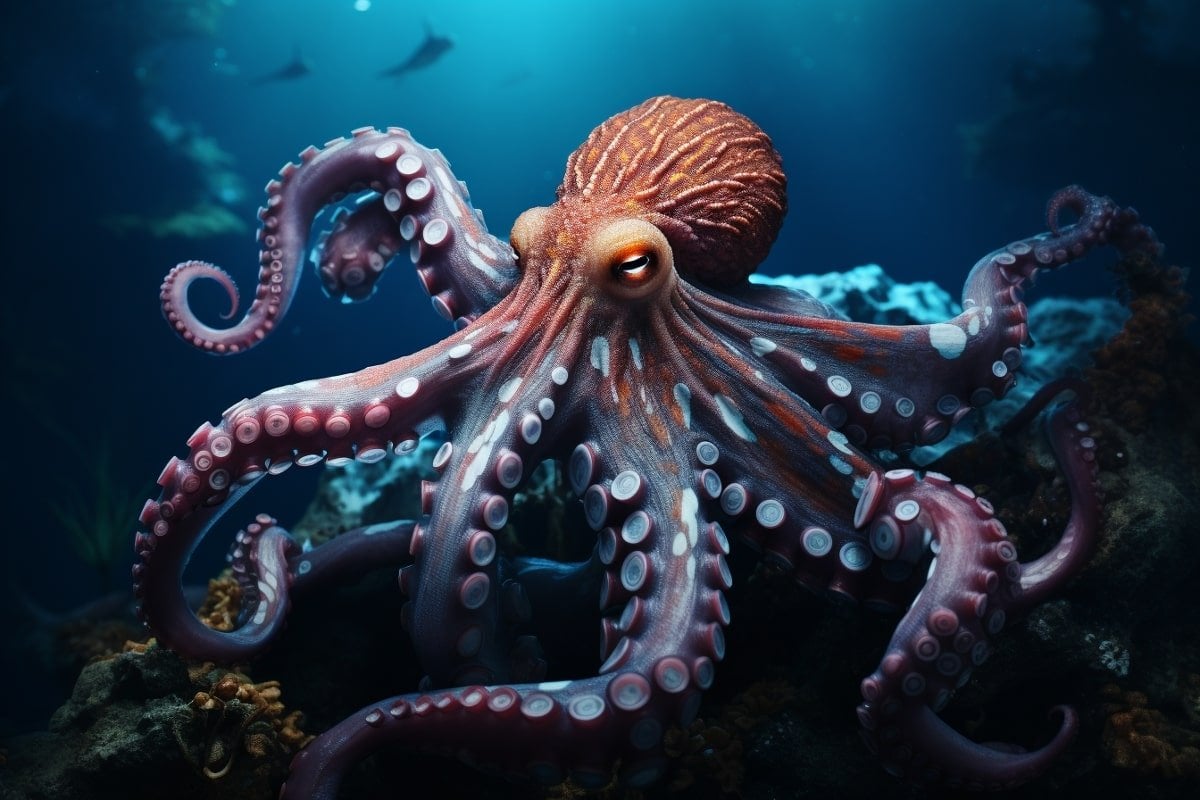
Ocean warming and rapid environmental changes are placing immense pressure on one of the ocean's most intelligent invertebrates. While casual articles treat cephalopods as mere ocean curiosities, understanding their true biology requires looking closely at how they navigate shifting marine ecosystems, extreme physiological constraints, and complex behavioral adaptations.
Cephalopods occupy a unique evolutionary niche defined by high metabolic demands, short lifespans, and remarkable neural complexity. As marine temperatures climb, examining how these animals hunt, evade predators, and maintain homeostasis provides critical insight into the health of modern coastal and deep-sea habitats.
Evolutionary Adaptations of Marine Cephalopods
Octopuses diverge dramatically from typical marine vertebrates and invertebrates through their decentralized nervous system. Two-thirds of an octopus's neurons reside in its arms rather than its central brain. This unique physiological structure allows each limb to process sensory input, taste textures, and execute complex motor tasks independently.
Skin Dynamics and Rapid Camouflage
The secret to survival without a protective shell lies in dermal specialization. Dermal layers contain millions of specialized pigment cells known as chromatophores, controlled directly by motor neurons. Beneath these pigment layers sit iridophores and leucophores, which reflect and scatter ambient light.
- Chromatophores: Expand or contract in milliseconds to alter color patterns.
- Papillae: Raise muscular projections of skin to match rocky or coral textures.
- Behavioral Mimicry: Certain species dynamically mimic venomous flatfish or sea snakes to deter visual predators.
Respiration and Hemocyanin Limits
Unlike humans who rely on copper-free iron-based hemoglobin, octopuses use hemocyanin to transport oxygen through their blue blood. Hemocyanin efficiency drops significantly as water temperatures rise and acidity levels fluctuate. Warmer water holds less dissolved oxygen, forcing an octopus's three hearts to beat faster just to maintain basic metabolic function.
Habitat Range and Environmental Tolerance
Marine biologists traditionally classify octopuses as purely stenohaline creatures requiring stable high-salinity oceanic environments. Field research published in the Journal of Experimental Marine Biology and Ecology demonstrates that certain resilient cephalopod populations inhabit estuarine zones where salinity drops below standard oceanic thresholds.
+-------------------------------------------------------------+
|               TYPICAL OCTOPUS HABITAT ZONES                 |
+-------------------------------------------------------------+
| Shallow Coastal Reefs : High light, diverse shelter         |
| Estuaries & Inlets    : Variable salinity, muddy substrates |
| Deep Sea Benthic      : Near-freezing, high pressure        |
+-------------------------------------------------------------+
Navigating Low-Salinity Estuaries
While standard species flounder in brackish water, localized adaptations allow select cephalopods to tolerate shifting osmotic pressures. They adjust internal fluid concentrations to match sudden drops in salinity near river mouths, exploiting rich invertebrate food sources while avoiding major pelagic predators.
Benthic Den Selection
An octopus spends a significant portion of its life sequestered in secure dens. Finding or excavating a suitable cavity protects these soft-bodied creatures from heavy-handed predators like groupers, eels, and marine mammals. They line these dens with discarded shells and stones, creating hidden middens that marine researchers track to study feeding habits.
Climate Pressures and Thermal Stress
Rising global sea surface temperatures directly threaten cephalopod physiology. Because most species live fast and die young—often completing their entire life cycle within one to two years—population resilience depends entirely on uninterrupted reproductive success.
Metabolic Bottlenecks
As thermal thresholds push past historical norms, metabolic rates skyrocket while oxygen binding capacity plummets. This creates a physiological bottleneck. Individuals expend more energy simply respiring, leaving less surplus energy for foraging, territorial defense, and egg brooding.
Ocean Acidification and Egg Brooding
Female octopuses invest enormous energy into brooding their eggs, often guarding them for months without feeding until they starve and perish. Acidifying waters interfere with embryonic development and make it difficult for hatchlings to build initial structures. Warming trends also accelerate embryonic development rates, causing premature hatching when food availability in the water column is insufficient.
Common Misconceptions About Octopus Behavior
Folk tales and sensationalized documentaries often distort how these animals function in the wild. Clearing up these inaccuracies helps focus conservation efforts where they matter most.
- Misconception: Octopuses possess human-like social structures.
- Reality: Aside from specific mating windows, most species live solitary, territorial lives and occasionally resort to cannibalism if confined or food-scarce.
- Misconception: They can survive indefinitely out of water.
- Reality: While some species crawl across damp rocks between tidal pools for short periods to hunt crabs, their gills collapse quickly in dry air, causing suffocation.
- Misconception: An octopus lacks problem-solving memory.
- Reality: Laboratory experiments confirm robust short-term and long-term memory centers, allowing individuals to navigate complex mazes and open threaded jars repeatedly.
Frequently Asked Questions
How long do most octopus species live in the wild?
Lifespans vary by species, ranging from a brief six months in smaller pygmy species to roughly three to five years in larger cold-water giants like the giant Pacific octopus. Both males and females die shortly after completing their reproductive cycle.
Why do octopuses have three hearts?
Two branchial hearts pump deoxygenated blood through the gills, while a central systemic heart pumps oxygenated blood to the rest of the body. When an octopus swims, the systemic heart temporarily stops beating, which explains why they prefer crawling along the seabed over sustained swimming.
Can an octopus regenerate lost arms?
Yes. If a predator bites off an arm, the animal can regenerate the complete limb with functional nerves and suckers over several months without permanent scarring.
How do octopuses mate without getting eaten?
The male uses a specialized third right arm called a hectocotylus to transfer spermatophores into the female's mantle cavity. Males often approach cautiously from a distance or use camouflage, darting away immediately afterward to avoid being consumed as prey.



