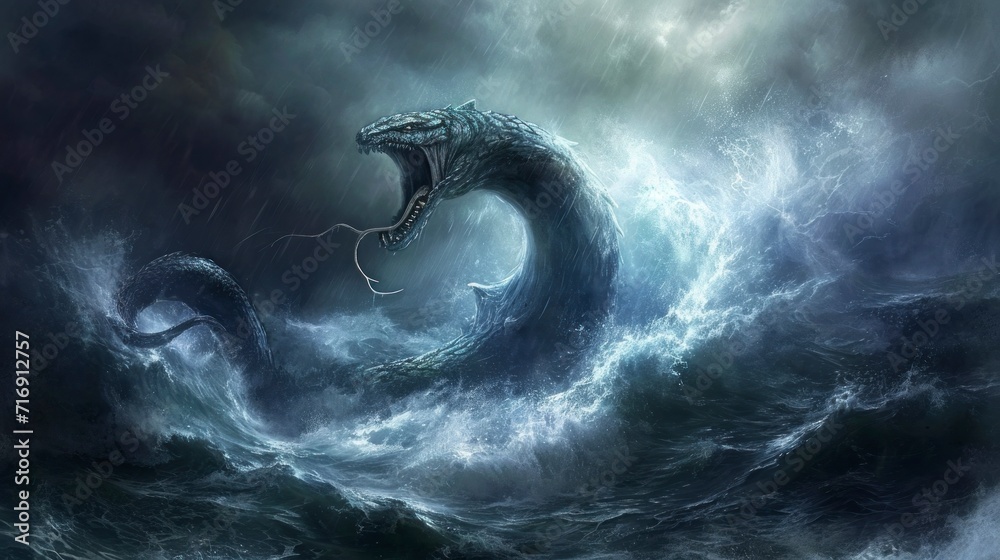
Long before sonar mapped the abyssal plains, early mariners stared into dark, rolling swells and imagined colossal shapes moving just beneath the surface. The leviathan and kraken stand out as the most enduring titans of maritime folklore, representing humanity's deep-seated dread of the uncharted sea. Cartographers filled blank spaces on antique charts with these horned serpents and tentacled giants, turning watery terrors into visual warnings.
Examining how ancient maps and historical texts tracked these beasts reveals where marine myth intersects with real biological discoveries. From biblical verses to Nordic sagas, these legends shaped centuries of seafaring culture and continue to influence how we visualize the deep ocean today.
Ancient Origins of the Biblical Leviathan
The leviathan first emerges in ancient Near Eastern mythology and Hebrew texts, most notably detailed in the Book of Job. Unlike ordinary marine life, this primordial creature symbolized cosmic chaos, untamed power, and the terrifying scale of nature.
Ancient texts describe the beast with shifting characteristics. Some passages portray a multi-headed sea serpent, while others focus on impenetrable scales and immense physical stature.
- The Metaphor of Chaos: Early theological writers used the creature to represent forces entirely beyond human control or domestication.
- Real-World Inspirations: Historians suggest early descriptions drew inspiration from Nile crocodiles or massive sperm whales encountered by Mediterranean traders.
- Prehistoric Parallels: Paleontologists later nodded to this history when naming Livyatan melvillei, an extinct Miocene-era sperm whale equipped with massive teeth that hunted alongside megalodons.
The Nordic Legend of the Kraken
While the leviathan dominated ancient Mediterranean and Near Eastern thought, the kraken haunted the cold, deep waters of the North Atlantic. First cataloged thoroughly by writers like Olaus Magnus and later bishop Erik Pontoppidan, the kraken was said to inhabit the seas off the coasts of Norway and Iceland.
Sailors whispered tales of an island-sized beast whose immense body created lethal whirlpools when it submerged. If the creature surfaced, unwary crews sometimes mistook its ridged back for land, anchoring their vessels directly on top of the monster before it dragged them down.
- Cephalopod Traits: Later folklore consolidated the description into a colossal octopus or squid capable of pulling entire merchant ships into the abyss.
- Collateral Damage: Unlike predatory sea monsters that actively hunted humans, the kraken was often described as simply feeding on massive schools of fish, causing shipwrecks as an accidental byproduct of its size.
Cartography and Fear: Mapping the Unknown
Renaissance mapmakers didn't just decorate blank parchment with illustrations; they communicated active dangers. Phrases like hic sunt dracones (here be dragons) and vivid drawings of tentacled titans warned navigators away from uncharted zones.
Maps produced during the 16th and 17th centuries treated these creatures with geographical seriousness. Cartographers placed them near known shipping lanes where violent storms, rogue waves, or sudden whale sightings validated sailor superstitions.
- Visualizing Risk: Drawing a massive sea serpent crushing a galleon signaled actual hazards, such as sudden squalls and hidden reefs.
- The Shift to Scientific Mapping: As navigational instruments improved and systematic hydrographic surveys replaced guesswork, monsters gradually vanished from official charts, replaced by depth contours and shipping lanes.
From Myth to Marine Biology
Modern science didn't banish these legends; it recontextualized them. Deep-sea exploration revealed that the ocean genuinely hosts colossal species that mirror ancient descriptions.
The giant squid (Architeuthis dux) and the colossal squid (Mesonychoteuthis hamiltoni) serve as the direct biological equivalents of the legendary kraken. Living at depths where sunlight fails to penetrate, these cephalopods possess massive eyes, powerful beaks, and long tentacles capable of battling sperm whales. Similarly, the blue whale—the largest animal ever known to have lived on Earth—dwarfs any mythical leviathan, proving that the real ocean easily outscales human imagination.
Frequently Asked Questions
Are the leviathan and kraken based on real animals?
Yes. Historical accounts of both titans were heavily influenced by real marine life, primarily giant squids, sperm whales, and large marine reptiles or crocodiles observed by ancient sailors.
Why did old maps feature sea monsters?
Mapmakers used illustrations of dangerous beasts to warn sailors about hazardous, unexplored regions, severe weather, and real navigational risks like reefs and strong currents.
How big did legends claim the kraken could grow?
Early 18th-century accounts exaggerated its size significantly, claiming the creature could measure up to a mile and a half in circumference, large enough to be mistaken for an island.
What is the difference between a leviathan and a dragon?
While both share reptilian or serpentine traits in folklore, the leviathan is strictly aquatic and tied to primordial ocean chaos in biblical and ancient Near Eastern traditions, whereas dragons often inhabit land or skies.



