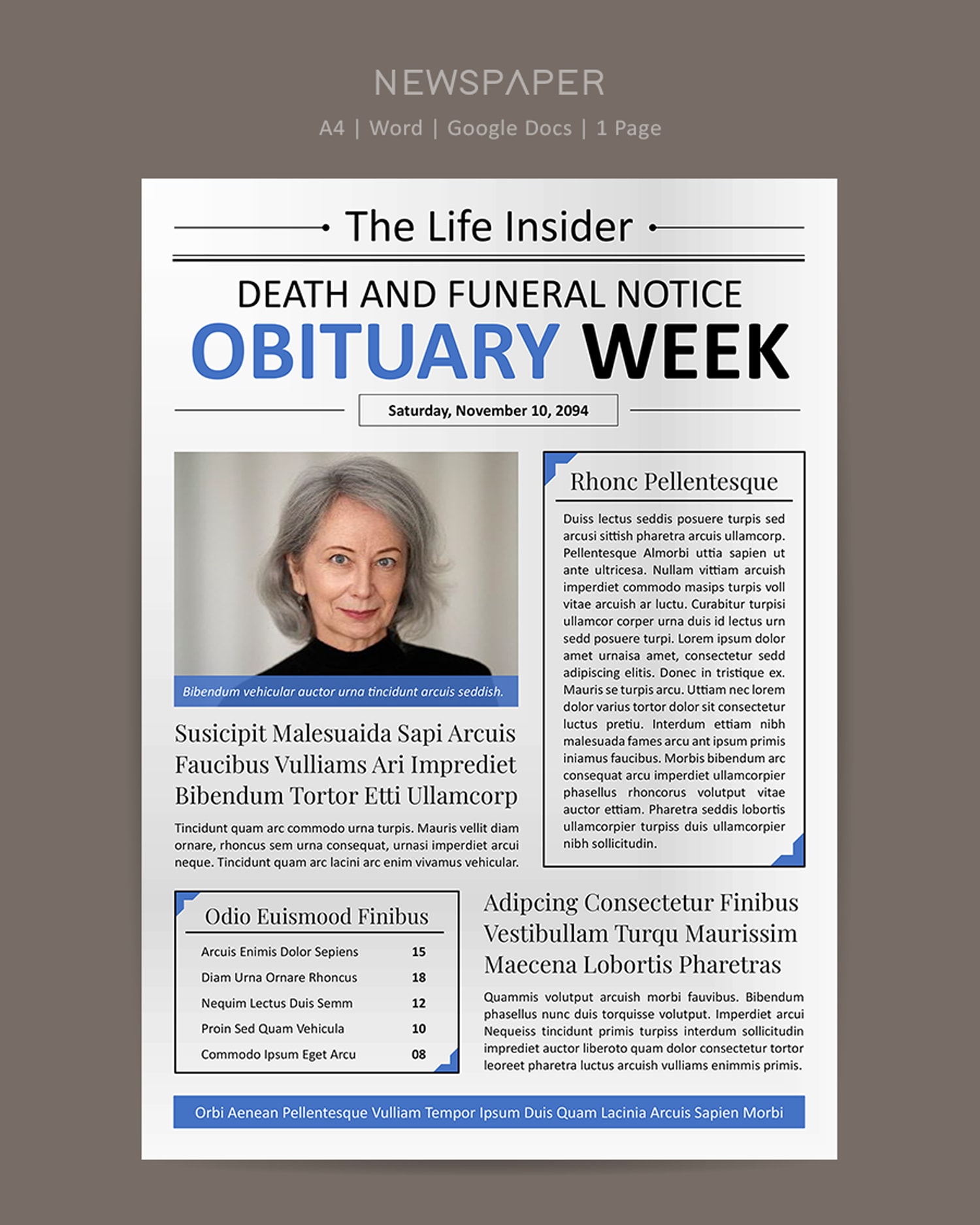
Writing an obituary when you're grieving feels like an impossible task. You're sorting through a lifetime of memories while trying to meet newspaper deadlines or online publishing requirements. But an obituary sample can serve as a steady anchor, showing you how to turn raw emotion into a polished, dignified tribute.
At its core, a strong obituary does two things. It shares practical event details with the community while preserving the unique story of the person who passed away. You don't need a degree in creative writing to capture someone's essence. You just need a clear structure, honest details, and a step-by-step approach to get your words on the page.
Essential Components of an Obituary
Every traditional obituary requires specific building blocks. While you can customize the style, omitting these core elements leaves readers searching for vital facts.
- Full Identification: Include the full legal name, maiden name if applicable, preferred nickname, and age.
- Date and Location: Note the exact date of passing and the city where they lived or died.
- Biographical Outline: Mention birthplace, education, military service, and career milestones.
- Immediate Family: List surviving relatives, including spouses, children, siblings, and grandchildren, alongside those who passed before them.
- Service Logistics: Provide the exact date, time, and venue for visitations, memorial services, or burials.
- Memorial Preferences: State whether the family prefers charity donations, flowers, or planted trees.
Full Obituary Sample
Reviewing a complete obituary sample helps you visualize how all the required pieces flow together. Notice how this example balances biographical facts with personal character traits.
Eleanor "Nora" Vance, 84, of Portland, Oregon, passed away peacefully on October 12, 2026. Born in Boise to Thomas and Margaret Higgins, Eleanor spent forty years teaching high school chemistry, inspiring thousands of teenagers to view science with curiosity rather than fear.
Beyond the classroom, Eleanor was an avid master gardener who spent every spring cultivating heirloom tomatoes and antique roses. She volunteered weekly at the Oregon Food Bank and never missed a Sunday crossword puzzle.
She is survived by her devoted husband of sixty years, Robert Vance; her children, Michael Vance and Susan Miller; and four beloved grandchildren. She was preceded in death by her brother, James Higgins.
A celebration of life will be held on Saturday, October 24, at 2:00 PM at Grace Memorial Chapel. In lieu of flowers, the family asks that donations be made to the Oregon Food Bank.
Step-by-Step Writing Process
Staring at a blank document triggers writer's block. Breaking the drafting process into manageable phases keeps you moving forward without feeling overwhelmed.
Gather Your Facts First
Before writing sentences, create a bulleted list of basic data. Collect birth dates, marriage dates, school names, job titles, and family member spellings. Double-check every spelling with another family member. Errors in names or dates cause immense stress during production.
Choose Your Tone
Match your writing style to the personality of the deceased. A witty, jovial person doesn't need a stiff, Victorian-era obituary. Conversely, a quiet, private person might prefer a reserved, traditional tone. Let their voice guide your word choices.
Draft the Narrative Core
Don't worry about word counts or elegance on your first pass. Write down favorite family stories, funny quirks, and defining hobbies. Did they bake the best cinnamon rolls in town? Were they obsessed with antique cars? These specific details transform a generic death notice into a vibrant life story.
Edit for Length and Clarity
Newspapers often charge by the word or line. Online obituary platforms usually offer more space, but brevity keeps readers engaged. Trim redundant phrases and check that your service details stand out clearly so attendees don't miss them.
Common Mistakes to Avoid
Writing under emotional stress leads to predictable slip-ups. Keep these pitfalls in mind to protect your draft.
- Omitting the Maiden Name: Forgetting a maiden name makes it difficult for childhood friends and extended relatives to recognize the notice.
- Vague Service Details: Failing to include the exact address or time of a service causes confusion for attendees traveling from out of town.
- Overly Generic Language: Relying entirely on clichés like "to know him was to love him" robs the tribute of personal flavor. Swap clichés for concrete actions and memories.
- Ignoring Formatting Rules: Submitting dense walls of text without paragraph breaks makes newspapers and websites hard to read. Use short paragraphs for clarity.
Frequently Asked Questions
How long should an obituary be?
Standard newspaper obituaries run between 150 and 300 words due to space costs. Online tributes can safely stretch to 500 or 600 words, allowing for deeper storytelling and photo galleries.
Who typically writes the obituary?
Usually, a close relative or spouse takes on the task. However, you can delegate this responsibility to a trusted friend, or ask the National Funeral Directors Association guidelines for professional assistance.
Should we include the cause of death?
Including the cause of death is completely optional. Many families choose to mention long battles with specific illnesses like cancer or Alzheimer's, while others prefer privacy and omit the cause entirely.
How do we handle estranged family members?
You aren't obligated to list estranged relatives. If listing survivors feels contentious, you can focus on immediate household members or use broader phrasing like "surrounded by loving family members."



