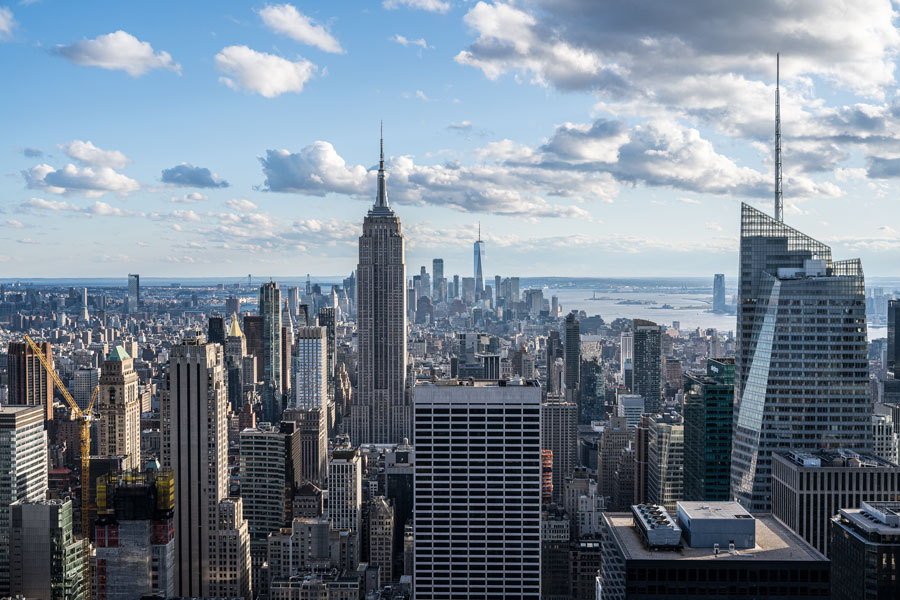
Walk through Greenwich Village, then take the subway up to Midtown, and you'll immediately notice how different neighborhoods feel like entirely separate worlds. One boasts low-rise brownstones and leafy, sunlit streets, while the other features towering glass monoliths casting long shadows over bustling avenues. These dramatic shifts aren't accidental. They're the direct result of New York City's zoning code, a massive and intricate legal framework that dictates what can be built, how tall it can rise, and what activities can take place on every single parcel of land.
Understanding how these regulations function helps explain everything from housing shortages to why your favorite local bakery can operate on the corner of a residential block. The city's rules balance growth, neighborhood character, and infrastructure capacity through three primary pillars: use, bulk, and parking.
The Anatomy of NYC Zoning Districts
Every piece of property in the five boroughs falls under a specific zoning district designation, split primarily into three categories: Residence (R), Commercial (C), and Manufacturing (M). These categories ensure that heavy industrial plants don't pop up next to elementary schools, keeping incompatible activities separated to protect public health and safety.
Residence districts range from low-density R1 zones, which permit only single-family detached homes on large lots in areas like Staten Island's Todt Hill, up to high-density R10 districts that allow massive residential towers. Commercial districts span from local C1 and C2 neighborhood convenience shops—think dry cleaners and grocery stores embedded in residential zones—to heavy C8 automotive repair yards. Manufacturing districts protect industrial land for warehousing, distribution, and production, though modern updates increasingly allow mixed-use spaces.
You can explore the official legal framework and district maps directly through the NYC Department of City Planning Zoning Resolution.
Use, Bulk, and Density Controls
Zoning controls property development through strict parameters that dictate physical form and operational purpose.
- Use Regulations: Define the exact activities permitted on a site, ranging from residential housing types to retail sales and community facilities.
- Bulk Regulations: Control the size, height, and total floor area of buildings. This includes floor area ratio (FAR), which limits the total building square footage relative to the size of the lot.
- Yard and Height Limits: Set mandatory setbacks, sky exposure planes, and rear yard requirements to ensure light and air reach the street level.
When developers want to build outside these as-of-right parameters, they must navigate public review processes like ULURP (Uniform Land Use Review Procedure), which involves community board reviews, borough president recommendations, and votes by the City Planning Commission and City Council.
Modernizing the Code: Recent Shifts
New York's regulatory landscape isn't frozen in time. The city regularly updates its rulebook to address contemporary challenges like housing affordability and economic shifts. For instance, sweeping legislative initiatives such as the "City of Yes" amendments represent some of the most comprehensive updates to the Zoning Resolution in decades, designed to spur housing production across all five boroughs and modernize business rules.
These updates attempt to reconcile historic neighborhood preservation goals with the urgent need for new housing inventory, sparking intense debates among residents, urban planners, and elected officials. To dive deeper into past text amendments and historical changes, consult the NYC Planning Resources.
Common Misconceptions About Zoning
Many residents assume that a neighborhood's current look is protected permanently, but zoning laws can change through city-initiated rezonings or private applications. Another frequent point of confusion involves landmark status versus zoning. While zoning regulates building size and use across whole districts, landmark preservation protects specific historic structures from demolition or major exterior alterations regardless of underlying zoning allowances.
Frequently Asked Questions
What does "as-of-right" mean in NYC zoning?
An as-of-right development complies with all existing zoning regulations for that specific lot without requiring special permits, variances, or discretionary approvals from the city.
How can I find the zoning designation for a specific property?
You can look up any address using the NYC Plan-PRG and ZoLa (Zoning and Land Use Map) portal, which provides free public access to official district maps and building records.
What is Floor Area Ratio (FAR)?
FAR is the ratio of total building floor area to the size of the piece of land on which it is built. For example, a 2.0 FAR on a 5,000-square-foot lot allows a building with 10,000 square feet of total floor space.
Can commercial businesses operate in residential zones?
Generally, no, unless the property sits within a commercial overlay (like a C1 or C2 district mapped over a residential area) or operates as a legally established non-conforming use predating current rules.


