Nuclear fission and nuclear fusion are two distinct atomic reactions that release immense amounts of energy, yet they operate on completely opposite mechanical principles. Fission splits heavy atoms apart, while fusion forces light atoms together. Understanding how these two processes work, what makes them different, and why only one powers our electrical grid today clarifies the future of global energy production.
At its core, nuclear energy comes from altering atomic nuclei. When you change the structure of an atom, a tiny fraction of its mass converts directly into thermal energy according to fundamental physics. Both processes generate heat that can drive turbines and produce electricity, but the engineering hurdles, fuel sources, and environmental safety profiles differ entirely.
How Nuclear Fission Works
Nuclear fission relies on splitting a heavy, unstable atomic nucleus into smaller parts. Commercial power plants typically use uranium-235 or plutonium-239 for this process.
When a stray neutron strikes a uranium-235 atom, the nucleus absorbs the neutron, becomes highly unstable, and splits into two smaller daughter nuclei. This split releases a massive amount of binding energy alongside two or three high-speed neutrons. These newly released neutrons slam into neighboring uranium atoms, triggering a self-sustaining chain reaction.
Controlling the Chain Reaction
If left unchecked, a fission chain reaction escalates rapidly, which is how nuclear weapons operate. Inside a commercial nuclear reactor, engineers use control rods made of elements like boron or cadmium to absorb excess neutrons. By inserting or withdrawing these rods, operators regulate the speed of the reaction, ensuring a steady, manageable heat output. This heat boils water into high-pressure steam, which turns turbines connected to electrical generators.
The Drawbacks of Fission
While fission power plants provide reliable, carbon-free baseload electricity, they carry significant challenges:
- Radioactive Waste: Fission products remain dangerously radioactive for thousands of years, requiring secure long-term geological disposal sites.
- Meltdown Risks: Although modern plants feature robust safety barriers, system failures or cooling losses can lead to core overheating and radioactive leaks.
- Resource Extraction: Uranium is a finite mining resource, meaning fission is ultimately bound by geographic and supply constraints.
How Nuclear Fusion Works
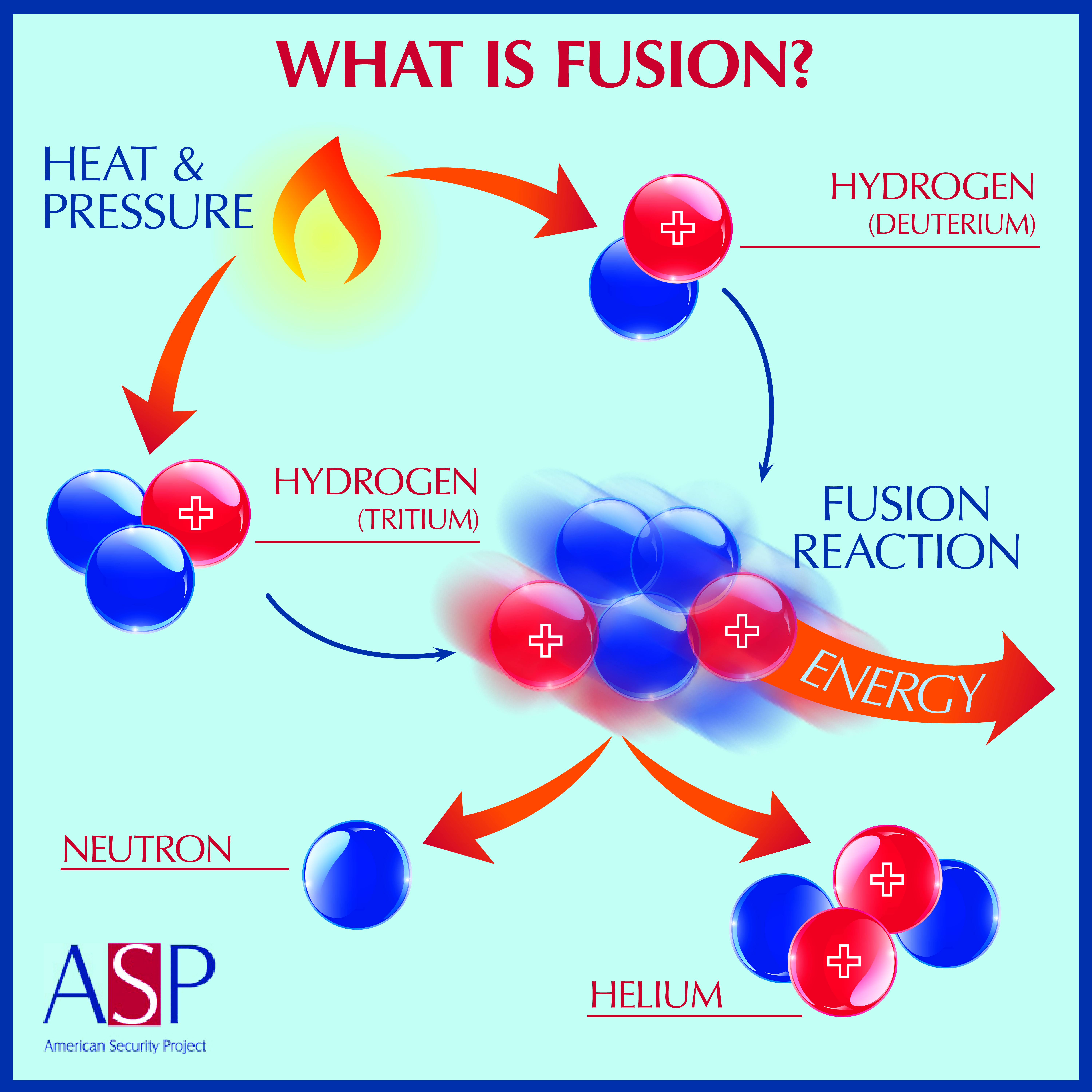
Nuclear fusion combines two light atomic nuclei into a single, heavier nucleus. This is the exact process that powers the sun and other stars, where immense gravitational pressure forces hydrogen isotopes—specifically deuterium and tritium—to fuse into helium.
When these isotopes fuse, the resulting helium atom weighs slightly less than the sum of the original parts. That lost mass converts into an extraordinary amount of energy. Per kilogram of fuel, fusion yields roughly four times more energy than fission, and nearly four million times more energy than burning coal.
Replicating Stellar Physics on Earth
Sustaining fusion on Earth requires recreating stellar environments. Atoms naturally repel each other because their positively charged nuclei push apart. To overcome this electrostatic barrier, fuel must be heated to over 100 million degrees Celsius, turning it into a high-energy plasma.
Scientists use two primary methods to contain this plasma:
- Magnetic Confinement: Machines like tokamaks use powerful magnetic fields to trap and control the swirling plasma ring away from reactor walls.
- Inertial Confinement: High-powered laser arrays compress tiny fuel pellets simultaneously from all sides, creating split-second conditions of extreme density and heat.
The Advantages of Fusion
Fusion holds the status of a holy grail for clean energy because it solves many shortcomings inherent to fission:
- Abundant Fuel: Deuterium is extracted easily from ordinary water, and lithium (used to produce tritium) is widely available.
- No High-Level Waste: Fusion doesn't produce long-lived radioactive fission products. The primary byproduct is inert helium, alongside low-level activated reactor components that require short-term management.
- Inherent Safety: Fusion reactions cannot trigger a runaway chain reaction. If the plasma containment fails, the gas cools instantly and the reaction stops within seconds.
Direct Comparison: Fission vs. Fusion
Evaluating both technologies across key operational metrics reveals why fission dominates current energy grids while fusion remains an intensive research frontier.
- Fuel Availability: Fission relies on scarce, mined heavy metals like uranium. Fusion uses hydrogen isotopes derived from water and lithium.
- Energy Output: Fusion produces significantly more energy per unit of mass than fission.
- Reactor Safety: Fission requires active safety systems to prevent core meltdowns. Fusion reactors shut down automatically if plasma containment is disrupted.
- Current Status: Fission operates globally, supplying roughly ten percent of worldwide electricity. Fusion remains in advanced experimental stages, with commercial net-electricity plants targeted for development in the coming decades.
According to the U.S. Department of Energy, ongoing international research focuses heavily on resolving the net-energy deficit—ensuring reactors produce substantially more power than it takes to heat and contain the plasma.
Frequently Asked Questions
Why don't we have commercial fusion power plants today?
Generating and sustaining the extreme temperatures required for fusion consumes massive amounts of electricity. Until recently, experimental reactors required more energy to run than they produced. While modern facilities have achieved net energy gain in brief bursts, scaling the technology into a stable, continuous commercial power plant requires breakthroughs in materials science and magnetic engineering.
Is nuclear fusion completely safe and waste-free?
While fusion doesn't produce long-lived radioactive waste like fission, the high-energy neutrons released during the reaction bombard the interior structural walls of the reactor. This causes the metal casing to become radioactive over time, requiring safe management and disposal for roughly a century—a much shorter timeline than fission waste, but not entirely zero-impact.
Can a nuclear fusion reactor explode like a bomb?
No. Fusion reactors operate with tiny amounts of fuel inside the chamber at any given moment. If a system malfunction occurs, the plasma expands, cools down instantly, and extinguishes the reaction. A runaway explosion or meltdown of fuel is physically impossible under terrestrial operating conditions.
How does nuclear energy compare to fossil fuels regarding emissions?
Neither nuclear fission nor nuclear fusion releases carbon dioxide, sulfur dioxide, or nitrogen oxides during operation. Integrating nuclear options into national grids displaces coal and natural gas generation, making it a powerful tool for reducing industrial greenhouse gas emissions.



