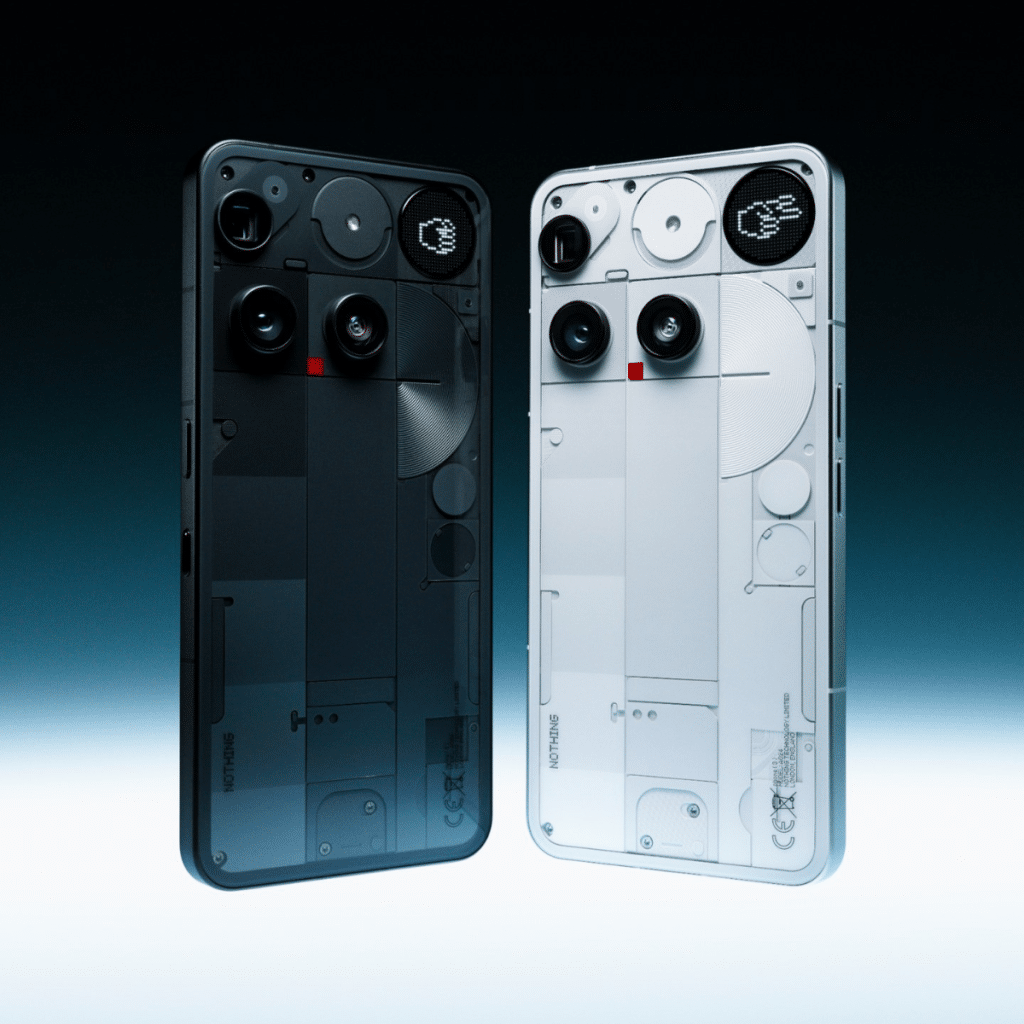
The smartphone market suffers from a severe case of visual sameness. Flip over almost any flagship handset on the market, and you will find an opaque slab of frosted glass or brushed metal, hiding its guts behind a sealed shell. Nothing disrupted this monotone landscape by asking a simple question: what if we let the technology speak for itself?
At its core, the transparent design philosophy of the Nothing Phone isn't just about sticking a clear piece of glass on the back of a device. It is an intentional industrial design movement aimed at stripping away the illusion of magic and replacing it with engineering honesty. To understand why this approach resonates, we need to dissect the mechanics, the engineering hurdles, and the psychological impact of turning consumer electronics inside out.
The Origins of Naked Design
Most modern electronics treat internal components as dirty secrets. Circuit boards, screws, ribbon cables, and battery packs are buried deep beneath layers of adhesive and opaque casing. Nothing flipped this script by treating internal architecture as the primary decorative asset.
This approach draws heavy inspiration from iconic industrial design principles, blending functional minimalism with deliberate structural exposure. Rather than pasting abstract graphics or gradients onto the rear glass, the design team uses the actual layout of the phone's internal components to create visual rhythm. Screws are arranged symmetrically. FPC connectors and wireless charging coils are styled with geometric precision.
The goal isn't to show an unedited, messy factory teardown. Real raw circuit boards are often chaotic and visually unappealing, featuring mismatching solder masks and raw warning labels. Instead, Nothing designs custom covers, faux-functional plates, and textured ribbons that sit over the actual functional components. This curation turns engineering into visual storytelling, making the back panel look like a precision instrument rather than an industrial assembly line leftover.
Engineering Transparency: The Hard Reality
Achieving a clean, transparent back panel is deceptively difficult. It requires solving massive manufacturing challenges that traditional phone makers avoid entirely.
When you place a clear sheet of glass on the back of a phone, every single speck of dust, stray glue droplet, or microscopic scratch becomes instantly visible. Manufacturing lines have to operate under ultra-cleanroom conditions to prevent contamination during assembly. Furthermore, the materials themselves must be chosen with extreme care. Standard plastics scratch easily and yellow over time, while low-grade glass lacks structural integrity.
Thermal management also changes entirely when you expose or rearrange internal layouts to fit a specific aesthetic template. Engineers can't just slap components wherever they look good; thermal dissipation paths, battery safety clearances, and antenna placement for 5G and Wi-Fi must coexist with the visual geometry of the transparent layer. Every screw placement has a dual purpose: holding the structural frame together while maintaining clean alignment lines across the transparent window.
The Glyph Interface: Light as a Functional Language
A transparent shell on its own is merely a cosmetic choice. What elevates Nothing's design philosophy from a gimmick to a coherent system is the integration of light.
The Glyph Interface embeds customized LED strips directly beneath the transparent rear glass. Instead of forcing users to constantly check an active OLED screen for notifications, the phone communicates ambient status updates through patterns of light.
- Glyph timers let you track countdowns visually without unlocking the device.
- Progress tracking integrates with ride-sharing or delivery apps to show arrival metrics via linear light fills.
- Essential notifications assign specific flash patterns to priority contacts, allowing you to identify callers while the phone lies face down.
By moving interaction to the back of the device, the design addresses modern digital fatigue. It encourages users to keep their screens down, reducing compulsive checking while maintaining situational awareness. Over successive iterations—ranging from early segmented LED bars to advanced micro-LED matrices—this lighting system has evolved from a visual novelty into a distinct functional language.
Minimalism Meets Monochromatic Software
Hardware transparency only works if the software doesn't clash with it. Nothing OS extends the physical design philosophy into the digital space by championing a minimalist, widget-forward approach.
The user interface relies heavily on custom dot-matrix fonts, monochrome icon packs, and clean layouts that mirror the industrial aesthetic of the hardware. By stripping away aggressive software bloat and visual clutter, the operating system reduces cognitive friction. When you look at a Nothing Phone, the hardware language and the software language share the same DNA. The device feels cohesive because the experience of looking at the transparent back matches the experience of interacting with the home screen.
Common Misconceptions About Transparent Tech
Because transparent electronics evoke nostalgia for 1990s clear plastic electronics—like translucent Game Boys or landline phones—critics often dismiss the trend as a superficial retro revival. However, several common myths surround the design philosophy:
- Myth: It's just a clear plastic case glued to a normal phone. Reality: The transparency is structurally integrated into the chassis, requiring custom-engineered internal covers, specialized adhesives, and strict dust-mitigation manufacturing protocols.
- Myth: The components you see are completely raw and unedited. Reality: While real internal structure dictates the layout, Nothing curates the color, texture, and finish of internal shields to maintain a balanced, intentional aesthetic composition.
- Myth: The transparent back compromises durability. Reality: Modern variants utilize chemically strengthened glass and robust internal sub-frames that meet the same drop-resistance and IP-rating standards as opaque competitors.
Frequently Asked Questions
Does the transparent back scratch easily?
Nothing uses durable materials like Gorilla Glass or chemically treated composite panels for the rear window, making it just as resilient against daily wear as standard frosted glass smartphones.
Are the internal components visible through the glass actually functional?
The components visible underneath are a hybrid of actual structural elements (like screws, connectors, and coil layouts) and specially designed decorative covers that organize the visual space cleanly.
Why do phone manufacturers usually hide internal parts?
Opaque casings are cheaper and easier to manufacture because they completely hide any minor cosmetic imperfections, dust particles, or asymmetrical wiring layouts that occur during high-speed factory assembly.
How does the Glyph Interface help reduce screen time?
By mapping specific contacts, app alerts, and timers to customizable rear LED light patterns, the phone lets you absorb essential information at a glance without turning on the power-hungry main display. You can read more about their hardware approach directly on the Nothing Official Website.



