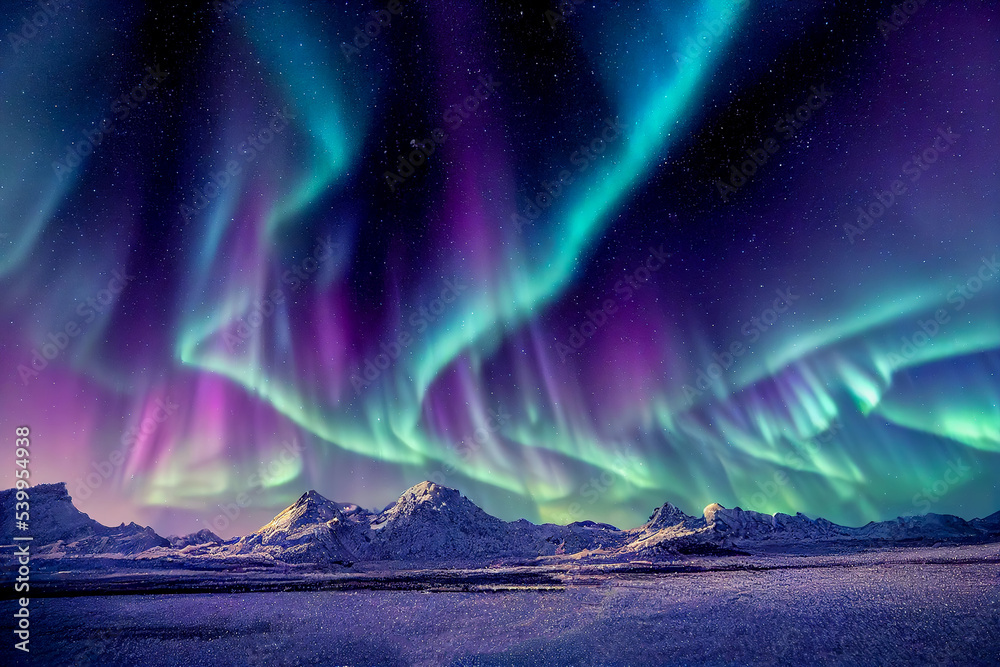
Finding the northern lights used to mean booking an expensive trip to crowded tourist hubs in Iceland or Tromsø. Today, smart stargazers use real-time data to find hidden viewing spots far away from artificial lights and tour buses. By reading the NOAA Aurora Dashboard, you can track the auroral oval in real-time and discover lesser-known locations that offer crystal-clear skies and zero light pollution.
The NOAA Space Weather Prediction Center provides live tools that forecast geomagnetic activity thirty minutes in advance. Instead of guessing when a solar storm will hit, you can match live Kp index numbers with remote geography to catch colorful light displays in total isolation.
Decoding the NOAA Aurora Dashboard
The NOAA dashboard features an experimental view tracking the auroral oval, solar wind speed, and interplanetary magnetic field orientations. When solar particles collide with Earth's upper atmosphere, they excite nitrogen and oxygen molecules, producing shifting green and violet curtains.
You don't need a degree in astrophysics to use the dashboard effectively. Focus primarily on two main elements: the 30-minute forecast model and the planetary K-index scale.
- The 30-Minute Oval: This map shows a green ring projected over the poles. When solar activity spikes, this oval expands equatorward. If the outer edge shifts south over your coordinates, you have a direct line of sight to the lights.
- The K-Index: This metric measures geomagnetic disruption from 0 to 9. A Kp of 2 or 3 keeps the aurora locked near high-latitude Arctic zones. When the index jumps to 5 or higher, mid-latitude regions suddenly gain front-row seats.
Secret Destinations for Northern Lights Viewing
When the dashboard signals a moderate to high geomagnetic storm, popular national parks fill up fast with cars and flashlights. Escaping the crowds requires heading to off-grid locations with ultra-low Bortle scale ratings. Here are several secret destinations where dark skies meet optimal geomagnetic positioning.
The Superior National Forest Backcountry, Minnesota
Most travelers flock to Iceland, yet northern Minnesota offers exceptional geomagnetic latitude due to its proximity to the magnetic north pole. While tourists crowd popular North Shore state parks, the interior of the Superior National Forest provides thousands of square miles of empty logging roads and silent lakes.
When NOAA registers a Kp 5 storm, the open lake vistas eliminate tree line obstructions. You can park at designated non-motorized entry points and hike a few hundred yards onto a granite shore for a completely unobstructed northern horizon.
Parc de la Gaspésie, Quebec
While Banff and Jasper grab the headlines, the rugged interior of Quebec features dark sky preserves with remarkably low light pollution. Parc de la Gaspésie features towering peaks and massive alpine lakes that sit far enough north to catch enhanced displays during minor geomagnetic bumps.
Setting up your tripod on the shores of Lake Cascapedia puts you miles away from major cities. Because the local topography blocks stray light from coastal towns, the contrast against the night sky remains striking.
Isle Royale National Park, Michigan
Isle Royale is one of the least-visited national parks in the United States, primarily because it sits isolated in the middle of Lake Superior and closes entirely during winter. However, during the early autumn window when the park remains accessible by ferry, solar activity frequently peaks.
The island has zero permanent residents, no cars, and strict dark sky policies. When the dashboard indicates active solar winds, standing on the rocky shoreline of Tobin Harbor offers total silence beneath dancing green ribbons.
How to Cross-Reference NOAA Data with Local Weather
Checking the aurora forecast means nothing if cloud cover blocks your view. A high Kp index paired with an overcast sky ruins the experience. Successful astrophotography and viewing require a multi-step verification process before you drive into the wilderness.
- Check the NOAA 30-Minute Model: Confirm that the auroral oval is expanding toward your latitude or that you are positioned safely inside the active green boundary.
- Verify Cloud Layers: Open a high-resolution meteorological radar to check for low, mid, and high-tier cloud formations. Even thin cirrus clouds will diffuse and mute the faint light of an aurora.
- Assess Moon Phase: A full moon washes out subtle auroras. Plan your secret excursions around the new moon phase to maximize the contrast of faint coronal arcs.
- Inspect Local Light Pollution Maps: Use darkness trackers to ensure no unexpected industrial or highway lighting sits directly on your northern horizon.
Common Mistakes to Avoid
Many first-time aurora chasers make avoidable errors that ruin their night. Recognizing these pitfalls saves time and frustration.
- Trusting Your Naked Eyes Immediately: Faint auroras often look like boring gray clouds to the untrained human eye. Always point a smartphone camera or a mirrorless camera with a long exposure at the northern horizon to check for hidden green hues.
- Ignoring Battery Drain: Sub-freezing or chilly night air drains camera and phone batteries rapidly. Always keep spare power banks inside an inner jacket pocket close to your body heat.
- Using White Flashlights: White light destroys your night vision, taking up to thirty minutes to recover. Switch all headlamps and flashlights to a deep red mode before stepping outside your vehicle.
- Forgetting Proper Clothing Layers: Standing still while waiting for solar winds to shift drops your core body temperature fast. Pack heavy windproof layers, insulated boots, and toe warmers even during crisp autumn nights.
Frequently Asked Questions
How far in advance does the NOAA dashboard predict the aurora?
The dashboard provides a reliable 30-minute short-term model based on real-time satellite data streaming from the Deep Space Climate Observatory. For broader planning, NOAA also issues a 3-day geomagnetic forecast, though exact timing gets harder to pin down past a few hours.
Can I see the northern lights with a Kp index of 2?
A Kp index of 2 restricts visible auroras to high-latitude regions like northern Canada, Iceland, and parts of Alaska. If you live in mid-latitudes, you generally need a Kp index of 5 or higher to spot them without professional camera gear.
Why does the aurora look gray instead of green in person?
Human eyes rely on cone cells for color vision in bright light and rod cells for monochrome vision in darkness. Because auroras are often faint, our eyes struggle to register their color dynamically, whereas digital camera sensors accumulate light over seconds to reveal vibrant emerald and purple tones.
Do I need expensive camera gear to capture the northern lights?
You don't need a professional cinema rig, but you do need a device capable of manual mode. Any modern smartphone or entry-level mirrorless camera mounted on a stable tripod with a 2 to 5-second exposure can capture stunning images of the night sky.



