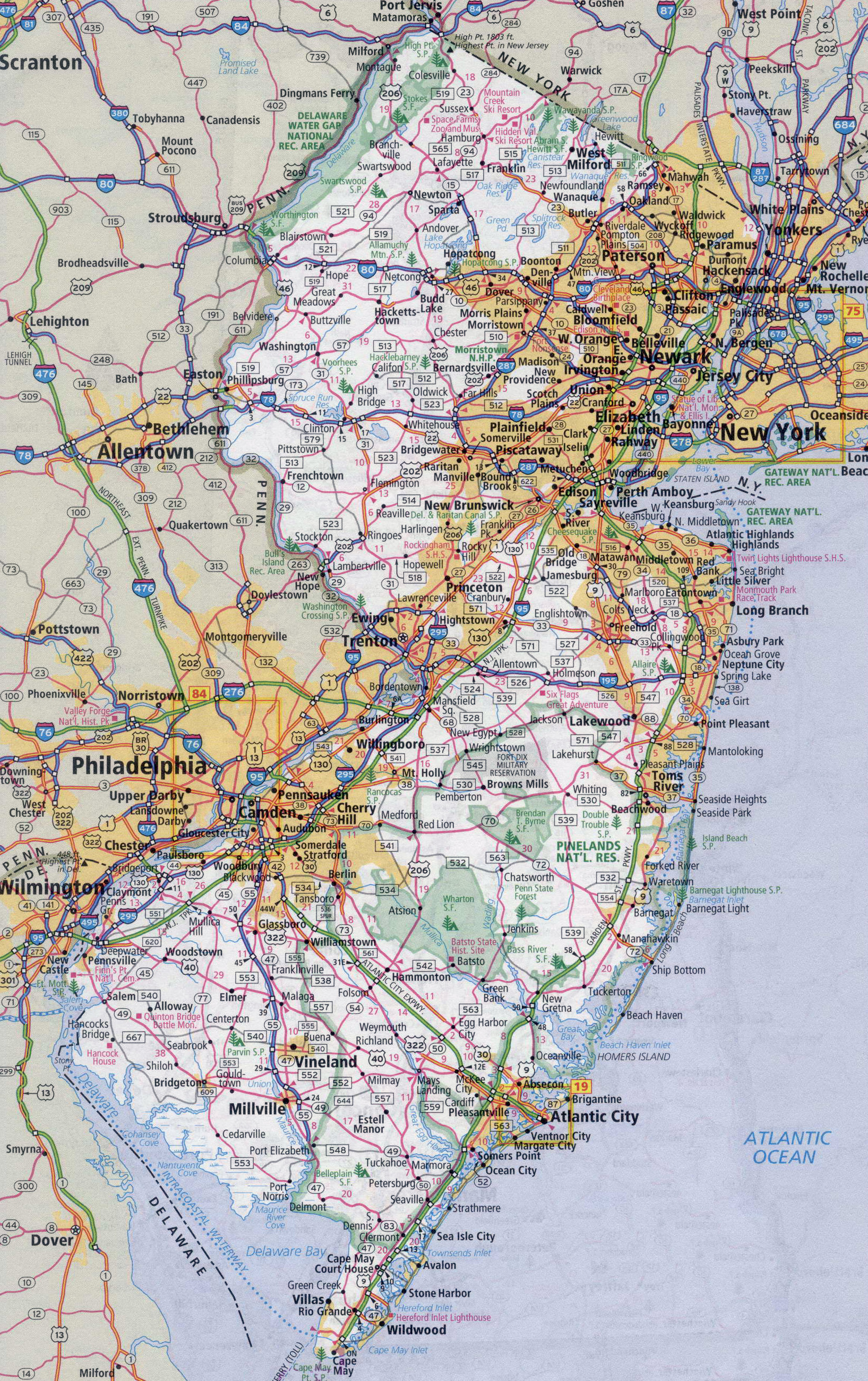
Mastering the clock in New Jersey means operating within the heart of the Eastern Time Zone (ET). Because New Jersey shares its schedule completely with major hubs like New York City and Philadelphia, its local time dictates fast-moving financial markets, massive transport networks, and millions of daily commutes across the Northeast corridor.
The state observes Eastern Standard Time (EST, UTC-5) during the winter months and transitions to Eastern Daylight Time (EDT, UTC-4) from March through November. This alignment prevents internal state discrepancies, but it creates distinct temporal relationships with the other five primary time zones spanning the United States.
Understanding the Eastern Time Baseline
New Jersey's synchronization with Eastern Time anchors its daily rhythm. Governed federally and set relative to Coordinated Universal Time (UTC), the zone spans from Maine down to Florida, enveloping dense urban populations.
For residents in Newark, Jersey City, or Trenton, this means business hours, television broadcasts, and rail schedules operate on an exact baseline. Commuters traveling across the Hudson River into Manhattan experience zero time variance, keeping cross-border employment seamless.
According to the National Institute of Standards and Technology, official timekeeping in the United States relies on atomic clocks to maintain precision across these regional zones. This exactness prevents discrepancies in high-stakes fields like telecommunications and mass transit.
How New Jersey Aligns with Other US Time Zones
Coordinating schedules across the United States requires tracking standard hour offsets from New Jersey's baseline. Because the country spans multiple zones, business hours and travel planning depend on clear conversions.
- Central Time Zone (CT): Cities like Chicago and Houston are 1 hour behind New Jersey. When it's 9:00 AM in Newark, it's 8:00 AM in Chicago.
- Mountain Time Zone (MT): Denver and Salt Lake City sit 2 hours behind New Jersey. A 10:00 AM meeting in Trenton translates to 8:00 AM for a colleague in Colorado.
- Pacific Time Zone (PT): Los Angeles and Seattle trail New Jersey by 3 hours. Financial markets on the West Coast open at 6:30 AM local time to align with the 9:30 AM opening bell on Wall Street.
- Alaska and Hawaii-Aleutian Zones: Alaska is 4 hours behind, while Hawaii is 5 hours behind New Jersey during standard time. Hawaii does not observe daylight saving time, shifting the offset during warmer months.
Managing these gaps requires careful planning for remote teams, logistics coordinators, and supply chain operators moving freight from West Coast ports to Northeast distribution hubs.
The Operational Impact of Daylight Saving Time
Twice a year, the state adjusts its clocks in lockstep with federal guidelines managed by the Department of Transportation. In spring, clocks move forward one hour at 2:00 AM, and in autumn, they fall back.
While the shift grants an extra hour of sleep in November or longer evening sunlight in June, it introduces temporary friction into daily life. Commuters face abrupt adjustments in sleep cycles, and transport networks must recalibrate automated scheduling software. Emergency dispatchers and utility providers execute meticulous protocols during the fall transition to ensure continuous coverage during the repeating hour.
Common Time-Zone Management Mistakes
Miscalculating domestic time gaps can disrupt travel and business operations. Avoiding common errors keeps daily schedules running smoothly.
- Forgetting seasonal shifts: Not all regions observe daylight saving time. Arizona (except the Navajo Nation) and Puerto Rico maintain static clocks, altering their offset relative to New Jersey part of the year.
- Confusing AM and PM across zones: Scheduling a cross-country conference call requires verifying both local times to avoid missing early morning windows on the West Coast.
- Assuming uniform transit times: Flight schedules and train manifests list local times for both departure and arrival cities, requiring passengers to calculate duration rather than raw clock differences.
Frequently Asked Questions
Is New Jersey ever in a different time zone than New York City?
No. New Jersey and New York City both operate entirely within the Eastern Time Zone and observe identical daylight saving transitions, resulting in zero time difference.
Does New Jersey observe daylight saving time?
Yes, New Jersey follows federal guidelines, moving clocks forward in March and back in November alongside the vast majority of the United States.
How do I schedule a meeting between New Jersey and California?
New Jersey is 3 hours ahead of California. To connect during standard business hours, schedule meetings between 12:00 PM and 6:00 PM Eastern time, which corresponds to 9:00 AM to 3:00 PM Pacific time.
Why do US time zones change at specific geographic boundaries?
Time zone boundaries are established by the Department of Transportation based on commercial and geographic convenience, aiming to keep local municipalities and economic regions unified under a single clock.



