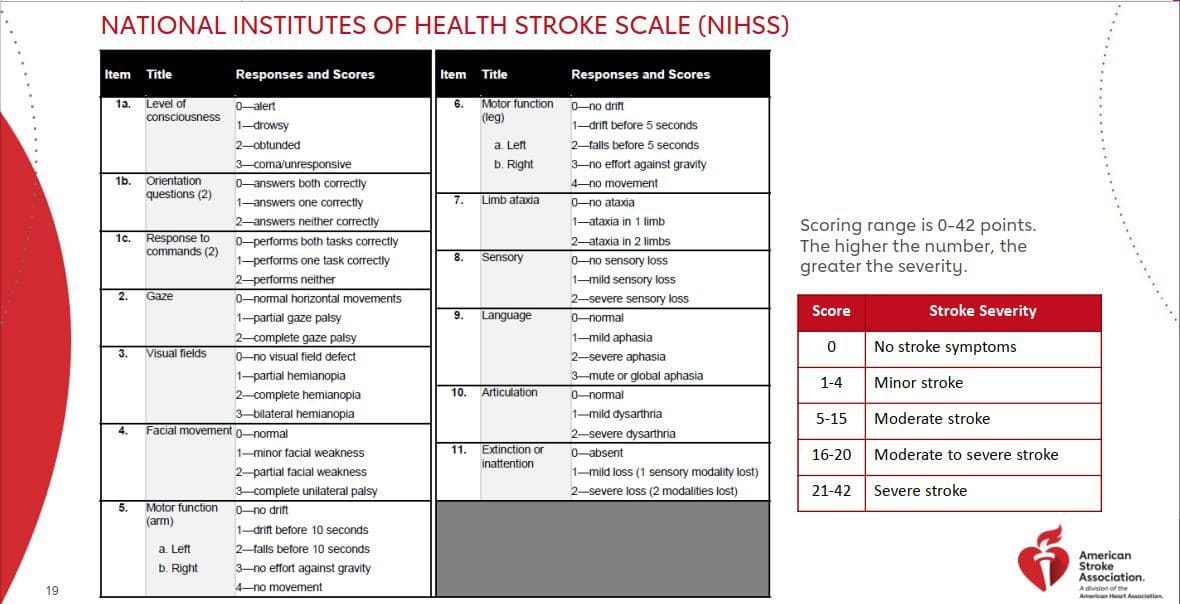
Getting NIHSS certification is a mandatory milestone for nurses, paramedics, and physicians working in emergency or neurological care. The National Institutes of Health Stroke Scale (NIHSS) is an 11-item physical and neurological examination tool used to objectively quantify the impairment caused by an acute stroke. Mastering this test requires understanding not just medical definitions, but the strict scoring logic applied during video patient evaluations.
The process takes roughly one to two hours to complete online and is typically free through recognized training platforms like Apex Innovations or institutional portals. Passing the exam demands a score of 93% or higher on video-based patient scenarios, which translates to strict margin limits.
Understanding the Structure of the NIHSS Exam
The certification process consists of two primary phases: instructional learning modules and patient certification groups. During the training portion, clinicians review video demonstrations of patients exhibiting varying degrees of neurological deficit.
Once training is complete, candidates enter the testing phase, which is divided into patient test groups. Each group features six distinct patient videos. Across those six cases, you evaluate 15 individual sub-scores per patient, resulting in 90 total graded items per test attempt. Further reporting on this trend has been provided by BBC.
You cannot afford loose interpretations of clinical signs. The test expects precise alignment with the scoring manual issued by the National Institute of Neurological Disorders and Stroke (NINDS).
The 11 Core Categories Explained
The scale evaluates specific functional areas of the central nervous system. Each category carries distinct point parameters that directly influence treatment decisions, such as eligibility for thrombolytic therapy or endovascular thrombectomy.
- Level of Consciousness (LOC): Assesses whether the patient is alert, arousable by minor stimulation, or responsive only to deep pain. Items 1b and 1c test specific orientation questions (month and age) and simple motor commands.
- Gaze and Vision: Measures horizontal eye movements and visual fields. Partial gaze palsies and complete hemianopias are scored based on the extent of visual loss or forced deviation.
- Facial Palsy: Evaluates symmetry by testing grimacing, smiling, and passive facial movements.
- Motor Function (Arms and Legs): Limbs are tested individually for drift against gravity. A score of 0 means no drift for ten seconds in arms or five seconds in legs, while higher scores indicate rapid descent or complete paralysis.
- Ataxia and Sensory: Limb ataxia looks for cerebellar dysfunction, while the sensory item checks response to pinprick testing across the face, arm, and leg.
- Language and Speech: Evaluates aphasia, fluency, naming objects, and articulation severity. Slurred speech receives specific grading separate from true linguistic comprehension deficits.
- Extinction and Inattention: Tests bilateral simultaneous stimulation to determine if the patient ignores sensory inputs on one side of the body.
Scoring Rules and Passing Thresholds
The math behind the exam trips up many first-time test-takers. Because you evaluate six patient profiles with 15 graded items each, you face a pool of 90 total grading decisions.
To achieve the required 93% accuracy threshold, you can make no more than six incorrect entries across the entire test set. A single misinterpretation of drift or a missed facial asymmetry on multiple patients quickly drains your margin of error. If you fail to meet the threshold, you must restart the patient group certification set, though retakes are generally unlimited.
Common Mistakes to Avoid
Clinicians often fail the certification exam by relying on clinical intuition rather than strict standardized scoring rules. Keep these pitfalls in mind while watching the test videos:
- Helping the patient: Examiners must never prompt, hint, or rephrase questions to assist the patient during the test video. Grade strictly on the initial response.
- Ignoring aphasia rules: Stuporous or aphasic patients have specific default scoring rules for language and cognitive items. Don't grade them as normal simply because they cannot speak.
- Misjudging drift timing: For motor arms and legs, you must watch the full duration (ten seconds for arms, five seconds for legs) before deciding if a drift constitutes a score of 1 or 2.
- Forgetting untestable codes: If a patient has an amputation or joint fusion, you must mark it as untestable (UN) rather than guessing a functional score.
Frequently Asked Questions
How long does NIHSS certification last?
Most hospital networks and certifying bodies require clinicians to renew their NIHSS certification annually. Check your specific institutional policies, as some require re-testing every 12 months.
Is the certification exam free?
Yes. The foundational training and certification modules provided through major accredited portals like the American Stroke Association or Angels Initiative do not charge administrative fees for standard clinical users.
Can I pause the certification test?
While you can take your time reviewing the instructional modules, the patient video testing sets are timed to ensure independent evaluation. Make sure you have an uninterrupted hour before launching the test sequence.
What happens if I fail an attempt?
Platforms allow unlimited retakes. If you fail a patient group set, review the scoring manual for the specific items you missed before attempting a new patient set.


