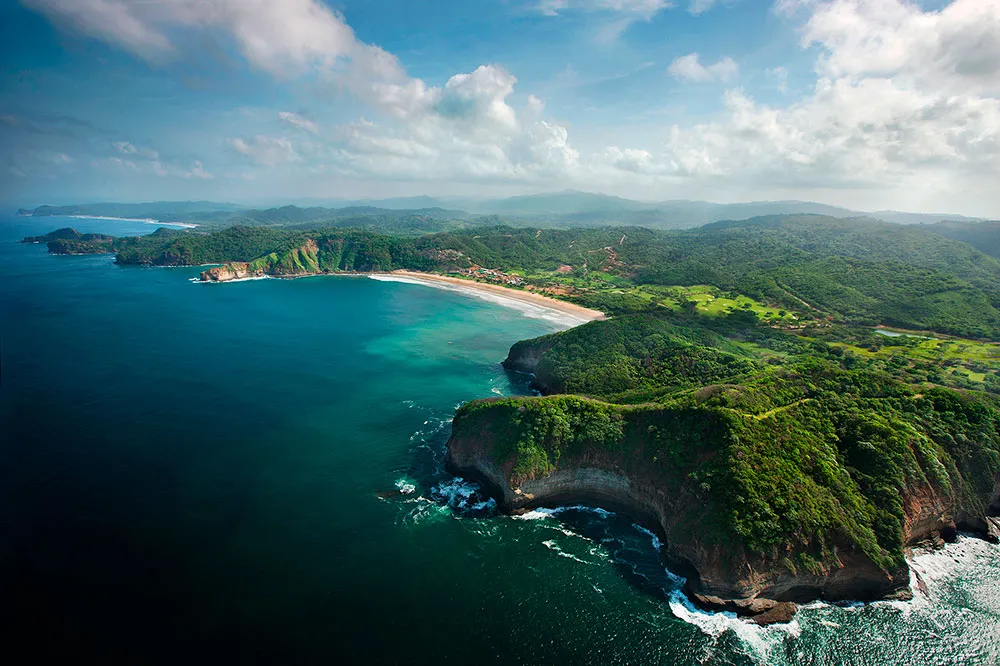
Choosing where to deploy capital in Central America comes down to balancing entry pricing against infrastructure maturity. If you're weighing Nicaragua vs Costa Rica for your next asset purchase or lifestyle relocation, you aren't just comparing two neighboring countries. You are evaluating two fundamentally different stages of economic development, risk profiles, and financial upside.
Costa Rica offers deep institutional stability, an established tourism engine, and world-class healthcare, but you pay a severe premium for those advantages. Nicaragua delivers raw coastal beauty, land values that are often half or a third of its southern neighbor's, and early-cycle appreciation potential, but demands a higher tolerance for political friction and bureaucratic friction. Let's break down how these markets actually function for foreign buyers.
The Financial Reality: Land Prices and Entry Costs
When you look at coastal or colonial real estate, the sticker shock between the two nations is immediate. Costa Rica's Guanacaste region and Central Valley have been heavily institutionalized. Prime ocean-view lots or established rental properties in popular expat zones frequently start north of $500,000, and construction costs have climbed steadily due to high demand and imported material constraints.
Nicaragua operates on an entirely different economic scale. In Pacific hotspots like San Juan del Sur or the Tola corridor, comparable ocean-view land or well-built single-family homes often trade between $250,000 and $450,000.
- Acquisition Capital: Your dollar stretches roughly twice as far in Nicaragua across housing, land parcels, and domestic building labor.
- Financing Realities: Traditional bank financing for foreign nationals is virtually non-existent in both nations. Expect both markets to operate primarily as cash environments, though Nicaragua's lower absolute entry prices make all-cash purchases far more accessible for independent investors.
- Transaction Friction: Closing costs in both countries hover around 3% to 7% once you factor in legal fees, registration stamps, and municipal transfer taxes. However, Nicaragua's registry processes can require more hands-on local legal oversight to ensure clean title chains.
Property Rights and Legal Frameworks
A common misconception is that foreign investors face severe ownership hurdles in Nicaragua. Legally, foreign nationals enjoy the exact same constitutional property rights as local citizens. You do not need to form a local corporation or hold permanent residency to hold a clean title in your own name. The primary geographic restriction is that foreign ownership is prohibited within five kilometers of international borders or maritime coastal strips without specialized concessions, which is standard across Central America.
Costa Rica provides a transparent, highly digitized property registry system through the Registro Nacional, giving buyers immense peace of mind. Title searches are fast and digital. Nicaragua's system is functional, but relies more heavily on notarized deeds and physical registry verification. Hiring an independent, reputable local attorney who has zero ties to the seller is mandatory in both jurisdictions. Never skip this step.
Tax Structures and Income Optimization
Both countries operate on a territorial tax system, which is a major win for international investors.
- Foreign Income: Neither Costa Rica nor Nicaragua levies local taxes on income you earn outside their borders. If you run a remote digital business, collect foreign pensions, or hold offshore dividends, you won't pay local income tax on those funds.
- Property Taxes: Annual property taxes in Nicaragua are exceptionally low, rarely exceeding $1,000 per year even for substantial single-family homes. Costa Rica's property tax is similarly modest at roughly 0.25% of the registered value, though Costa Rica also enforces a luxury tax on high-end homes exceeding specific multi-million dollar thresholds.
- Capital Gains: Both countries tax local capital gains upon the sale of real estate, though enforcement and compliance mechanisms are much stricter and automated within Costa Rica's centralized tax authority.
Infrastructure, Healthcare, and Daily Operations
Infrastructure is where Costa Rica justifies its high pricing. Paved roads, reliable fiber-optic internet grids, and an extensive network of private and public hospitals make daily operations seamless. The CAJA public healthcare system and private facilities like Hospital CIMA provide top-tier medical care that attracts medical tourists globally.
Nicaragua's infrastructure has improved significantly—highlighted by major regional investments like the Costanera coastal highway project connecting southern beach towns. Yet, outside of Managua and major expat hubs like Granada or San Juan del Sur, you will encounter more infrastructural quirks, power fluctuations, and unpaved access roads.
- Healthcare Access: Managua hosts modern private hospitals capable of handling routine procedures and standard emergencies at a fraction of North American or Costa Rican costs. For highly specialized surgeries or complex treatments, many expats in Nicaragua still travel to Costa Rica or Miami.
- Day-to-Day Expenses: Monthly living expenses for an expat couple generally run between $1,500 and $2,500 in Nicaragua, compared to $2,500 and $4,000 in Costa Rica's popular coastal enclaves, driven primarily by differences in rent, dining out, and private services.
Stability, Risk, and Exit Strategy
Every real estate investment carries a political and liquidity risk profile. Costa Rica is the undisputed heavyweight for political stability, boasting a mature democracy, zero standing army, and predictable regulatory shifts. Because the market is liquid and globally recognized, selling a property in Guanacaste to another international buyer is relatively straightforward.
Nicaragua carries a distinct political history. While daily street life in expat corridors is peaceful and local crime rates remain lower than many urban centers in North America or its southern neighbors, the country's centralized governance has drawn ongoing international scrutiny and economic sanctions. This political headline risk depresses current asset valuations, which is precisely why the initial entry price is so low. Your exit strategy in Nicaragua requires a longer time horizon; you are buying at a deep discount, but you must be prepared to hold through macro-level volatility.
To help evaluate your risk tolerance further, look at official advisories and economic metrics directly through resources like the World Bank Nicaragua Overview and the Costa Rica Investment Promotion Agency.
Common Mistakes Made by Foreign Investors
- Underestimating Due Diligence: Buying beachfront or rural land without verifying water rights, electrical grid access, and clear concession titles. Never rely on verbal promises from developers.
- Ignoring Title History: Failing to trace the root of title back through decades, which can expose you to historical family inheritance disputes, particularly in coastal zones.
- Failing to Account for Currency and Banking: Assuming opening a local corporate or personal bank account is fast. Due to strict international anti-money laundering laws, opening accounts as a non-resident can take weeks or months of compliance checks in both countries.
- Overlooking Tropical Weather Impact: Building without factoring in heavy rainy seasons, salt-air corrosion, and high humidity, which can destroy substandard construction materials within three years.
Frequently Asked Questions
Can I get permanent residency through real estate investment?
Yes. Both countries offer distinct investor and retiree residency tracks (pensionado or rentista categories) that lower bureaucratic hurdles if you prove a steady monthly income or purchase qualifying real estate assets above specific minimum thresholds, typically starting around $150,000.
Is it safe to live and own property in Nicaragua?
Statistically, street-level violent crime rates in Nicaragua are lower than in many parts of Costa Rica. However, the primary safety considerations are political rather than criminal. Foreign investors must separate day-to-day community safety from macro-political governance risks when calculating their comfort level.
How hard is it to manage a rental property remotely?
Both markets feature local property management agencies that handle guest check-ins, maintenance, and marketing for vacation rentals. In Costa Rica, the ecosystem of English-speaking property managers is mature. In Nicaragua, you will find capable operators in major hubs like San Juan del Sur, but hands-on oversight or personal vetting is strongly recommended to protect your asset yield.
Which country offers better long-term capital appreciation?
Nicaragua offers higher percentage upside because current valuations are heavily discounted due to historical perception gaps. Costa Rica functions more like a mature, stable asset class where appreciation is steadier but initial capital outlays leave less room for explosive multiple growth.


