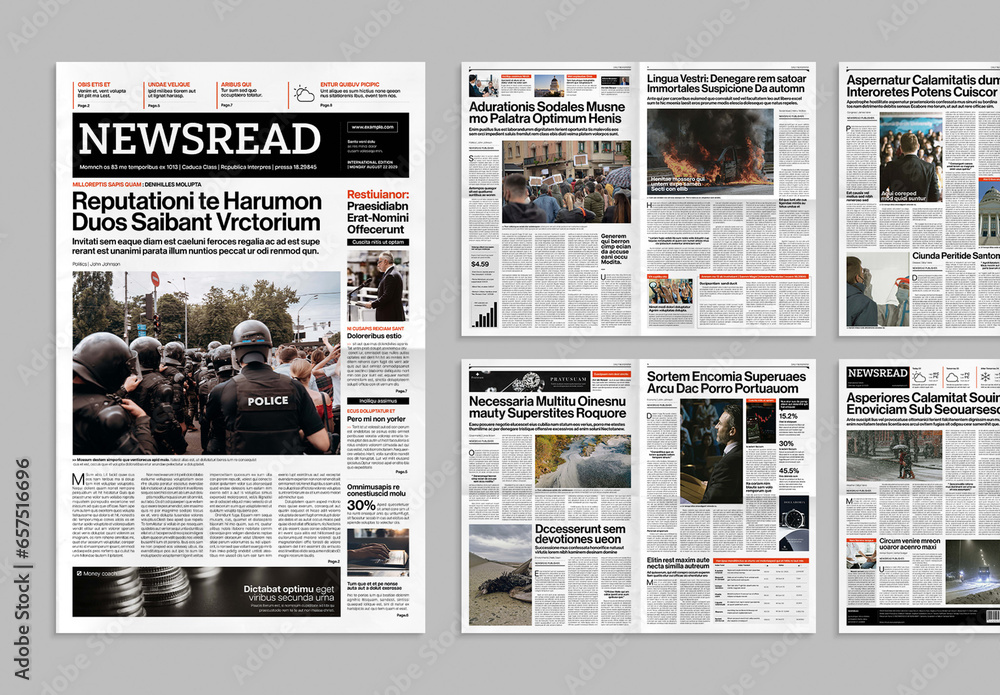
A newspaper headline does more than just title a page. It acts as a compact, high-stakes contract between the reader and the publication, distilling a complex investigation or breaking event into a handful of words. While reporters spend weeks gathering facts, copy editors and layout desks craft the headlines that ultimately decide whether a story lives or dies in the public eye.
Understanding the mechanics of modern headline writing requires looking past surface-level wordplay. Effective headlines balance strict spatial limits, informational accuracy, and psychological resonance, all while steering clear of misleading clickbait. This deep dive explores the history, structure, and strategic craft behind the lines that drive print and digital journalism.
The Evolution of the Headline: From Summaries to Hooks
Early newspapers didn't use headlines the way modern readers expect. In the 17th and 18th centuries, publications relied on simple labels like "From Our London Correspondent" or multi-line descriptive indexes that functioned more like table of contents entries than emotional hooks. Readers sat down with a paper expecting to read every line, so editors didn't need to compete aggressively for attention.
As literacy rates surged and the penny press emerged in the 1830s, newspapers transformed into consumer products sold on bustling street corners. Publishers realized that vendors needed punchy, highly visible text to catch the eye of hurried passersby. This shift birthed multi-tiered deck structures, bolder fonts, and the foundational rule of journalism: headlines must convey core facts quickly while sparking immediate curiosity.
By the 20th century, the rise of wire services like the Associated Press standardized headline constraints even further. Editors had to count characters manually to fit strict column widths on physical printing presses. Today, digital algorithms and search engines have shifted these constraints once again, but the core psychological principles established centuries ago remain intact.
Anatomy of an Effective News Headline
Writing a strong headline isn't about stringing together clever puns. It's a disciplined exercise in structural engineering. Every effective headline relies on a specific set of grammatical and functional components.
Active Verbs and Immediate Context
Good headlines avoid static descriptions in favor of active voice. Instead of writing "A New Policy Was Announced by the City Council," an editor writes "City Council Cuts Transit Funding." Dropping auxiliary verbs (is, was, has) saves precious space while driving momentum forward.
- Subject and action: The reader instantly knows who did what.
- Tense alignment: Breaking news uses the simple present tense ("Mayor Resigns") even if the event occurred an hour ago, creating a sense of immediacy.
- Contextual framing: The headline must accurately preview the tone of the body copy without exaggerating or promising details the article doesn't deliver.
The Role of Subheads and Decks
A main headline rarely carries the entire weight of a complex story alone. Newspapers and digital outlets use complementary decks and subheadlines to bridge the gap between a broad hook and specific facts. While the primary headline grabs attention, the secondary deck expands on the why or how, ensuring the reader understands the stakes before diving into the lead paragraph.
The Copy Editor's Craft: Rules and Constraints
Behind every major front page is a copy desk enforcing strict typographic and stylistic rules. Writing headlines under print constraints required a masterclass in brevity. Editors had to count letter units—where an 'm' or 'w' took up more horizontal space than an 'i' or 'l'—to ensure the text fit physical column bounds.
Digital publishing removed physical column widths, but new constraints emerged. Mobile screens truncate long titles, and search engine result pages clip text that exceeds roughly 60 characters. Consequently, modern copy editors must pack maximum informational value into tight spaces while optimizing for clarity.
According to guidelines from major style bodies like the Associated Press, clarity always supersedes cleverness. A confusing pun that forces a reader to puzzle over its meaning fails the primary function of news design.
Common Mistakes in Headline Writing
Even experienced writers sometimes fall into traps that undermine reader trust. Recognizing these pitfalls helps maintain journalistic integrity.
- The Clickbait Trap: Sensationalizing minor details or withholding critical context just to manufacture curiosity destroys long-term audience trust.
- Burying the Lead: Focusing on a secondary anecdote in the headline instead of the most newsworthy fact leaves readers confused.
- Punctuation Overload: Relying on excessive exclamation points, question marks, or confusing colons cheapens the gravity of serious reporting.
- Misleading Slang: Forcing outdated slang or awkward pop culture references into a serious news context alienates readers.
Frequently Asked Questions
Why do newspaper headlines often omit small words?
Articles (a, an, the) and helper verbs are routinely stripped out of headlines to save space and increase visual impact. This convention dates back to the era of physical typesetting, where every character slot on a printing press carried a real cost.
What is the difference between a hard news headline and a feature headline?
Hard news headlines prioritize direct, objective facts about breaking events. Feature headlines take a more creative, narrative approach, often relying on atmosphere, irony, or emotional resonance to draw readers into longer-form storytelling.
How do digital SEO titles differ from print headlines?
Print headlines are optimized for physical layout and immediate emotional impact on a page. Digital SEO titles balance readability with keyword relevance to help search engines index and rank the content correctly for users looking for specific information.
Who actually writes the headline for a news article?
In traditional newsrooms, reporters rarely write their own headlines. Specialized copy editors, news editors, or digital producers read the finished article and craft headlines designed to fit the specific layout and audience strategy of the publication.


