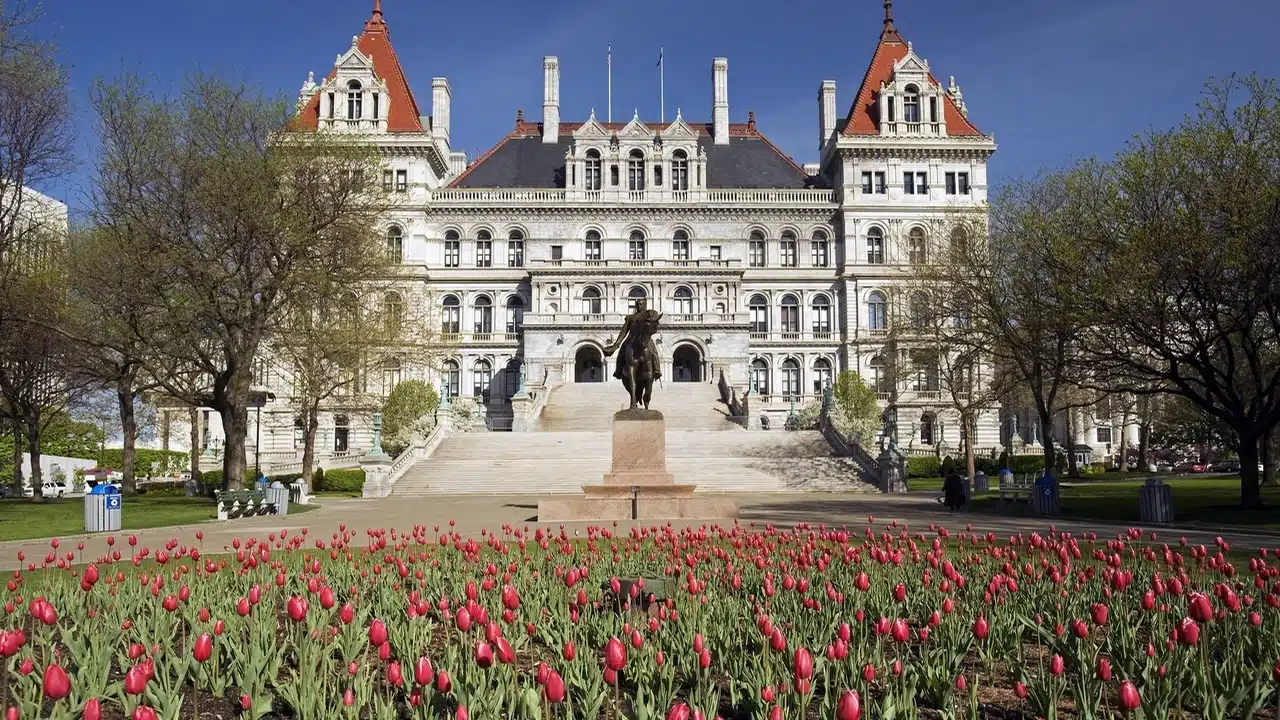
The New York Secretary of State is appointed by the governor and confirmed by the state senate, serving as the head of the New York State Department of State. While voters often focus on executive figures like the governor or attorney general, this office quietly manages the legal, commercial, and administrative records that keep the state running. From corporate filings and professional licensing to community planning and consumer protection, the office acts as the foundational engine of state administration.
Understanding this office requires looking past the high-profile political contests to examine daily governance. The department handles everything from regulating business entities to maintaining the official text of state laws. When corporations register to do business in the state, real estate professionals seek licensure, or local governments adopt zoning updates, they interact directly with divisions overseen by the secretary.
Historical Origins and Evolution of the Office
The roots of the position stretch back to the colonial era, long before New York adopted its first state constitution in 1777. During the British colonial period, royal governors appointed secretaries to record official proclamations, maintain land grants, and correspond with the Crown. These early officials held custody of the colonial seal and established the record-keeping traditions that persist today.
When New York formed an independent government, the role shifted from an agent of the British Crown to an instrument of republican self-governance. Initially, the state constitution placed the appointment power in the hands of the Council of Appointment. Later constitutional revisions made the office an elected position chosen by statewide voters for decades, before structural reforms eventually returned it to an appointed cabinet post.
Throughout these structural shifts, the core mission remained consistent: serving as the impartial custodian of official state records. As the state grew from a collection of agrarian settlements into a global financial center, the paperwork required to maintain order scaled exponentially. The office adapted by absorbing new responsibilities, transitioning from a simple repository of parchment scrolls into a massive administrative bureaucracy.
Core Responsibilities and Divisions
The New York Department of State operates through several distinct divisions, each addressing a critical pillar of daily public and commercial life. Navigating state governance requires understanding how these operational units function.
Division of Corporations and State Records
This division manages the legal identity of nearly every business entity operating within the state. Whether entrepreneurs launch a small local LLC or international conglomerates establish headquarters, they must file formation documents with this office.
- Business Filings: Processes articles of organization, incorporation papers, and annual statements.
- Uniform Commercial Code (UCC): Maintains financial filings and liens, providing transparency for lenders and investors.
- State Records: Preserves official state rules, local laws, trademark registrations, and oaths of office taken by public officials.
Division of Licensing Affairs
The state protects public health and safety by regulating dozens of professions through this specific arm. Individuals cannot legally practice certain trades without credentials vetted by the state.
- Professional Regulation: Oversees real estate brokers, notaries public, cosmetologists, security guards, and private investigators.
- Exam Administration: Coordinates testing standards and background checks to ensure practitioners meet baseline competency rules.
- Disciplinary Actions: Investigates consumer complaints against licensed professionals and revokes credentials when operators violate state laws.
Division of Consumer Protection
Modern commerce exposes residents to sophisticated scams, data breaches, and deceptive marketing. This division acts as the primary state advocate for consumer rights.
- Mediation Services: Assists individuals in resolving disputes with businesses over faulty goods, billing errors, or unfulfilled contracts.
- Public Education: Issues alerts regarding emerging financial scams, identity theft tactics, and safety recalls.
- Legislative Advocacy: Proposes consumer protection statutes to close legal loopholes exploited by bad actors.
Intersection with Elections and Democracy
While other states place election administration squarely under their secretary of state, New York handles elections through a separate bipartisan agency known as the New York State Board of Elections. Even so, the Department of State plays an indispensable supporting role in the democratic process.
The office publishes the official text of constitutional amendments, ballot initiatives, and statewide propositions so voters can review proposed changes before heading to the polls. Furthermore, it records the official certification of election results submitted by local boards, ensuring a seamless transition of power for legislative and executive offices.
By maintaining the official compilation of codes, rules, and regulations (often referenced as Title 19 of the NYCRR), the department guarantees that laws passed by the legislature and rules enacted by agencies remain publicly accessible. Transparency forms the bedrock of accountability, and this office provides the physical and digital infrastructure required for citizens to inspect government mandates.
Practical Impact on Residents and Businesses
Everyday interactions with state government usually route through the systems managed by the secretary. For instance, launching a business requires checking name availability through the New York Department of State corporate database to ensure another entity isn't using the same designation.
Local governments also rely heavily on the department for technical assistance. Municipal planning boards work with state experts to draft comprehensive zoning laws, manage waterfront revitalization projects, and ensure compliance with the New York State Open Meetings Law. These quiet administrative supports prevent local governments from descending into legal chaos.
Furthermore, the office manages programs aimed at assisting new immigrants and refugees, helping them navigate naturalization procedures, find English language resources, and launch local enterprises that stimulate the economy. These initiatives demonstrate that the department's reach extends far beyond corporate filing cabinets into the social fabric of local communities.
Frequently Asked Questions
Is the New York Secretary of State elected or appointed?
The secretary is appointed by the governor with the advice and consent of the state senate. This differs from many other states where voters elect the position directly.
Does the secretary run elections in New York?
No. Unlike most states, New York separates election administration into a dedicated bipartisan agency called the New York State Board of Elections, though the department still publishes ballot proposals and administrative rules.
How can I verify if a business is legally registered in New York?
You can search the public corporate database maintained by the Division of Corporations via the official Division of Corporations Portal to check active status, filing history, and service of process addresses.
What happens to local laws after a town or city passes them?
Municipalities must file their local laws with the Department of State before they officially take effect and become binding legal statutes.


