Nevada contains 16 counties and one independent city, creating a stark contrast between massive urban centers and wide-open rural expanses. If you look at a map, you'll see a state defined by extreme contrasts. Most residents live packed into two southern and western pockets, while vast desert stretches remain nearly empty.
Understanding the geography and population of Nevada requires looking past the neon lights of Las Vegas. From the high-desert peaks of the Great Basin to the sweeping salt flats, each local jurisdiction holds a distinct identity shaped by mining history, modern sprawl, and indigenous heritage. This guide breaks down how Nevada divides its land, where people actually live, and what makes these local districts unique.
The Dual Nature of Nevada Geography
Nevada ranks as the 7th largest state by area in the US, covering roughly 110,577 square miles. Yet, over 80 percent of that land is managed by the federal government, primarily through the Bureau of Land Management. Public land ownership shapes every aspect of local development, limiting private expansion and keeping rural districts sparsely populated.
Topographically, the state sits almost entirely within the Great Basin, featuring a unique "basin and range" geological pattern. Hundreds of parallel mountain ranges run north-to-south, separated by arid valleys. Nye County serves as a prime example of this scale; spanning over 18,000 square miles, it stands as one of the largest counties in the contiguous United States, yet houses fewer than 60,000 residents.
Water dictates settlement patterns entirely. Rivers like the Truckee in the north and the Colorado in the south anchor the state's survival. Where water flows, towns grew. Where dry desert basins dominate, human footprints stay small.
Population Distribution: Urban Powerhouses vs. Rural Solitude
Population numbers in Nevada are heavily skewed toward two main hubs. According to estimates from the U.S. Census Bureau, the state population sits above 3.1 million, but it clusters tightly in Clark County and Washoe County.
- Clark County: Home to Las Vegas, Henderson, and North Las Vegas, Clark County houses over 2.4 million residents. It represents roughly three-quarters of the state's total population and drives the economy through tourism, hospitality, and rapid suburban growth.
- Washoe County: Anchored by Reno and Sparks, Washoe County holds around 513,000 residents. It acts as the economic engine for northern Nevada, blending tech manufacturing, warehousing, and tourism.
- The Rural Ring: The remaining 14 counties and Carson City share the rest of the population. Esmeralda County is the least populated, holding fewer than 800 residents across rugged desert terrain.
This disparity creates unique governance challenges. Rural districts rely heavily on natural resource extraction, cattle ranching, and federal land payments, contrasting sharply with the service-driven economies of the south.
Breakdown of Key Jurisdictions
Every corner of the state carries a specific identity rooted in history. Here is how the major divisions break down by region and function:
Clark County and the Urban South
Clark County is more than just the Las Vegas Strip. It encompasses master-planned communities like Summerlin and Henderson, alongside historical outposts like Boulder City—which famously banned gambling for decades. Growth here remains swift, turning former desert scrub into sprawling residential grids.
Washoe County and the Truckee Meadows
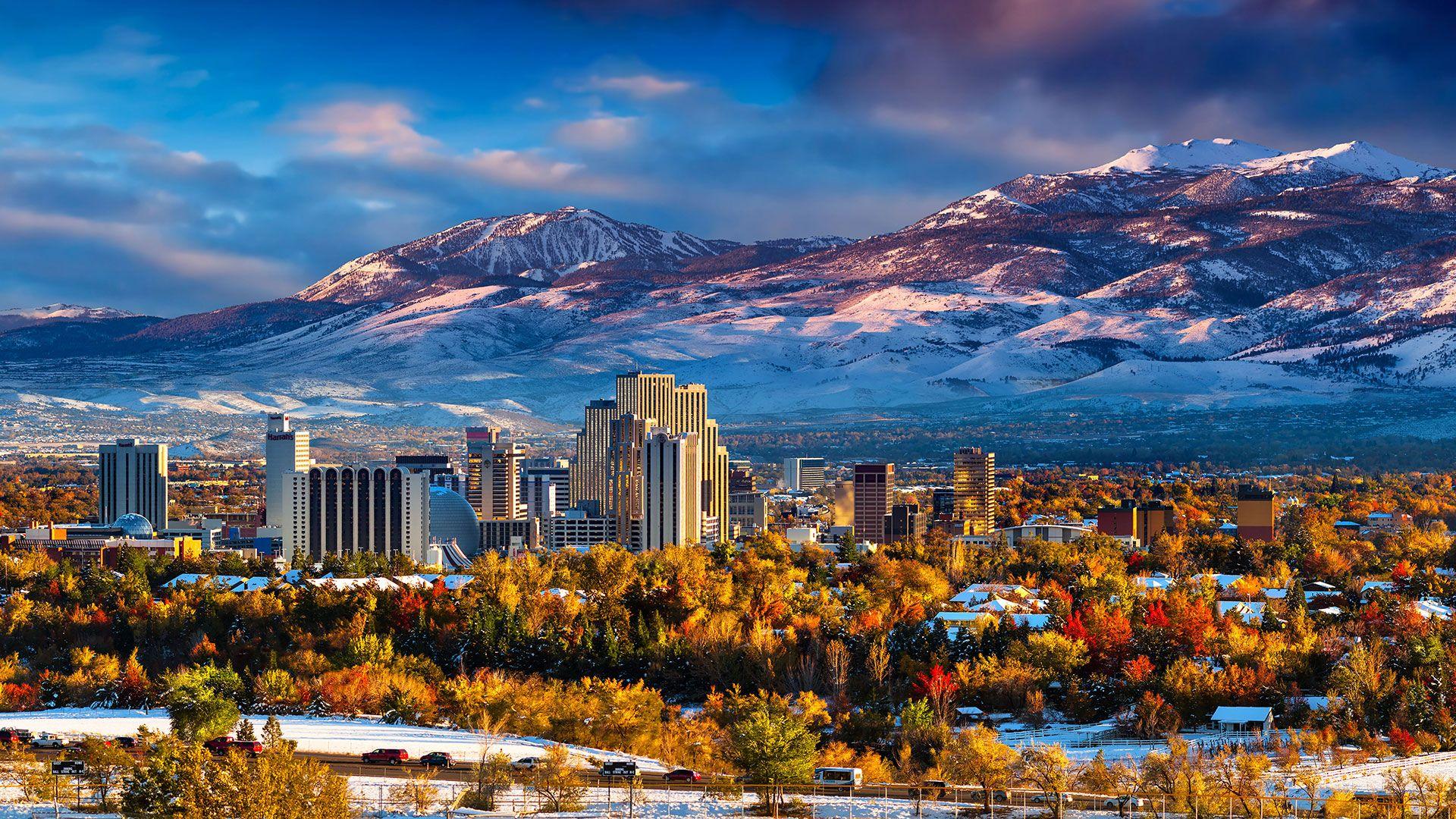
Washoe County stretches from the Sierra Nevada mountains down to the Black Rock Desert. Reno, the county seat, transitioned from a gambling-centric economy into a major logistics and technology hub, drawing companies like Tesla and Panasonic to the Tahoe Reno Industrial Center.
Rural Frontier and Mining Counties
Counties like Elko, Lander, and Eureka form the heart of rural Nevada. Elko County is a stronghold for Basque culture, ranching, and massive gold mining operations. Nevada produces a significant share of the world's gold, with operations concentrated in the Carlin Trend across northeastern Nevada.
Carson City operates as an independent city functioning as a county equivalent, serving as the political capital where state laws are drafted. Meanwhile, Storey County—home to Virginia City—preserves the legacy of the 19th-century Comstock Lode silver rush, maintaining historic wooden boardwalks and Victorian architecture.
Common Misconceptions About Local Boundaries
Many visitors assume Nevada is entirely flat desert, ignoring the fact that several northern peaks rise above 10,000 feet, supporting alpine forests and even ski resorts. Another frequent error involves assuming every town falls under a county government. Carson City dissolved its traditional county-city separation long ago, opting for a consolidated municipal government structure similar to National Association of Counties guidelines for independent cities.
People also underestimate the sheer driving time between seats of government. Traveling from the county seat of Esmeralda County (Goldfield) to the county seat of Elko County (Elko) takes over six hours by car, passing through vast swaths of empty highway where cell service drops out completely.
Frequently Asked Questions
How many counties are in Nevada?
Nevada has 16 traditional counties and 1 independent city (Carson City), bringing the total number of local county-level jurisdictions to 17.
Which Nevada county is the largest by area?
Nye County is the largest, covering approximately 18,147 square miles of territory.
Which county has the smallest population?
Esmeralda County has the smallest population, with roughly 730 residents recorded in recent census data.
Why do most people live in Clark County?
Clark County contains the Las Vegas metropolitan area, which offers diverse employment opportunities in entertainment, hospitality, construction, and corporate services, driving massive inward migration over the last several decades.



