When you look at a map of Europe, it's easy to misjudge how much ground a country actually covers. A Netherlands vs Portugal area comparison reveals a stark difference. Portugal is more than twice the size of the Netherlands, spanning roughly 92,090 square kilometers compared to the Dutch territory of roughly 41,543 square kilometers. Yet, despite having less than half the physical territory, the Netherlands houses a significantly larger population, creating a fascinating contrast in density, landscape composition, and regional development.
Understanding how these two western European nations stack up requires looking past simple square mileage. Water management, overseas territories, regional topography, and urban planning all shift the narrative. Let's break down how their borders enclose everything from reclaimed sea beds to Atlantic archipelagos.
Total Land Area and Territorial Dimensions
Raw numbers tell the first part of the story. Portugal covers a total area of about 92,090 square kilometers. This figure includes the mainland territory on the Iberian Peninsula as well as the autonomous island regions of the Azores and Madeira. Mainland Portugal stretches roughly 561 kilometers from north to south and about 218 kilometers from east to west, giving it a rectangular, coastal orientation bordered entirely by Spain to the east and north, and the Atlantic Ocean to the west and south.
The Netherlands covers a total area of approximately 41,543 square kilometers (or up to 41,850 square kilometers depending on inland water calculations). European Netherlands—often called Holland by casual travelers—is compact, stretching roughly 300 kilometers north to south and 200 kilometers east to west. While the European mainland makes up the vast majority of this footprint, the broader Kingdom of the Netherlands also includes Caribbean island territories like Bonaire, Sint Eustatius, and Saba, though these are constitutionally distinct special municipalities rather than part of the European territory.
To put these dimensions into perspective:
- Portugal is slightly smaller than the US state of Virginia.
- The Netherlands is roughly twice the size of the US state of New Jersey.
- You could fit the Netherlands inside Portugal more than two times with room to spare.
Water vs Land: The Dutch Reclaim and Portuguese Coastlines
Size isn't just about dry dirt. The proportion of water within each nation's borders shapes their geography profoundly.
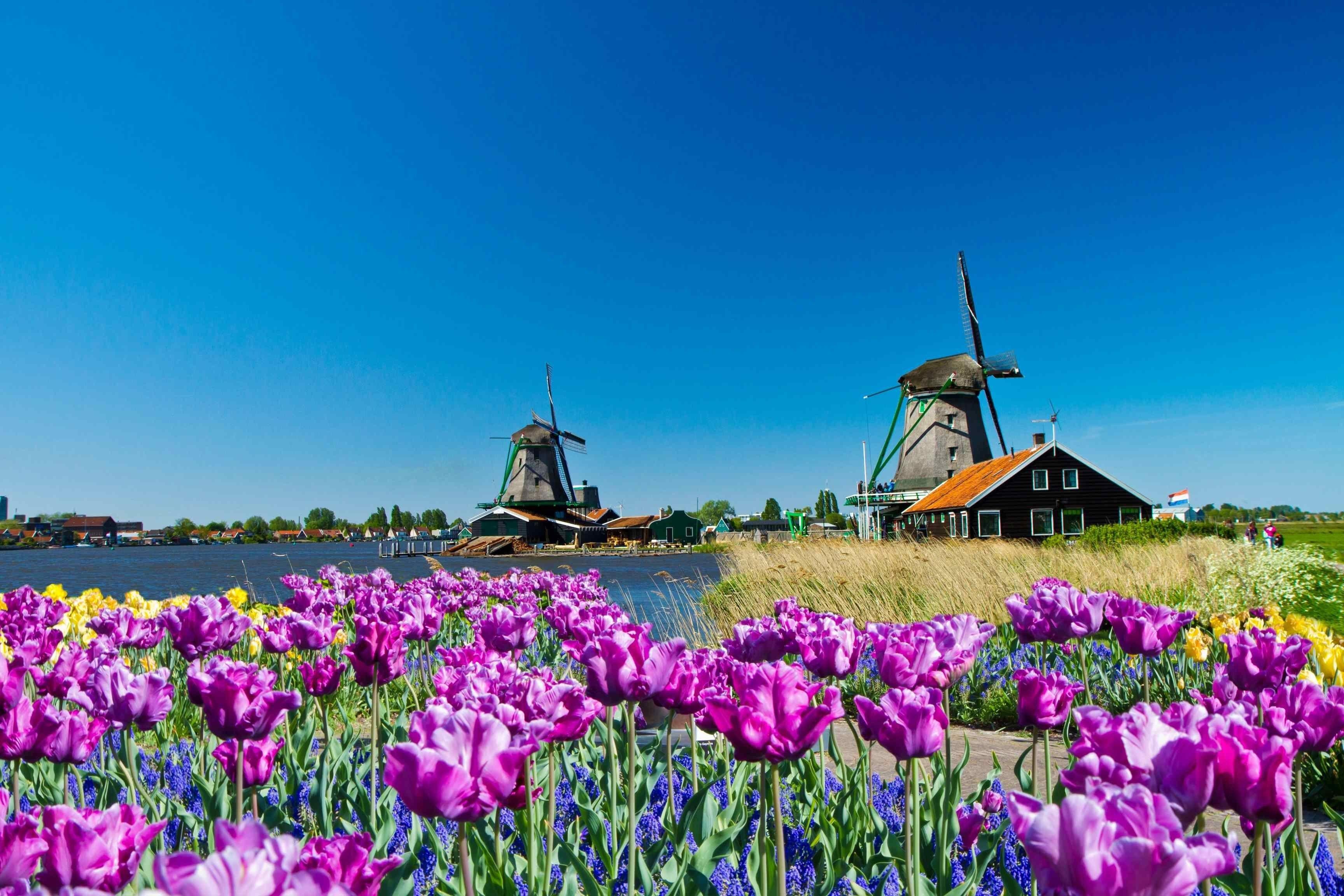
The Netherlands is famously defined by water. Roughly 18 percent of its total territory is covered by water, including massive lakes, rivers, and artificial inlets. More importantly, a significant chunk of Dutch land is actually polders—land reclaimed from the sea and lakes through centuries of relentless engineering, dikes, and windmills. Without human intervention, a large portion of the Netherlands would literally be underwater. The CIA World Factbook on the Netherlands details how deeply intertwined Dutch infrastructure is with its hydrological networks.
Portugal, on the other hand, has a much lower percentage of internal water, with lakes and rivers taking up a minor fraction of its 92,090 square kilometers. Instead, Portugal's relationship with water is defined by its massive Atlantic coastline. While the Netherlands features an extensive North Sea coast protected by dunes and artificial barriers, Portugal's coastlines feature rugged cliffs, dramatic headwaters, and sweeping sandy beaches stretching along both the mainland and its island groups.
Population Density and Geographic Impact
Because Portugal is more than twice as large as the Netherlands, you might assume it holds more people. The opposite is true.
The Netherlands supports a population of over 18 million people, resulting in an intense population density of more than 400 people per square kilometer. Towns bleed into cities, transit networks connect urban hubs seamlessly, and open space is heavily managed and protected. Every square kilometer has to work overtime to accommodate housing, agriculture, nature reserves, and industry.
Portugal houses roughly 10.2 million residents, yielding a much lower population density of around 110 people per square kilometer. While major urban centers like Lisbon and Porto buzz with high density, vast swaths of the interior—such as the Alentejo and parts of the central mountains—feature rolling hills, sprawling cork oak forests, and quiet rural villages where you can drive for miles without encountering heavy traffic.
Topography and Regional Diversity
The physical layout of both countries creates entirely different travel and living experiences.
Portugal's landscape is varied and dramatic. The Tagus River cuts the mainland roughly in half, with the northern half featuring mountainous terrain, lush valleys, and granite highlands. Moving south toward the Algarve, the landscape flattens into drier plains and coastal limestone formations. The highest point on the Portuguese mainland, Torre in the Serra da Estrela, reaches nearly 2,000 meters. Add in the volcanic peaks of the Azores, and Portugal offers verticality and rugged wilderness.
The Netherlands is famously flat. Its highest point on the European mainland, the Vaalserberg, sits at just 322 meters in the far southern tip of Limburg. Most of the country consists of low-lying delta plains, clay meadows, and sandy soils. This flat topography is why cycling is the default mode of transportation; you don't fight hills, you just fight the North Sea wind.
Frequently Asked Questions
Is the Netherlands smaller than Portugal?
Yes, significantly. The Netherlands covers around 41,543 square kilometers, while Portugal spans 92,090 square kilometers. Portugal is more than twice the size of the Netherlands.
Which country has a larger population despite being smaller?
The Netherlands has a larger population. It houses over 18 million people in its compact territory, whereas Portugal has roughly 10.2 million residents.
Do these size figures include overseas territories?
For Portugal, the 92,090 square kilometer figure includes the Azores and Madeira. For the Netherlands, the 41,543 square kilometer figure represents European Netherlands, excluding its Caribbean municipalities.
Why is the Netherlands geography considered unique?
A large percentage of Dutch land sits below sea level. Through an extensive system of dikes, canals, and pumps, the Dutch have engineered a landscape where human habitation depends entirely on continuous water management.



