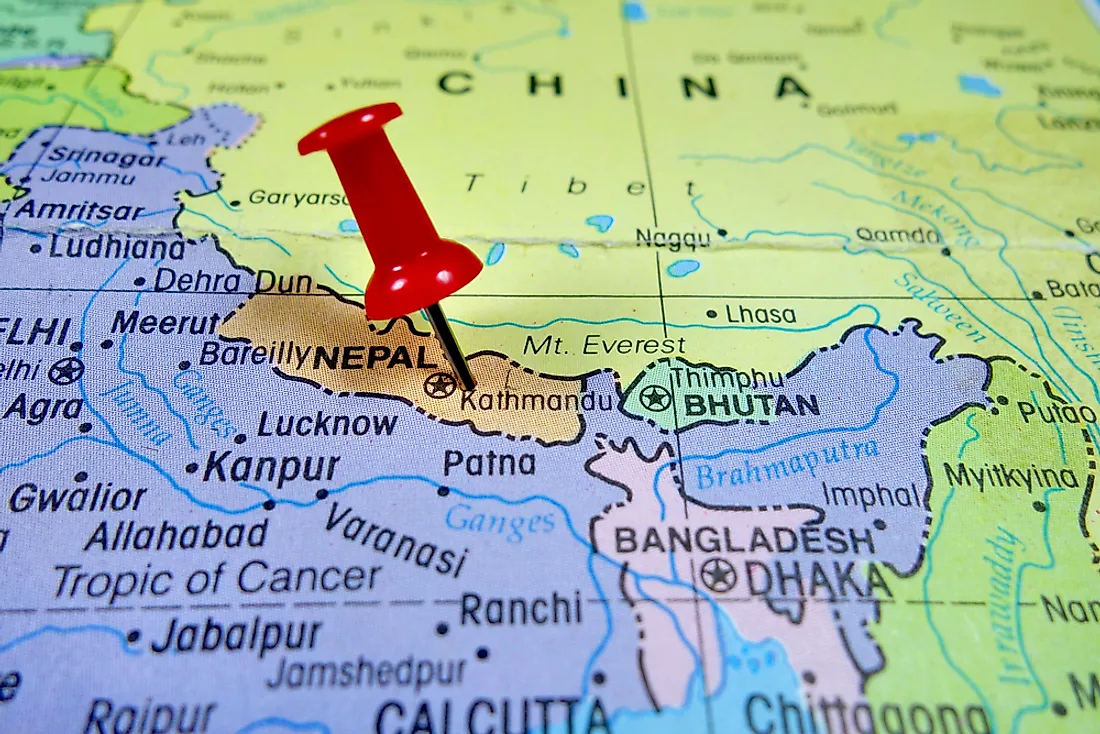
While Nepal and India share an open border, deep religious roots, and overlapping culinary traditions, treating them as interchangeable cultures is a mistake. Nepal isn't a miniature extension of India. Beyond the common Sanskrit linguistic lineage and widespread Hindu-Buddhist heritage, stark contrasts define their governance, terrain, economic structures, and everyday social frameworks.
Understanding what separates these two South Asian neighbors requires looking past superficial similarities. From structural geopolitical realities to distinct indigenous traditions, the differences shape everything from daily life to international diplomacy.
Geographic Realities and Topography
The most immediate physical divergence lies in land formation and scale. India is a massive subcontinent spanning over 3.28 million square kilometers, featuring a diverse mix of tropical coasts, arid western deserts, the fertile Gangetic plain, and the southern Deccan plateau.
Nepal is a landlocked nation roughly one-twenty-third of India's size, compressed into a dramatic vertical landscape. It rises from the humid southern tropical plains of the Terai through central rolling hills up to the high alpine Himalayas, containing eight of the world's ten highest peaks, including Mount Everest. This rugged topography historically isolated remote Nepali communities, preserving distinct ethnic enclaves and languages that vary drastically from valley to valley. India's vast river plains, by contrast, allowed for massive imperial unification and extensive road networks over centuries.
Governance, Statehood, and Political Evolution
Political histories have taken radically different paths since the mid-20th century. India established itself as a sovereign federal parliamentary republic immediately following independence from British colonial rule in 1947, building a vast bureaucratic democracy across diverse states.
Nepal avoided direct European colonization, maintaining a distinct monarchy under the Shah dynasty for centuries. Political turbulence marked the late 20th and early 21st centuries, culminating in the abolition of the monarchy in 2008. Nepal transitioned into a federal democratic republic. While India's constitution explicitly enshrines secularism in a multi-religious state, Nepal's constitutional journey shifted it from the world's only officially Hindu monarchy to a secular federal republic, though Hinduism remains the cultural majority.
Economic Structures and Trade Interdependence
Economic scale and industrial output create an asymmetric relationship between the two nations. India represents one of the world's largest emerging economic powerhouses, boasting massive domestic manufacturing, tech sectors, and a diverse export market.
Nepal's economy relies heavily on remittances from migrant workers abroad, tourism centered on Himalayan mountaineering, and agricultural production. Because Nepal is landlocked and shares open transit routes primarily with India, it depends heavily on Indian ports for international trade. Over sixty percent of Nepal's total trade flows through India. This geographic vulnerability means that supply chain disruptions or border blockades immediately trigger severe fuel and commodity shortages within Kathmandu and beyond.
Cultural Nuances, Festivals, and Daily Life
Though Hindu epics and deities are revered in both countries, festival celebrations and social structures reveal distinct national characters.
- Festivals: While India celebrates Navratri with regional variations like Garba in Gujarat or Durga Puja in Bengal, Nepal's largest festival is Dashain, a fifteen-day national holiday centered on receiving tika and jamara from elders. Similarly, Tihar in Nepal shares roots with Diwali but places specific ritual emphasis on honoring crows, dogs, and cows on designated days.
- Calendars: Nepal operates primarily on the Bikram Sambat (BS) calendar, which sits roughly 56.7 years ahead of the Gregorian calendar, influencing official documents, holidays, and fiscal planning.
- Social Pace: Travelers frequently note a distinct shift in tempo crossing the border. India's dense megacities hum with overwhelming sensory intensity, rapid transit hubs, and high-energy commercial hustle. Nepal, outside the urban sprawl of the Kathmandu Valley, offers a slower, more rugged mountain pace where community structures remain tightly bound to village kinship networks.
You can read more about bilateral cooperation frameworks through the Ministry of External Affairs India and regional overviews via ICIMOD regarding Himalayan ecosystem management.
Common Misconceptions
Several persistent myths blur the lines between these sovereign neighbors:
- Myth: Nepali is just a regional dialect of Hindi. While both share Sanskrit roots and utilize the Devanagari script, Nepali belongs to the Indo-Aryan branch with distinct grammar, vocabulary, and tonal influences from Tibeto-Burman language families.
- Myth: The open border means domestic laws are identical. The 1950 Indo-Nepal Treaty of Peace and Friendship allows free movement of citizens, but legal jurisdictions, citizenship laws, and property ownership rights for foreigners differ entirely.
- Myth: Cuisine is identical across the board. While dal bhat (lentils and rice) forms the dietary backbone of both regions, traditional Nepali cuisine features unique indigenous staples like gundruk (fermented leafy greens), dhindo, and distinct momo preparation styles that reflect Tibetan and Central Asian trade history.
Frequently Asked Questions
Do citizens need a passport to cross between Nepal and India?
Indians and Nepalis can cross the land border using approved identification documents such as voter cards or passports under specific bilateral agreements, though international air travelers require valid passports and visas where applicable.
Is Nepal a part of India?
No. Nepal is an entirely independent, sovereign nation with its own seat at the United Nations, distinct legal system, government, and foreign policy.
Why is Nepal economically dependent on India?
As a landlocked nation bordered by the Himalayas to the north and India to the east, west, and south, Nepal relies on Indian transit routes and ports for the vast majority of its fuel, heavy machinery, and consumer goods imports.
How do the dominant religions differ in practice?
While both countries have Hindu majorities, India's secular constitution governs a deeply pluralistic population comprising significant Muslim, Christian, Sikh, Buddhist, and Jain minorities. Nepal's demographic makeup includes strong indigenous Buddhist traditions deeply integrated with Hindu practices, particularly within the Newar community of the Kathmandu Valley.



