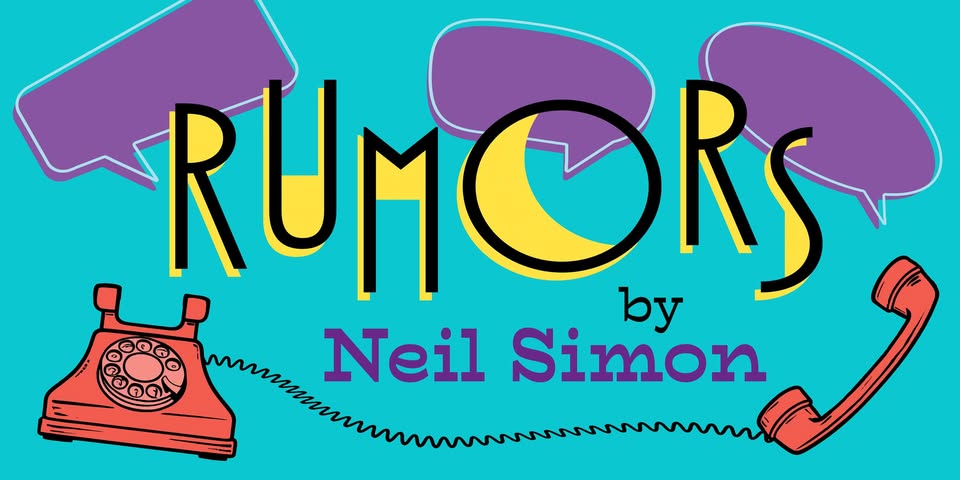
Neil Simon didn't set out to write an unfinished or lost manuscript when he penned Rumors in 1988; rather, the play is his first and only traditional farce. Internet rumors claiming the text stems from an abandoned or incomplete project stem from a misunderstanding of its unique production history and chaotic structure. In reality, Rumors is a fully completed, two-act theatrical script written during a deeply turbulent period in the playwright's personal life.
Examining the actual creation of the script reveals why misconceptions persist, how Simon constructed his only door-slamming comedy, and what the text reveals about his broader career.
Why People Think the Rumors Script Was Unfinished
The persistent myth that Rumors is an unfinished work usually arises from two factors: the chaotic nature of the plot and the abrupt, unconventional ending.
Unlike Simon's character-driven tragicomedies like Brighton Beach Memoirs or Biloxi Blues, Rumors relies entirely on escalating panic. The story begins with a couple arriving at a high-end anniversary party in Sneden's Landing, New York, only to find the host bleeding from the earlobe after a self-inflicted gunshot wound and the hostess missing. As more guests arrive, elaborate cover stories cascade into total absurdity.
The play concludes with a massive, breathless monologue delivered by Lenny Ganz to the police, followed by a quick blackout. Because the narrative resolves with verbal exhaustion rather than a neat moral takeaway, casual readers or amateur theatergoers sometimes misinterpret the rapid finale as an incomplete draft or an abandoned concept.
The Real Origin: Writing Through Personal Pain
To understand Rumors, you have to look at what Simon was experiencing offstage. In the late 1980s, Simon was navigating a painful divorce from his third wife, actress Diane Lander, alongside personal health battles. He sought out a pure comedy not as a casual exercise, but as a psychological lifeline.
Simon noted in interviews that he wanted to write a farce—a genre he had never attempted before—because the mechanical precision required to build a farce acted as a cathartic distraction. He deliberately placed his wealthy characters in formal evening wear to create a sharp visual contrast against the physical indignities they suffer, such as strained backs, bruised ears, and food smeared on designer clothes. Far from being an accidental or unfinished scribble, every entrance, exit, and slamming door in the script is meticulously timed.
Key Elements of the Rumors Script Structure
Studying the published text reveals a masterclass in theatrical mathematics. Simon structured the script around several distinct pillars:
- The Single-Set Constraint: Taking place entirely inside a modern, upscale New York home, the script restricts movement to force characters into claustrophobic confrontations.
- The Escalating Lie: Each arriving couple adds a new layer of fabrication to cover up the deputy mayor's supposed suicide attempt, turning simple miscommunication into a massive web of deception.
- Physical Slapstick: The script contains explicit stage directions for physical comedy, including disappearing door handles, dropped food, and accidental injuries.
- The Monologue Climax: Act II centers on Lenny's marathon, improvised explanation to the police officers—a tour de force for comedic actors that requires precise rhythmic timing.
Common Misconceptions About Simon’s Farce
Because Rumors breaks from Simon's realistic, autobiographical style, it has frequently been misjudged by critics and theater historians over the decades.
Some early Broadway reviews labeled the play lightweight compared to his earlier work, mistaking its breakneck speed for a lack of substance. However, modern revivals have reevaluated the script, recognizing that the frantic cover-up is a satirical look at how social elites protect their reputations at all costs. The script is tight, finished, and intentionally engineered to generate continuous kinetic energy from curtain up to blackout.
Frequently Asked Questions
Is Rumors based on a true story?
No. Unlike many of Simon's works that draw heavily from his childhood and family life, Rumors is an entirely fictional, highly stylized farce invented purely to test his skills in structural comedy.
Why is the ending of Rumors so sudden?
Farces traditionally rely on a rapid release of accumulated tension rather than a slow, reflective resolution. Simon ends the play immediately after Lenny's long, fabricated confession because the comedic engine has reached its absolute peak.
Where can I legally read or license the Rumors script?
The official performance rights and published script copies are managed and distributed by Concord Theatricals.
Did Neil Simon write other farces?
No. Rumors remains his only pure door-slamming, traditional farce. Most of his other plays rely on situational comedy blended with deep emotional drama.