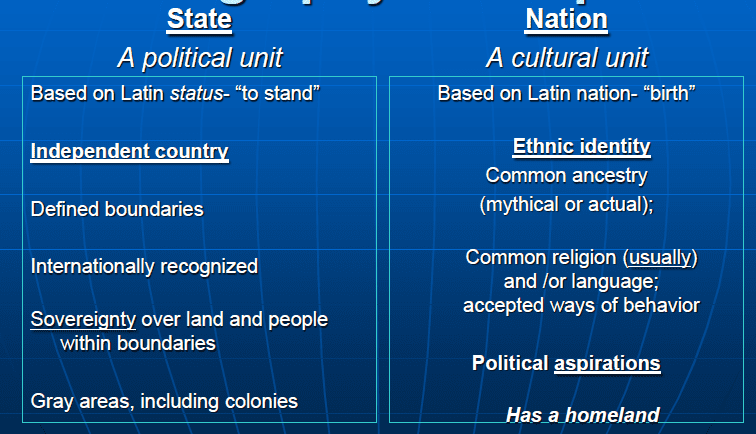
Brunei Darussalam commands attention as a sovereign Islamic absolute monarchy situated on the northern coast of the island of Borneo in Southeast Asia. Completely surrounded by the Malaysian state of Sarawak except for its northern coastline along the South China Sea, this compact nation spans approximately 5,765 square kilometers and is home to roughly 450,000 residents. Governed under an absolute monarchy by the Sultan of Brunei, His Majesty Sultan Haji Hassanal Bolkiah, the country is officially styled as "Brunei Darussalam," translating to "Brunei, the Abode of Peace."
While many brief travel overviews focus superficially on its status as a peaceful Islamic sultanate, understanding Brunei requires examining its economic architecture, constitutional framework, and distinct societal structure. This guide breaks down the historical origins, governance model, economic reliance on hydrocarbons, and practical realities of visiting or navigating business within Brunei Darussalam.
Historical Evolution of the Sultanate
Brunei's recorded history dates back well before European arrival in the region. Archaeological findings and Chinese historical records from the Song and Ming dynasties indicate that a trading kingdom, known as P'uni or Vijayapura, existed near the Brunei River delta as early as the sixth century. By the fifteenth century, following the conversion of its ruler to Islam under the influence of Arab traders and Sufi missionaries, Brunei emerged as a powerful regional sultanate.
At the zenith of its power during the sixteenth century under Sultan Bolkiah, the Brunei Empire extended its authority across the entire island of Borneo, parts of the Sulu Archipelago, and modern-day Palawan and the southern Philippines. Trade with China, Java, and Malacca fueled its wealth. However, European colonial expansion, internal succession disputes, and piracy gradually eroded its territory. Further analysis by National Geographic Travel delves into comparable perspectives on the subject.
In 1888, Brunei became a British protectorate, a status that shielded it from complete annexation by neighboring colonial powers. In 1906, the introduction of a British Resident system stripped the Sultan of domestic administrative power, except for matters concerning Malay custom and the Islamic religion. Oil was discovered in Seria in 1929, fundamentally transforming Brunei’s economic trajectory. Following the adoption of its written constitution in 1959 and a brief rebellion in 1962, Brunei finally achieved full independence from the United Kingdom on January 1, 1984.
Governance and the Philosophy of MIB
Brunei operates under a system of absolute monarchy combined with British-derived common law traditions for civil matters, alongside a parallel Sharia legal system. The Sultan acts as both Head of State and Prime Minister, holding supreme executive authority. Legislative power is vested in the Legislative Council (Majlis Mesyuarat Negera), whose members are appointed directly by the Sultan.
The ideological bedrock of the nation is Melayu Islam Beraja (MIB), or Malay Islamic Monarchy. Formally proclaimed upon independence, MIB is an integrated governance and societal framework fusing Malay cultural values, orthodox Sunni Islamic teachings, and unwavering loyalty to the royal monarchy.
- Malay Culture: Preserves traditional customs, linguistic etiquette, family structures, and community values (Kampong Ayer lifestyle).
- Islam: Functions as the official state religion, influencing public holidays, dietary laws, education, and legal codes.
- Monarchy: Views the Sultan as the supreme protector of the faith and the ultimate unifying authority of the state.
Public schools and universities mandate MIB coursework. The philosophy serves to inoculate local society against rapid external cultural shifts while maintaining civic stability and social cohesion.
Economic Structure: Beyond Oil and Gas
Brunei’s economy has historically depended on extensive petroleum and liquefied natural gas (LNG) reserves. As one of Southeast Asia's largest oil producers, the country achieved high GDP per capita rankings, providing citizens with extensive welfare benefits, including subsidized housing, free healthcare through national hospitals, and zero personal income tax.
However, the finite nature of hydrocarbon reserves and global energy transitions have prompted rigorous economic diversification efforts, spearheaded by Brunei Vision 2035 (Wawasan Brunei 2035). The government focuses on several non-oil growth pillars:
- Downstream Petrochemicals: Expanding domestic refining capacity and fertilizer production through joint ventures at the Pulau Muara Besar industrial park.
- Halal Industry Development: Leveraging Brunei’s strict Islamic credentials to position local food processing, cosmetics, and pharmaceuticals within the global halal market.
- Logistics and Maritime Hub: Upgrading Muara Port to capture regional transshipment trade connecting the Brunei-Indonesia-Malaysia-Philippines East ASEAN Growth Area (BIMP-EAGA).
- Information and Communication Technology (ICT): Improving broadband infrastructure, nurturing tech startups, and digitalizing public administrative services.
- Eco-Tourism: Promoting pristine rainforest conservation in Ulu Temburong National Park as a premier destination for low-impact, sustainable tourism.
Geography and Environmental Conservation
Brunei is split into two distinct enclaves separated by the Malaysian district of Limbang. The western district of Brunei-Muara contains the capital city, Bandar Seri Begawan, along with Tutong and Belait (the center of oil production). The eastern district, Temburong, is largely mountainous and heavily forested, connected to the rest of the country via the Sultan Haji Omar Ali Saifuddien Bridge.
Despite rapid urbanization, Brunei has preserved nearly 70% of its landmass under dense, pristine tropical rainforest. Through strict environmental policies like the Heart of Borneo initiative, logging is heavily restricted, and heavy industrial clearings are confined to designated zones.
- Ulu Temburong National Park: Accessible only by longboat (telingkong), this protected reserve features a canopy walkway rising over 50 meters above the forest floor.
- Kampong Ayer: Often called the "Venice of the East," this sprawling historic water village on the Brunei River houses thousands of residents in traditional wooden stilt homes equipped with modern amenities like electricity, internet, and schools.
Culture, Architecture, and Daily Life
Brunei’s urban landscape reflects a blend of Islamic architectural heritage and modern civic engineering. Bandar Seri Begawan features two monumental mosques that define the city's skyline:
- Sultan Omar Ali Saifuddien Mosque: Completed in 1958, this structure features Italian marble, pure gold domes, and a lagoon reflecting a ceremonial stone boat modeled after a sixteenth-century royal barge.
- Jame' Asr Hassanil Bolkiah Mosque: The largest mosque in the country, featuring twenty-nine golden domes and expansive manicured gardens.
Traditional attire remains standard for formal events and government offices. Men wear the traditional baju melayu paired with a sarong wrap (samping), while women wear the elegant baju kurung. Religious observances shape daily rhythms; businesses pause briefly during Friday midday prayers, and the consumption of alcohol is strictly prohibited in public areas, with non-Muslim visitors permitted limited duty-free personal allowances under strict import declarations.
Frequently Asked Questions
What language is spoken in Brunei?
Malay is the official national language, spoken by the vast majority of the population. English is widely used in business, higher education, and government administration. Mandarin and various Chinese dialects are also spoken within the Chinese minority community.
Do visitors need a visa to enter Brunei?
Citizens of many nations, including ASEAN member states, EU countries, the United Kingdom, the United States, Australia, and Canada, enjoy visa-free entry for tourism stays ranging from 14 to 90 days. Always verify current entry requirements through the Brunei Ministry of Foreign Affairs before traveling.
What currency is used in Brunei?
The official currency is the Brunei Dollar (BND). Under a Currency Interchangeability Agreement established in 1967, the Brunei Dollar is pegged at parity with the Singapore Dollar (SGD), and both currencies are accepted interchangeably as legal tender throughout the country.
How is public transportation structured in Brunei?
Public transport relies heavily on buses (disparate orange mini-buses) operating out of the central terminal in Bandar Seri Begawan, though routes and schedules can be limited. Taxis are available, and ride-hailing applications like Dart provide convenient alternatives for getting around urban centers. Renting a car is common for travelers exploring outside the capital.


