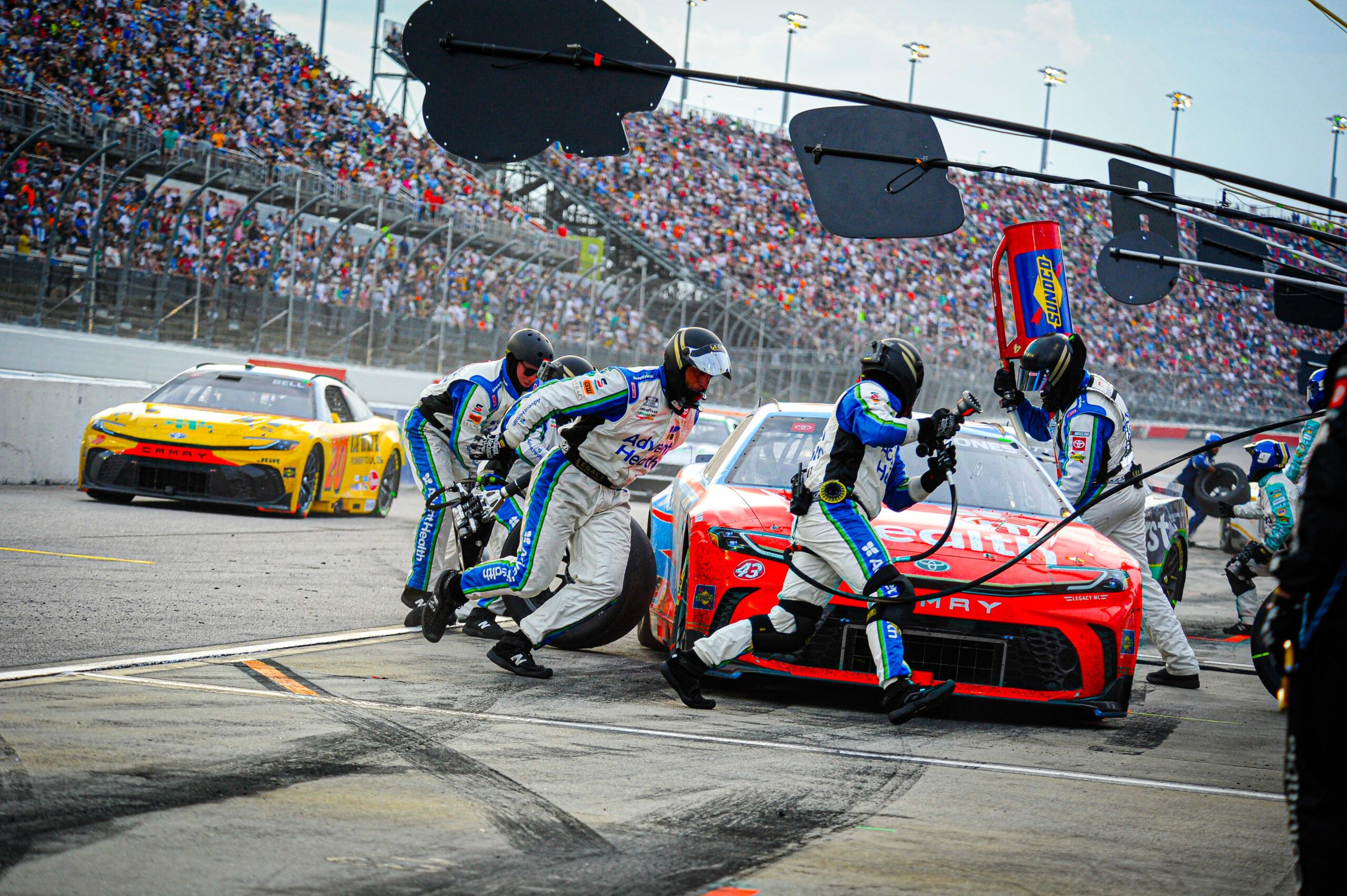
NASCAR overhauled its Damaged Vehicle Policy following mounting pressure and high-profile backlash from veteran drivers like Kyle Busch. The changes eliminated the strict rule that automatically ended a driver's race if a crash-damaged car could not be fully repaired within a tight pit road time window. Teams can now take heavily damaged race cars back to the garage area for extended repairs, fundamentally altering how teams strategize through multi-car wrecks.
If you're wondering how the updated protocol operates, it replaces the old system of instant disqualifications with a tiered repair framework. Under the revised guidelines, teams get a restricted window on pit road before they must head to the garage, or they can choose to tow a car out of harms way without receiving an immediate race-ending DNF.
The Catalyst: Kyle Busch and Daytona Frustration
The catalyst for the rulebook revision traced back to severe driver frustration during major race weekends, most notably when Kyle Busch faced an early exit. Busch voiced fierce criticism after race control disqualified his entry under the old DVP framework, arguing that officials didn't fairly evaluate the extent of the damage or give teams a realistic chance to fix minor structural issues.
When a driver of Busch's stature calls out race control for lacking procedural consistency, the sanctioning body listens. The strict previous enforcement meant that even a slight rub against the wall that delayed a pit stop beyond the mandatory clock resulted in an terminal disqualification. Drivers argued it wasted competitive equipment and robbed fans of seeing star cars fight back.
Breakdown of the DVP Overhaul
The structural changes to the Damaged Vehicle Policy introduced significant operational flexibility for garage crews. Understanding these mechanics helps clarify how modern Cup Series races handle multi-car pileups.
Pit Road Limits and Garage Access
Teams no longer face a definitive race-ending deadline the second a car gets tapped on track.
- The Pit Window: Crews can still work on a car in their assigned pit box under a strict time limit.
- The Garage Option: If repairs take longer than the allotted pit window, teams can move the car to the designated garage area where the clock stops, allowing them to patch up structural components safely out of the way of active pit traffic.
- Towing Rules: If a car cannot drive back under its own power due to flat tires or steering damage, it receives a tow to the garage rather than an automatic exit.
Minimum Speed and Competitive Constraints
Allowing cars to return from the garage doesn't mean rolling roadblocks get a free pass to circle indefinitely. NASCAR maintains strict performance requirements to keep uncompetitive or dangerously compromised machines off the racing line.
- Repaired vehicles must successfully meet the posted minimum speed requirement.
- Cars are given a specific number of consecutive green-flag laps to reach that baseline speed.
- If a team fails to hit the required threshold, race control black-flags the entry, ending its day permanently.
Impact on Race Strategy and Team Tactics
This policy shift changed how crew chiefs calculate risk during stage breaks and chaotic restarts. In the past, a minor fender bender during an early multi-car crash meant packing up the hauler hours early. Now, teams view early-race damage as a solvable setback.
For instance, if a contender gets collected on lap ten, the crew can spend valuable laps in the garage replacing a radiator core or hammering out sheet metal. While they will lose many laps and fall way down the order, they can return to the track to pick up positions if other competitors later retire due to mechanical failures or crashes. This pursuit of surviving championship points alters late-race dynamics significantly.
Common Misconceptions About the New DVP
Fans often confuse the relaxation of the DVP rule with a total free-for-all on vehicle safety. Several boundaries remain rigidly enforced by race officials.
- No Unsafe Parts: Crew chiefs and drivers carry the legal and operational responsibility to ensure a repaired car is structurally safe before rejoining the field.
- Limited Crew Sizes: Only a maximum number of designated crew members are allowed over the wall to service the damaged vehicle during pit road repairs, preventing chaotic overcrowding.
- Strict Panel Rules: Teams cannot use makeshift materials to construct new aerodynamic pieces; original components must be reattached using approved fasteners or tape.
You can review the official parameters directly on the NASCAR Rules Page. Additional historical context on past enforcement can be found via Jayski's NASCAR Silly Season Site.
Frequently Asked Questions
Can a car return to the race after going to the garage?
Yes. Under the updated policy, cars can head to the garage area for repairs and return to the track as long as they meet minimum speed requirements.
Is there still a time limit on pit road?
Yes. Crews have a limited window on pit road to perform quick fixes, but once that time expires, the car must move to the garage or face penalties.
What happens if a repaired car cannot maintain speed?
If a car fails to reach the mandatory minimum speed within the designated green-flag laps, NASCAR orders the vehicle off the track permanently.
Do these rules apply across all national series?
NASCAR tailors its rulebook specifics across the Cup, Xfinity, and Truck Series, though the core framework of the DVP overhaul primarily targets top-tier Cup competition mechanics.



