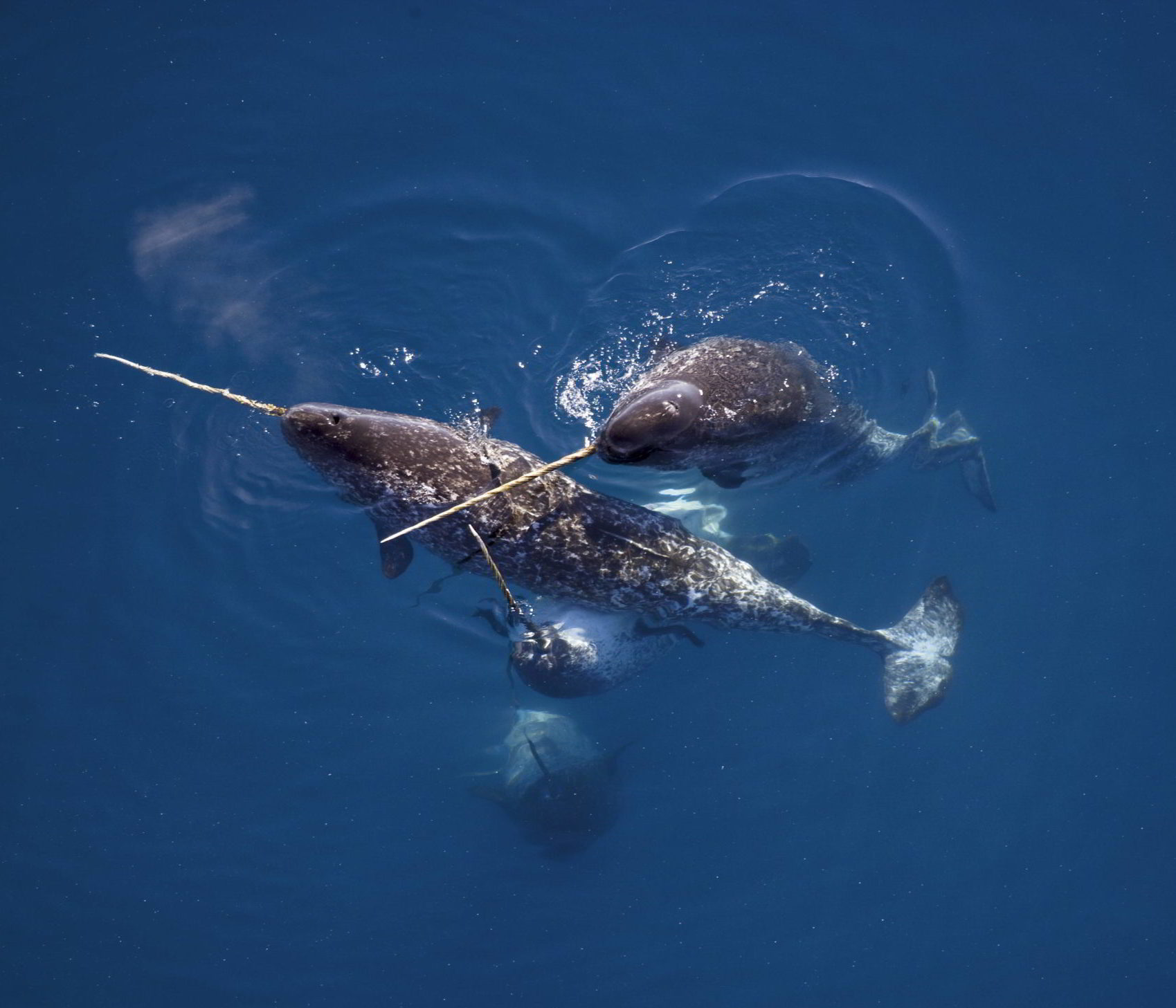
Ghostly residents of the high north, narwhals spend their lives in dark, ice-choked polar waters that few other mammals can tolerate. Famous for the spiraled tusk that gave rise to medieval unicorn legends, Monodon monoceros is far more than a mythic curiosity. These toothed whales navigate deep ocean trenches, communicate through complex underwater clicks, and face intense ecological pressure as the Arctic environment warms.
Understanding narwhals requires looking past their iconic appearance to examine their extreme specialization. From specialized feeding dives beneath shelf ice to the sensory mechanics of their tusks, these marine mammals represent a masterclass in Arctic adaptation.
The Anatomy and Truth Behind the Narwhal Tusk
The most striking feature of the male narwhal is its spiraled tusk, which can grow up to ten feet long. Contrary to old misconceptions, this structure isn't a horn, nor is it typically used as a weapon to gore rivals. It's actually an enlarged canine tooth that punches through the upper left jaw of males, emerging in a counter-clockwise spiral.
Inside this tooth lies a dense network of millions of nerve endings connecting seawater directly to the animal's brain. This design turns the tusk into a high-precision sensory organ capable of detecting changes in water temperature, salinity, and pressure.
Recent field studies show that narwhals also use their tusks physically to tap, herd, and gently stun fast-moving fish like Arctic cod during deep foraging bouts. While a small percentage of females also grow tusks, the trait remains predominantly male and serves dual roles in social signaling, hierarchy establishment, and environmental sensing.
Extreme Diving and Foraging Ecology
Unlike many cetaceans that feed near the surface, narwhals are elite deep-dive specialists. They routinely plunge more than 3,000 feet into pitch-black waters, enduring crushing hydrostatic pressure for up to 25 minutes at a time.
During these underwater descents, narwhals conserve oxygen by slowing their heart rate and restricting blood flow to non-critical tissues. Because light doesn't penetrate the deep Arctic ice pack, they rely entirely on echolocation—emitting rapid bursts of clicks and interpreting the returning sound waves—to map their surroundings and hunt.
Their winter diet focuses heavily on Greenland halibut, polar cod, and squid found near the seafloor. According to research from the University of Washington Polar Science Center, narwhals consume the bulk of their yearly energy requirements during the dark winter months when prey is densely packed beneath solid pack ice.
Habitat Range and Seasonal Migration
Narwhals are strictly bound to polar waters, primarily inhabiting the Canadian High Arctic, West Greenland, Svalbard, and Russian coastal zones. They don't roam open temperate oceans; instead, their movements are dictated by the expansion and retreat of sea ice.
- Winter Grounding: When winter sets in and ice cover exceeds ninety percent, narwhals retreat to deep offshore pack-ice cracks and leads in regions like Baffin Bay and the Davis Strait.
- Spring Migration: As warming spring fractures the ice sheets, pods travel northward along familiar coastal corridors to reach shallower summering grounds in fjords and bays.
- Summer Refuges: During ice-free summer months, they rest, socialize, and nurse newborn calves in protected coastal waters before heading back offshore as freeze-up begins.
Why Narwhals Cannot Survive in Captivity
While popular aquariums routinely house belugas and bottlenose dolphins, no facility has ever successfully maintained a live narwhal. Past attempts have always ended in rapid mortality, a tragedy rooted in the animal's specialized physiology.
Narwhals require cold, hyper-specific marine environments, extreme hydrostatic pressure, continuous access to shifting pack ice, and acoustic calm. Transporting them stresses their delicate cardiovascular systems, and artificial pool environments lack the acoustic space and deep-water dynamics they need. Protecting them requires preserving their wild habitat rather than attempting captive conservation.
Climate Change and Emerging Threats
The rapid disappearance of multi-year Arctic sea ice threatens the foundational stability of narwhal populations. As ice cover diminishes, warmer surface temperatures alter the distribution and abundance of key prey species like the Greenland halibut.
Furthermore, shrinking ice sheets open northern waters to increased industrial shipping, seismic testing, and commercial extraction. The resulting underwater noise pollution masks the clicks and whistles narwhals rely on for social communication and hunting.
Loss of ice cover also exposes pods to heightened predation from transient killer whales, which previously avoided heavy pack-ice zones. Monitoring initiatives by groups like the World Wildlife Fund utilize satellite tagging to track these shifts and advocate for marine protected areas across high-latitude migration routes.
Frequently Asked Questions
How long do narwhals live in the wild?
Narwhals have a long lifespan, typically living between 30 and 50 years in their natural Arctic environment.
Do female narwhals have tusks?
Most females do not develop visible tusks, though rare exceptions occur where a female grows a single or even a double tusk.
What do narwhals sound like?
They produce a broad vocal repertoire consisting of high-frequency echolocation clicks, whistles, trills, and squeaking door sounds to interact and navigate underwater.
How deep can a narwhal dive?
Narwhals routinely dive to depths exceeding 3,000 feet (nearly 1,000 meters) and can spend upwards of 20 to 25 minutes submerged during a single foraging trip.



