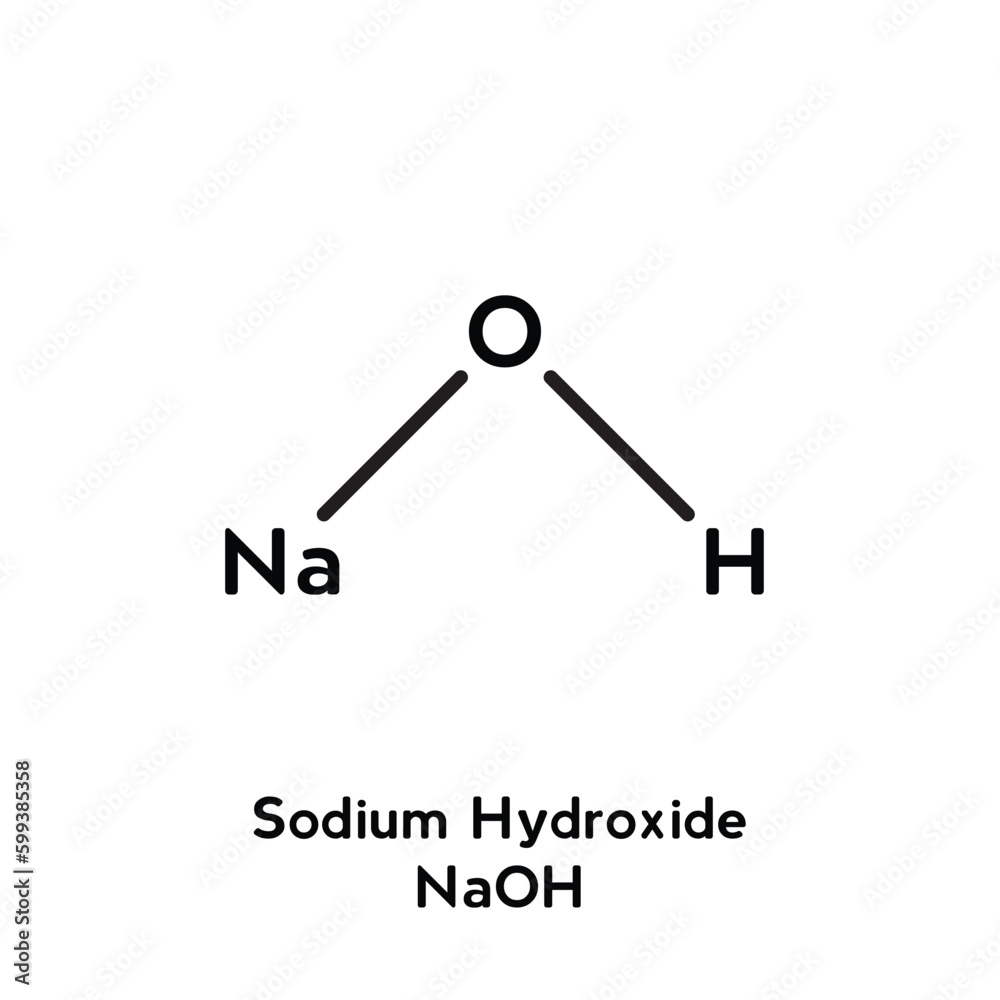
Sodium hydroxide is strongly basic, not acidic. It dissociates completely in water to release high concentrations of hydroxide ions, giving it a high pH level that typically reaches 13 or 14 in concentrated solutions. If you're wondering whether this common compound exhibits any acidic characteristics under normal conditions, the short answer is no. It is one of the strongest foundational bases used in both laboratory settings and industrial manufacturing.
Understanding this chemical behavior requires looking at how sodium hydroxide interacts with water and other compounds. When you drop solid sodium hydroxide pellets into water, they break apart completely into sodium ions and hydroxide ions. This total dissociation defines its status as a strong base. Let's examine the foundational properties, structural characteristics, and practical applications that make sodium hydroxide a cornerstone of chemical science.
What Makes Sodium Hydroxide a Base?
Chemically written as NaOH, sodium hydroxide consists of a sodium cation ($Na^+$) bound to a hydroxide anion ($OH^-$). In an aqueous solution, these bonds break instantly. The released hydroxide ions dictate its strong basicity by accepting protons or increasing the concentration of $OH^-$ ions relative to hydrogen ions ($H^+$).
This substance fits cleanly into the Arrhenius, Brønsted-Lowry, and Lewis definitions of a base:
- Arrhenius definition: It increases the concentration of hydroxide ions when dissolved in water.
- Brønsted-Lowry definition: The hydroxide ion acts as a strong proton acceptor.
- Lewis definition: The oxygen atom in the hydroxide group donates an electron pair in coordination reactions.
Because it doesn't donate protons or contain acidic hydrogen atoms bonded to electronegative elements in a way that releases $H^+$ ions, it has zero acidic properties in aqueous solutions.
The pH Scale and Sodium Hydroxide
The pH scale measures the acidity or basicity of an aqueous solution on a logarithmic scale from 0 to 14. Neutral water sits right at 7. Values below 7 indicate acidity, while values above 7 indicate basicity.
When you dissolve sodium hydroxide in water, the resulting solution pushes toward the upper limit of the scale. A 0.1 molar solution of sodium hydroxide typically exhibits a pH of around 13, while a 1 molar solution reaches a pH of 14. Because the scale is logarithmic, each whole number shift represents a tenfold change in ion concentration. A solution with a pH of 14 contains ten times more hydroxide ions than a solution with a pH of 13.
To learn more about standard measurement protocols, visit the National Institute of Standards and Technology.
Industrial Uses and Everyday Applications
Sodium hydroxide serves multiple functions across manufacturing and household products. Because it breaks down fats, oils, and protein structures, it appears in many formulations where cleaning or chemical breakdown is required.
- Soap making: Saponification relies on sodium hydroxide to react with triglycerides in fats and oils, turning them into soap and glycerin.
- Drain cleaning: Commercial clog removers use lye because it liquefies hair and grease blockages by breaking down organic matter.
- Water treatment: Municipal facilities use it to adjust the pH of acidic water, preventing pipe corrosion and metal leaching.
- Paper production: The Kraft process uses sodium hydroxide mixed with sodium sulfide to dissolve lignin and separate wood fibers.
For detailed guidelines on handling industrial chemical compounds safely, check out the Occupational Safety and Health Administration.
Common Mistakes and Misconceptions
Working with strong bases often leads to predictable errors, especially regarding safety and chemical reactions. Avoiding these mistakes prevents accidents and experimental failures.
- Assuming it's safe because it isn't an acid: Many people respect acids for their corrosiveness but underestimate bases. Sodium hydroxide causes severe chemical burns that penetrate deep into tissue because it liquefies proteins and fats on contact.
- Adding water to solid lye incorrectly: Dissolving solid sodium hydroxide in water releases an intense amount of heat. Pouring water directly into a pile of dry lye can cause boiling and splashing. Always add the solid slowly to a large volume of cold water while stirring.
- Storing in inappropriate containers: Sodium hydroxide absorbs carbon dioxide from the air and reacts with glass over time, etching the surface and fusing ground-glass stoppers shut. Store it in tightly sealed plastic containers instead.
Frequently Asked Questions
Can sodium hydroxide neutralize acids?
Yes. When you mix sodium hydroxide with an acid like hydrochloric acid, a neutralization reaction occurs. The hydroxide ions combine with hydrogen ions to form water, while the sodium and chloride ions form dissolved salt. This reaction releases heat.
Is sodium hydroxide the same thing as lye?
Yes. Lye is the common commercial and historical name for sodium hydroxide, though the term can occasionally refer to potassium hydroxide as well.
Why does solid sodium hydroxide feel slippery?
Solid sodium hydroxide absorbs moisture from the air and your skin. When it touches the oils on your skin, it initiates saponification, turning your skin oils into a soap-like substance. That slippery feeling is actually your skin beginning to dissolve.
Does sodium hydroxide conduct electricity?
Yes. Because it dissociates completely into mobile ions in water, a sodium hydroxide solution is an excellent electrolyte that conducts electrical current efficiently.



